
 Arti Intel
A $71 Day
Gold spent the start of the week going up and coming straight back down. On November 9, spot traded at $4,118.30 an ounce, up $48.20, or 1.18%, on the day. By 8:02 a.m. Eastern on November 10, it was quoted at $4,075.20, down $64.20. By 9:15 a.m. It was at $4,052, a $71 drop from the same hour the previous day. Another quote the same morning had spot at $4,053.30, down $87.21, or 2.11%.
Different feeds, different timestamps, same story: the November 9 gain was gone by the next morning, and then some. Measured against the $4,118.30 print, the $4,052 quote is about $66 lower, roughly 1.6%. Gold was also $36 lower than a year earlier on November 10, which puts the week's volatility in context: for all the noise, the metal sits close to where it was twelve months ago.
For dealers who price off a single screen, the spread between those morning quotes is a reminder that spot is a moving reference, not a fixed number. The $4,075.20 print at 8:02 a.m. And the $4,052 print at 9:15 a.m. Are $23.20 apart, inside about an hour and a quarter. On a kilo bar that is real money, and on a heavy chain it is still enough to change a quote.
The PBOC's 24th Month
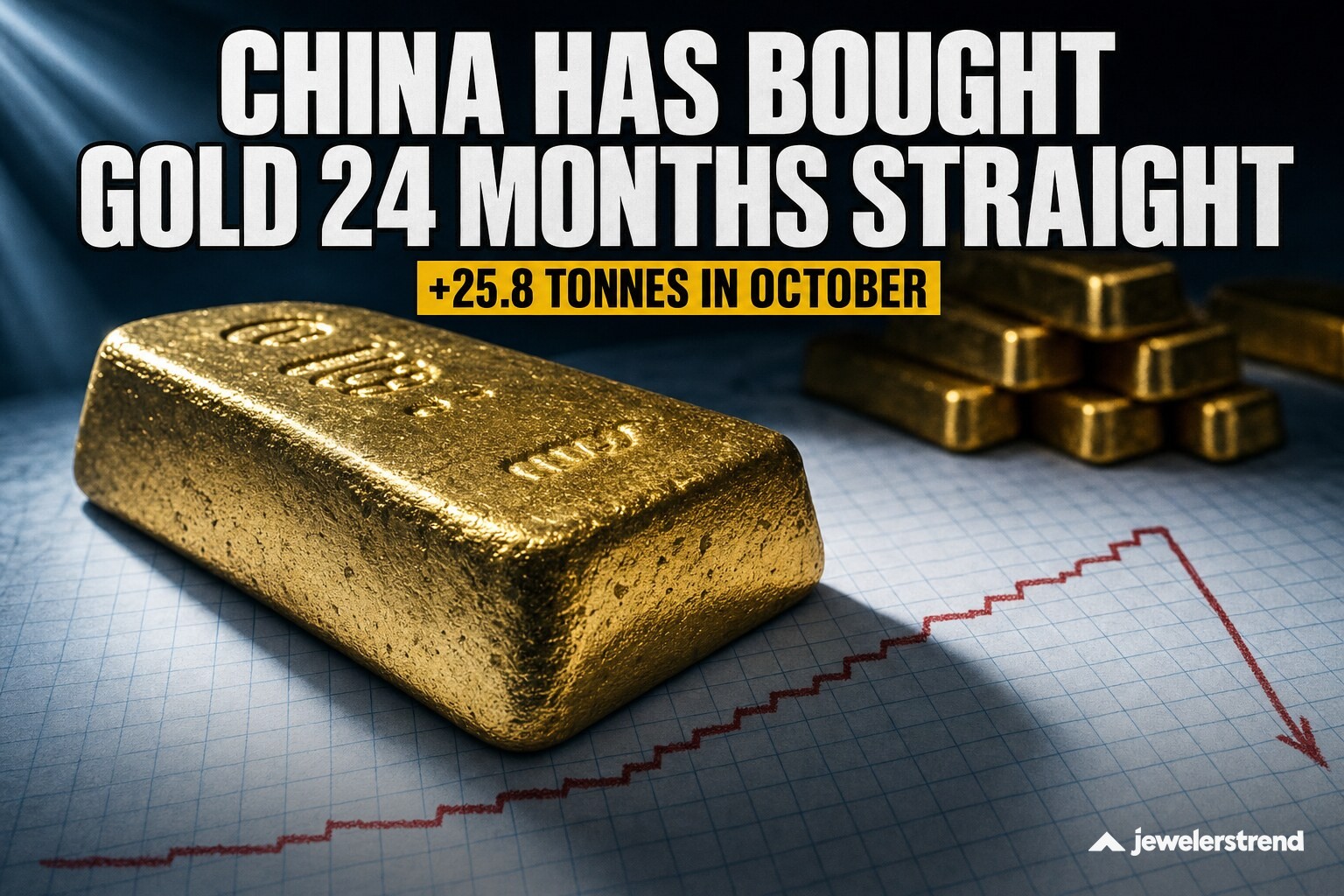
The steadier buyer is in Beijing. Bullion holdings at the People's Bank of China rose by 830,000 ounces in October, around 25.8 metric tons. That is the 24th consecutive month of accumulation, two full years without a pause. Additions over the first 10 months of the year now total around 129 metric tons.
Run the arithmetic and October stands out. If 129 tons came in over 10 months, the monthly average is just under 13 tons. October's 25.8 tons is roughly double that pace. Whether that is a one-month step-up or a new run rate is the question every bullion desk will be asking when the November figure comes out.
Twenty-four months also matters as a signal in its own right. A central bank that reports additions every month for two years is telling the market its reserve policy is a program, not a trade. That kind of buyer does not need to time entries, and the October step-up suggests it is not trying to. A central bank adding at roughly twice its year-to-date pace is not behaving like a buyer waiting for a lower price.
The Wider Official Bid
China is not buying alone. The World Gold Council reported that central banks globally added a net 321 metric tons in the third quarter, a 42% rise year-over-year. We covered the quarterly number when it came out. The point to add now is the October data. The PBOC's 25.8 tons in a single month is about 8% of the entire global central bank net purchase for the prior quarter.
Put the two data sets side by side. Global central banks added 321 tons in the three months to September. The PBOC alone added about 129 tons in the ten months to October. The reporting windows differ, so the numbers cannot be stacked directly, but both point the same way: official demand is growing, not fading, and China is a consistent part of it.
That mix, steady official demand on one side and sharp daily swings on the other, is the market bullion dealers have been trading all autumn. Official buying sets the tone over quarters. Rates, the dollar and macro data move the tape over hours.
What It Means at the Counter
For the retail jeweler, a $71 day is a pricing problem before it is a market story. A scrap offer quoted on November 9 was made against a higher spot than the one in force the next morning. Gold chain and heavy gold jewelry priced off spot reprices with it. Anyone writing special orders this week should be quoting with a time limit.
The year-over-year number helps with customers, too. A buyer who assumes gold only rises can be shown that spot on November 10 was $36 below its level a year earlier. That is a useful frame for anyone weighing a gold purchase this holiday season, and it cuts both ways: the metal has not run away from them, and it has not paid a holder much over the year either.
For the bench and the refining side, the bigger number is the official one. Two years of uninterrupted PBOC accumulation and a 42% year-over-year jump in global central bank buying in the third quarter describe a demand base that does not react to a $71 morning. For the rest of the week across the trade, including Geneva's $112.3 million watch weekend, see our Friday trade wrap. For where diamond prices stand by comparison, see our 1-carat price-gap report.
The next marker is the PBOC's November figure. After 25.8 tons in October against a 10-month average of just under 13, does month 25 come in at the old pace or the new one?


Comments 0
Sign in or create a free account to join the conversation.
No comments yet. Be the first to share your thoughts.