
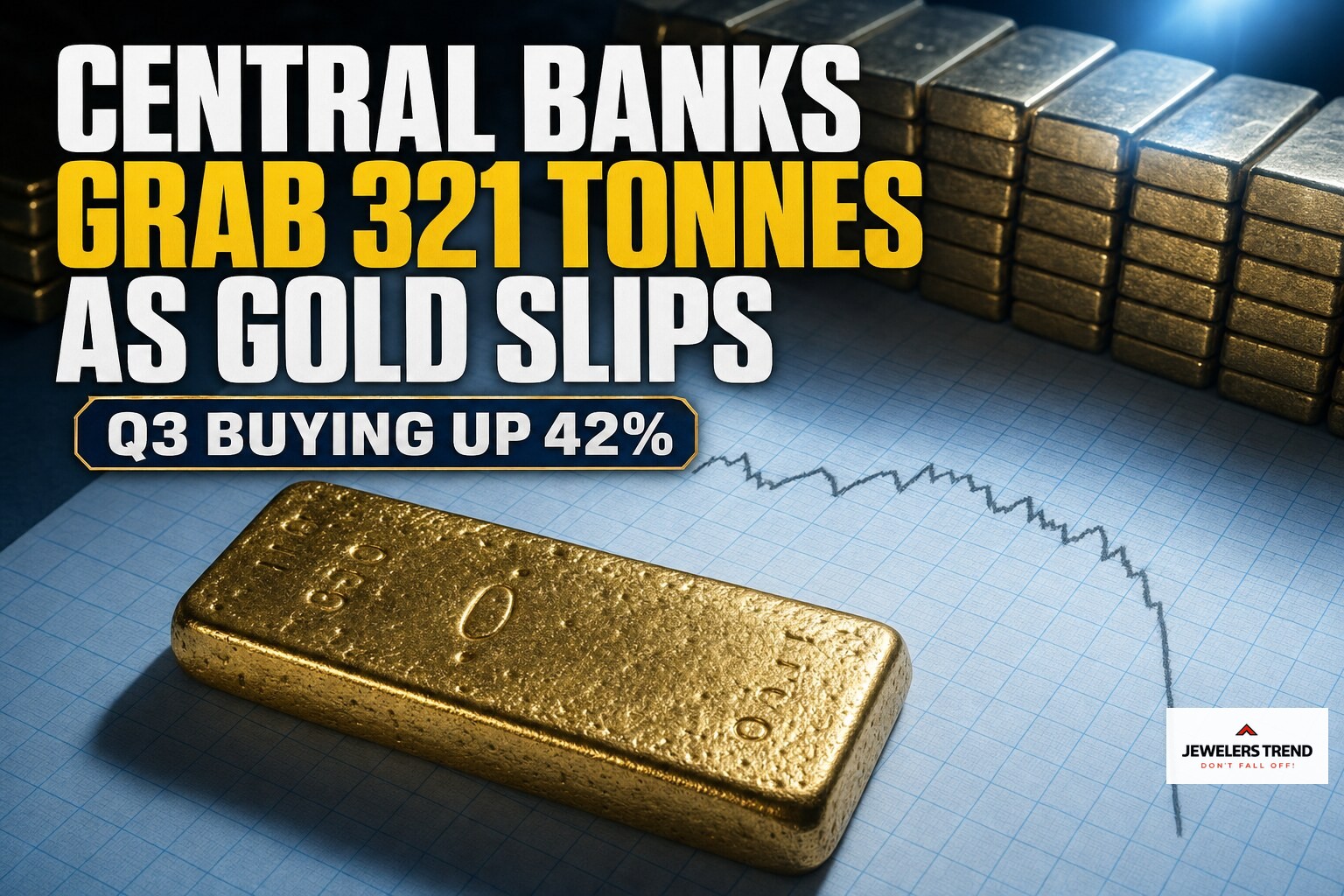
Gold gave back Thursday's gain on Friday. Spot traded at $4,049.69 an ounce on November 6, down $38.28 or 0.94% on the day, per USAGOLD, after a stronger-than-expected October jobs report. That followed a $60.22 rise, or 1.48%, to $4,121.74 on November 5. A strong payroll print tends to push rate-cut expectations back, and a metal that pays no yield usually takes that badly.
Reading the tape
The quotes on the desk this morning did not all match, and it is worth explaining why. JM Bullion showed live spot at $4,085.82 at 5:01 AM Eastern on November 6, before the jobs number hit. 150currency.com logged $4,047.48, down $38.48 from the prior day. The spread between those readings is timing, not disagreement. The pre-report price and the post-report price are both real. They sit on opposite sides of a data release.
For a refiner or a dealer quoting scrap, that intraday swing matters more than the closing number. A $38 move on an ounce is felt on every kilo bar and every lot of karat scrap that walks through the door. A dealer who wrote buy tickets off the overnight number and settled after the release would have been on the wrong side of it.
For retail bullion buyers, the two-day swing is a reminder that the jobs calendar matters as much as the geopolitical headlines. Thursday's buyers paid more than Friday's. Anyone pricing a kilo bar purchase for a client this week would have done better waiting for the payroll release, and that is a lesson that rarely sticks for long.
The official sector keeps buying
The bigger story this week came from the World Gold Council. Central banks added 321 tonnes of gold in the third quarter of 2026, the fastest pace since late 2024. USAGOLD, citing the same data, put the quarterly total up 42% from a year earlier. Year to date through September, official purchases reached 675 tonnes.
Put those two figures side by side and the third quarter accounts for nearly half of the year's central bank buying so far. That is acceleration, not maintenance. The official sector is buying harder, and it is doing so at prices that have pushed a lot of retail consumers away from the metal.
China's streak
The People's Bank of China added 20 tonnes in August, according to World Gold Council central bank statistics, taking its 2026 total to 80 tonnes and extending its run to 22 consecutive months of purchases. A 22-month streak is a policy, not a trade. Whatever the monthly figure, the direction has not changed since the run began, and the market has come to treat it as a standing bid.
Where the jewelry demand went
The contrast with jewelry demand is stark. JCK reported on November 5 that gold jewelry consumption fell 17% year over year in the third quarter, the weakest third quarter in the data series. Central banks absorbed 321 tonnes in the same quarter that jewelry buyers pulled back to a series low. The metal is moving from the counter to the vault.
The retail cost of that shift showed up the day before. Pandora on November 4 cut its 2026 margin guidance from at least 24% to around 23%, citing material and currency headwinds, as Morningstar reported. A charm jewelry maker is telling you the metal bill is biting. Richard breaks down the rest of that quarter in his Pandora report, and the weekly trade wrap puts the gold move alongside the Hong Kong and Swiss data.
On the floor
What this means for the bullion side of the trade is straightforward. Scrap flows from consumers tend to rise when prices are high and jewelry demand is weak, because owners sell what they no longer wear. Refiners take more material in, while the outbound market for fabricated product stays thin. The bid holding the price up is coming from official buyers, not from the jewelry trade.
That leaves the jewelry counter in an awkward spot heading into the holiday season. Every gram in a finished piece is priced off a spot market that central banks are supporting, while the customers who buy those pieces are the ones stepping back.
The level to watch
The question for next week is whether $4,000 holds as support after Friday's jobs-driven drop, or whether central banks need to post another quarter like the third, at 321 tonnes, to keep it there.


Comments 0
No comments yet. Be the first to share your thoughts.