
 Arti Intel
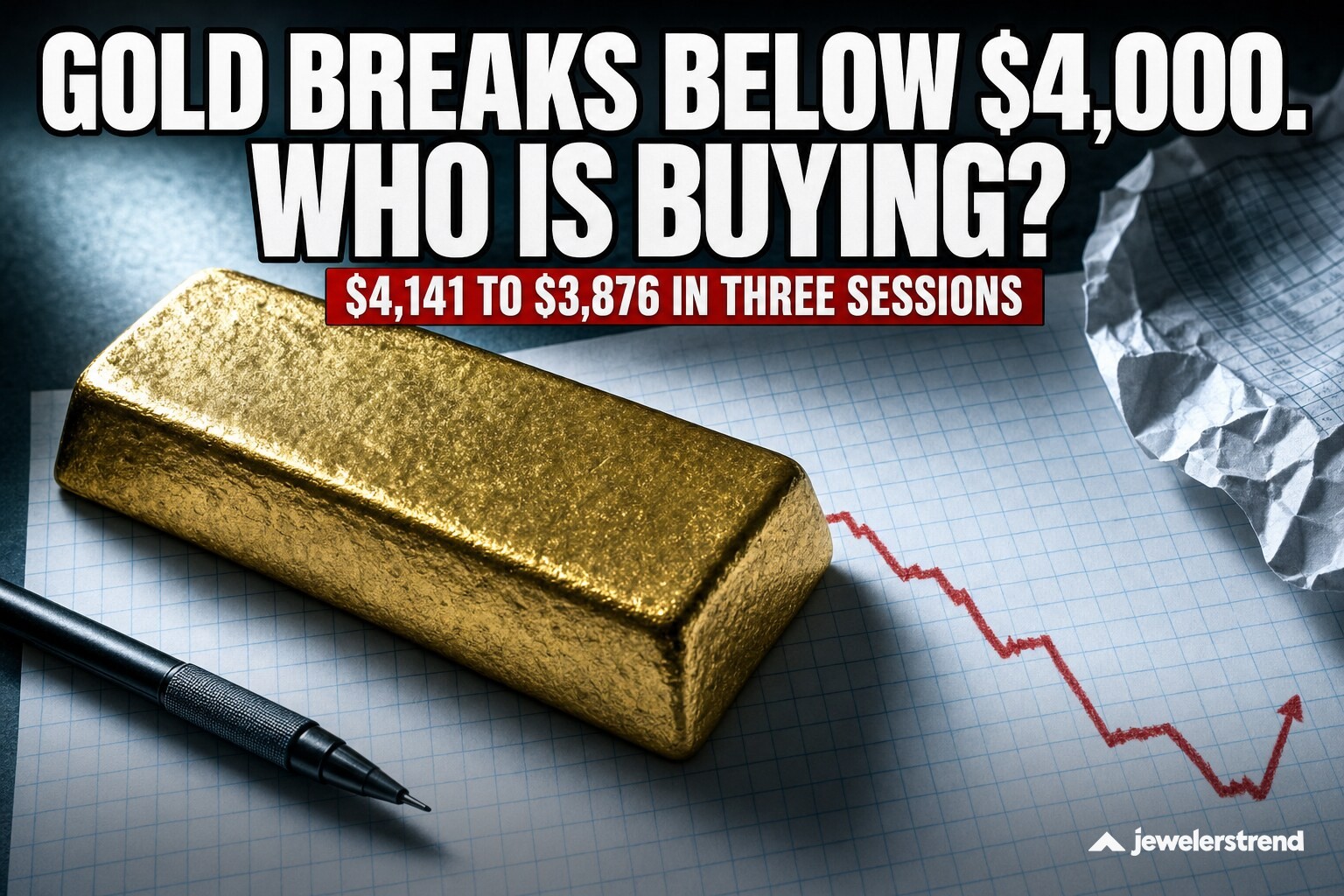
The week opened with gold at $4,141, where it closed on Monday, November 9. By Thursday it was changing hands near $3,876.40. That is roughly $265 an ounce off the Monday close in three sessions, and the move started with one data release: October consumer prices rose 0.4%, more than expected, and the metal sold off on the print.
Session by session
- Monday, Nov 9: gold closed at $4,141.
- Tuesday, Nov 10: CPI rose 0.4% for October, above expectations, and gold fell about 3% to $4,013.29.
- Wednesday, Nov 11: spot climbed as high as $4,066.77 before falling 1.2% to $3,983.55.
- Thursday, Nov 12: spot changed hands near $3,876.40, down $110.60 or 2.77%.
- Friday, Nov 13: gold rose to $3,914.60, up 0.98% from Thursday, per Trading Economics CFD data.
From the dealer side, Wednesday is the session I would study. Gold climbed back to $4,066.77 intraday, the kind of bounce that tempts a counter into treating the CPI drop as a one-day event. It then fell 1.2% to $3,983.55, and Thursday took another $110.60 off. Anyone who paid up for scrap on that Wednesday bounce learned the lesson within 24 hours.
Why CPI hit gold this hard
In a textbook, hotter inflation helps gold. In practice the trade reads a 0.4% monthly CPI print through the rate lens. Hotter inflation usually means a Federal Reserve less inclined to cut, which tends to support the dollar and real yields, and both work against a metal that pays no income. That is the standard reading of Tuesday's move. Whether it fully explains Thursday's further 2.77% drop is less clear.
India: cheaper metal, wider premiums
Physical demand shows up in the premiums. In India, 24K gold was Rs 1,38,490 before taxes and making charges on November 13, Rs 1,310 less than on Thursday. Dealer premiums widened to as much as $8 an ounce, up from up to $4 the prior week, per Finimize. Premiums that widen into a falling price usually mean local buyers are taking metal faster than dealers can replace it. Listed jeweler Kalyan Jewellers slipped 1.28% on the day.
That matters on this side of the Pacific too. Dip buying in India has a habit of putting a soft floor under spot, and a premium that doubled from $4 to $8 is the clearest sign this week that buyers, not sellers, are testing it.
The official sector was still buying
The official-sector data predates the selloff but is worth restating. The World Gold Council put third-quarter central bank purchases at 321 tonnes, up 42% from the same period a year earlier. One country added 26 tonnes in October, taking its total holdings to 2,435 tonnes. Neither figure captures this week's move, but both describe the buyer least likely to react to a single CPI print.
For a dealer, the combination is the useful part. Price-sensitive buyers in India paying wider premiums and official buyers who were adding metal through October make a different setup from a market where the only bid is speculative. It does not tell you where the bottom is. It does tell you who is likely to be buying near it. Our weekly trade wrap covers how the gold move sat alongside the Geneva auctions and the De Beers news.
What this means at the counter
Retail jewelers price finished gold off spot with a lag, and a $265 slide in three sessions squeezes that lag from both ends. A shop that bought metal near $4,141 is holding inventory that cost more than it would to replace. A shop that reprices down quickly gives up margin it may want back if Friday's 0.98% bounce holds. Neither choice is comfortable with the holiday season starting.
The same squeeze shows up on the diamond side, covered in this week's diamond pricing report, where small natural goods are falling in price at the same time as metal. A cheaper gold setting does not offset a softer stone price, but it does change the arithmetic on a finished piece.
Levels I am watching
Three numbers from this week frame the next. Wednesday's high of $4,066.77 is where the post-CPI rally failed. Thursday's $3,876.40 is the lowest level among the week's reported prices. Friday's $3,914.60 is where the bounce stands. A move back through $4,000 puts Wednesday's high in play. A break below Thursday's level erases the bounce and then some.
The question for next week is whether the Indian premium of up to $8 an ounce holds with spot under $4,000, or narrows back toward the $4 it was a week ago.



Comments 0
Sign in or create a free account to join the conversation.
No comments yet. Be the first to share your thoughts.