
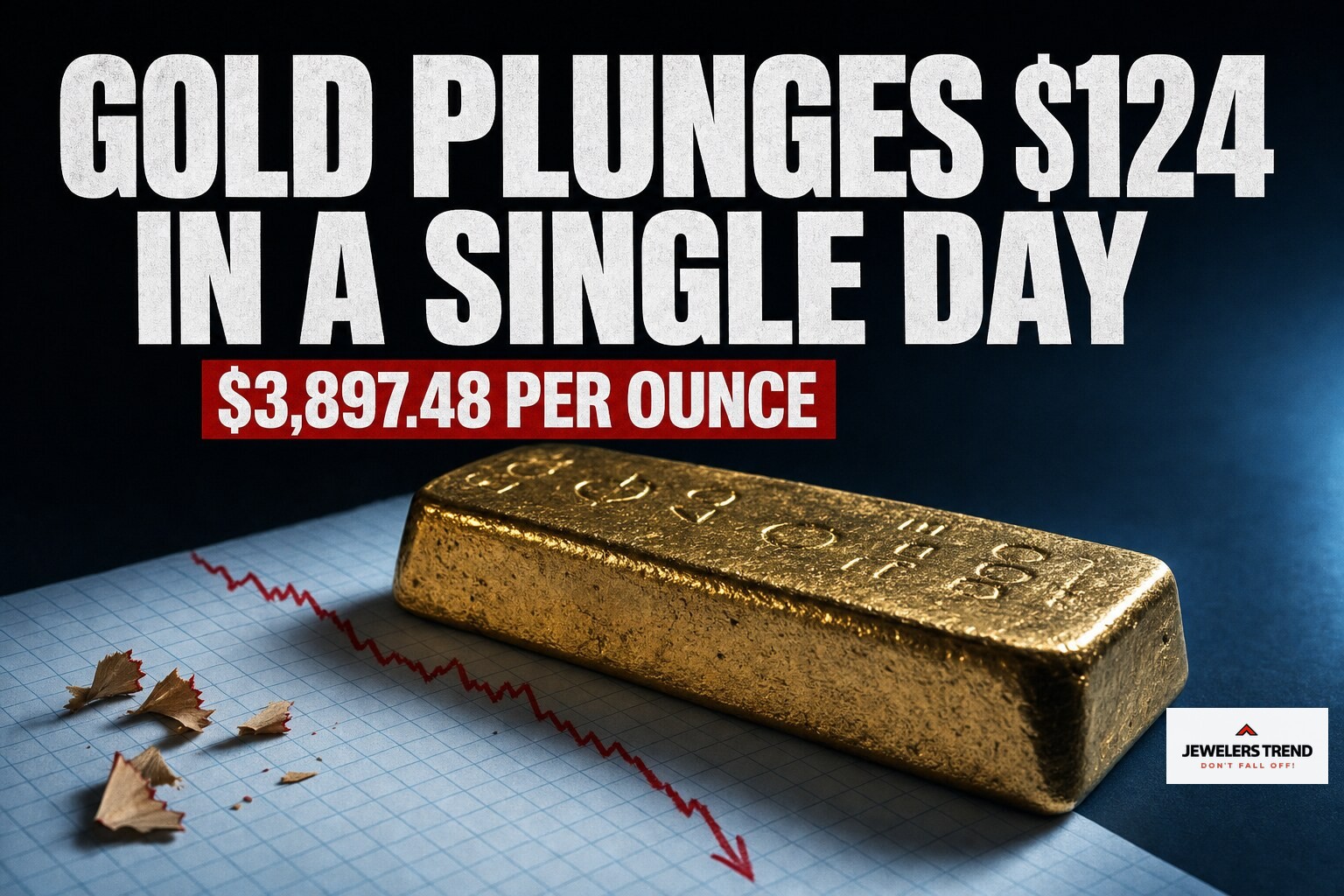
Gold spot traded at $3,897.48 an ounce on Friday, October 30, down $124.03 on the day, a 3.08% drop. That is the kind of session that rewrites every scrap quote and bullion bid in the trade before the weekend. It also takes the metal below $4,000 and through $3,900 in one move.
How October Unwound
The slide has been building through the month. On October 20, gold traded at $4,120, down $44 from the prior day and $196 lower than a year earlier. By October 26 it was at $4,016, down $16 from October 23 and $118 below its year-ago level. Friday's print sits under both of those marks. Those year-over-year comparisons matter for anyone who has been telling customers gold only goes one way. On both of those dates, the metal was trading below where it stood a year earlier.
The Official Sector Has Not Left
What the trade should keep in view is the buyer underneath this market. The World Gold Council reported on October 6 that central banks posted 39 tonnes of net gold buying in August and 170 tonnes through the first eight months of 2026. China added 20 tonnes in August. Poland and Uzbekistan each added 8 tonnes. PBOC data released October 7 showed China adding 740,000 ounces to reserves in September, the 23rd month of accumulation.
Poland and Uzbekistan at 8 tonnes each in August are worth noting too. Neither is a headline buyer the way China is, but steady mid-sized purchases from several countries make the official bid broader than one central bank's policy. That breadth is what keeps a day like Friday from turning into a rout.
The full-year forecast for central bank buying in 2026 is 720 tonnes, roughly 15% below the previous year but still above pre-2022 levels. Read that carefully. The official sector is buying less than it did, but it is still buying at a pace the market did not see before 2022. My read is that a 15% step down in that bid is one reason spot has struggled to hold $4,000 this month, and 39 tonnes in a single month is one reason I do not expect the floor to fall out entirely.
China is the name the trade watches. Twenty tonnes in August and 740,000 ounces in September, with the accumulation now running 23 months, is not a buyer that panics on a 3.08% day. When the PBOC reports its October number next month, that figure will tell us more about where support sits than any chart pattern.
What the Drop Means at the Counter
For retail jewelers running a gold buying counter, Monday will be awkward. A customer who heard $4,000 on the news a few weeks ago will walk in with chains and broken bracelets and hear a lower number. Some will sell anyway. Others will hold. My experience on the dealer floor is that a sharp drop slows scrap flow for a week or two, then sellers come back once they accept the new level. Refiners will likely see the same lag in lot sizes.
On the bullion side, the dynamic runs the other way. A one-day drop of $124.03 tends to bring in buyers who sat out the run above $4,000. Coin and small-bar demand from retail investors usually firms on days like Friday, and dealers who were long inventory going into the session will be looking to move it into that bid.
For manufacturers and finished-goods buyers, a lower metal price eases mounting costs going into the holiday quarter, which matters for natural and lab-grown settings alike. Lab-grown pricing is falling too, as our jewelry desk lays out this week, so the center stone and the metal are both getting cheaper at once for anyone building lab-grown bridal.
Where This Fits in the Week
Gold was not the only number moving. Swiss watch exports rose 11.7% in September on FH data, and Audemars Piguet launched its Watch Keepers certified pre-owned program on October 26. Those stories, and the rest of the week, are in the October 30 trade wrap. For dealers who carry both, the holiday inventory call is being made against a falling metal price and a firming watch market at the same time.
What to Watch Next
Three numbers will set the tone into November. First, whether spot reclaims $3,900 or extends below Friday's $3,897.48 print in the first sessions of the week. Second, the World Gold Council's September central bank figures, which will show whether the 39 tonnes reported for August was a steady pace or a high point. Third, the PBOC's October reserve data, which will show whether China extends its accumulation to a 24th month.
With 170 tonnes reported through August against a 720-tonne forecast for the year, the question for the trade is whether the official sector steps up its buying at prices under $3,900.


Comments 0
No comments yet. Be the first to share your thoughts.