Gold Vermeil vs Gold Plated: A Buyer's Guide
Vermeil and gold plated pieces can look identical under studio lighting, yet they are built to different standards and age in very different ways. Learning to tell them apart protects both your money and your expectations.
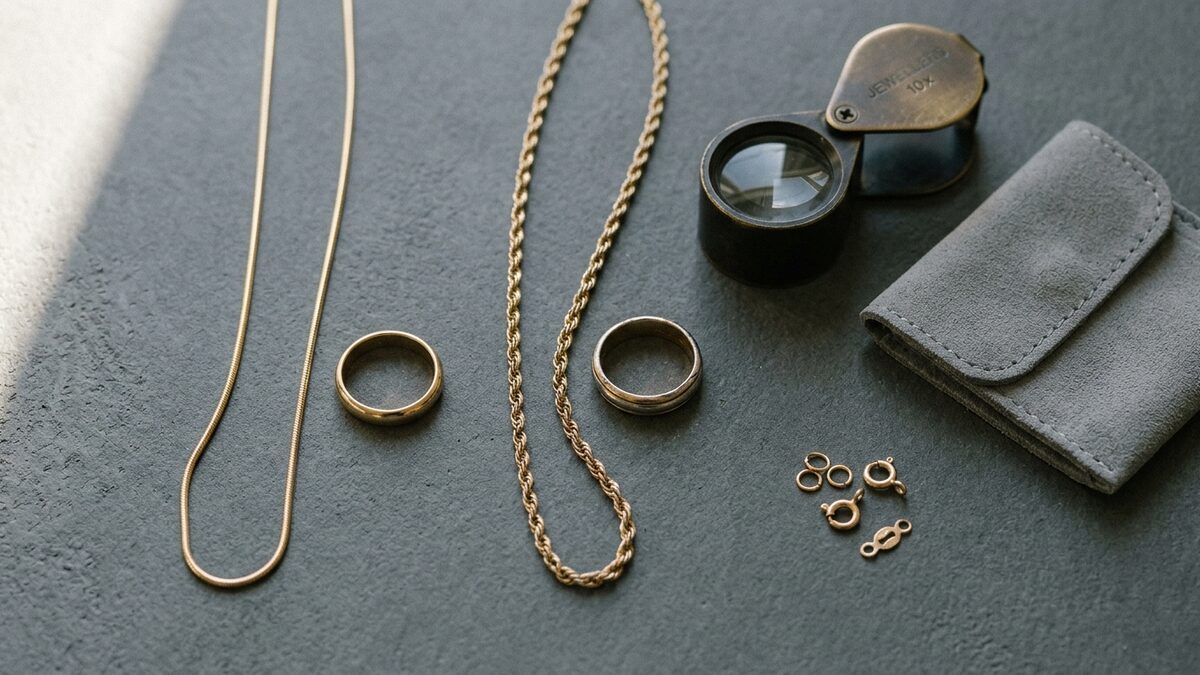
Two necklaces can look identical in a product photo and cost wildly different amounts, and the reason often comes down to two words in the description: vermeil and plated. Both describe a thin layer of gold over a cheaper metal, so shoppers treat them as synonyms. They are not. The distinction decides how the piece feels, how long it keeps its color, and whether the price is fair.
How gold vermeil and gold plated jewelry are actually made
Both finishes start with a base metal and add a surface layer of gold, usually through electroplating, where an electric current bonds gold ions to the piece. What separates the two is regulated in some markets and vague in others. Gold plating is the broad category: any base metal, most often brass, with a gold layer that can be as thin as a fraction of a micron. So-called flash plating may use only 0.5 microns of gold, which is enough for a bright photo and a season of light wear.
Gold vermeil is a specific, stricter grade of plating. In the United States, the Federal Trade Commission sets two conditions: the base must be sterling silver, and the gold layer must measure at least 2.5 microns and be 10 karat or higher. That silver core is the quiet advantage. It costs more than brass, resists tarnish differently, and sits closer to fine jewelry in feel and weight. When a seller says vermeil and means it, you are buying a real silver piece wearing a comparatively generous coat of gold.
The thickness gap explains almost everything you will notice later. A 2.5 micron vermeil layer is roughly five times deeper than budget flash plating, and that depth is what stands between the gold and the skin's oils, friction, and moisture that eventually wear it away. Thickness is not the only variable; the karat of the gold, the presence of a nickel or palladium barrier layer, and the quality of the plating bath all matter. But depth is the number that most reliably predicts how long a piece keeps its color.
Neither finish is permanent. Gold is soft, and every plated surface thins with contact. On a plated brass ring worn daily, the high points can start to show base metal within months, often as a dull gray or a faint green where skin reacts with the alloy. Vermeil ages more gracefully thanks to its thicker layer and silver core, so a well-made vermeil chain can hold its finish for years with reasonable care. Earrings and pendants, which take less friction than rings and bracelets, outlast both categories regardless of grade.
Care extends either lifespan. Both finishes dislike the same things: perfume, lotion, chlorine, and abrasive polishing cloths that scrub gold away faster than any chemical. Putting jewelry on last when getting ready, taking it off before showers and swimming, and storing it dry in a soft pouch all buy extra years. None of this changes the underlying grade, but it narrows the gap enough that a cared-for plated piece can outlast a neglected vermeil one.
How to read a listing and know what you are paying for
Product descriptions are where the money is won or lost, because the same photo can front very different construction. Start with the base metal. If a listing says gold plated but never names what sits underneath, assume brass or an unspecified alloy. If it claims vermeil, look for the words sterling silver and a micron figure. A seller confident in genuine vermeil will usually state both, since the silver base is a selling point, not a cost to hide.
Watch for language that borrows the prestige of vermeil without the substance. Phrases like gold over silver or 18k gold finish sound reassuring but carry no minimum thickness. If no micron number appears anywhere, treat the piece as standard plating and price it accordingly. Terms such as gold filled describe yet another method, a mechanically bonded layer that is thicker than most plating, so do not read them as interchangeable with either vermeil or plated.
Price is a useful sanity check. A ring sold for a few dollars is almost certainly thin plating over brass, whatever the title claims. Genuine vermeil carries the cost of its silver, so a suspiciously low price on a vermeil label is a reason to ask questions rather than to celebrate. When a shop lists the karat, the micron depth, and the base metal together, that transparency is itself a signal of quality, because sellers who cut corners rarely volunteer the numbers that would expose it.
One more line worth checking is whether a piece can be re-plated. A vermeil item with a solid silver base can be sent back to a jeweler and re-coated once the gold thins, which spreads its cost over a much longer life. Thin plating over brass is rarely worth re-plating, since the labor can exceed the value of the piece. Factoring that into the math often makes vermeil the cheaper option over several years, even when its sticker price is higher on the day you buy.
Finally, match the finish to how you will wear it. For a daily ring that meets keys, countertops, and handwashing, spend up toward vermeil or heavier construction, since thin plating will not survive the abuse. For occasional earrings or a pendant that rarely touches anything, lighter plating can look excellent for a long time at a fraction of the cost. The right choice is not always the thickest gold; it is the finish whose lifespan fits the life you plan to give it.
Vermeil and plating are not a matter of real versus fake gold. Both are real gold on a base, and both have a place. The difference is measurable: a silver core and at least 2.5 microns of gold on one side, an unregulated and often much thinner layer on the other. Read the base metal, look for the micron number, and let the price and the wear pattern confirm the story. Once you know what those words promise, a listing stops being a guess and starts being a spec sheet.