How to Clean and Store Fine Jewelry at Home
Fine jewelry rarely fails because of one dramatic event. It dulls slowly, from skin oils, lotion, dust, and the quiet friction of pieces rubbing against each other in a drawer. The good news is that most of what a professional cleaning restores can be maintained at home with warm water, a soft brush, and a little discipline about where things live between wearings.
Before you clean anything, look at what you are holding. A solid gold band with no stones tolerates far more than a strand of pearls or an emerald ring, and treating them the same is how good pieces get damaged by well-meaning owners. Identify the metal, note whether there are stones, and consider how those stones are set. Once you know that, the method almost chooses itself.
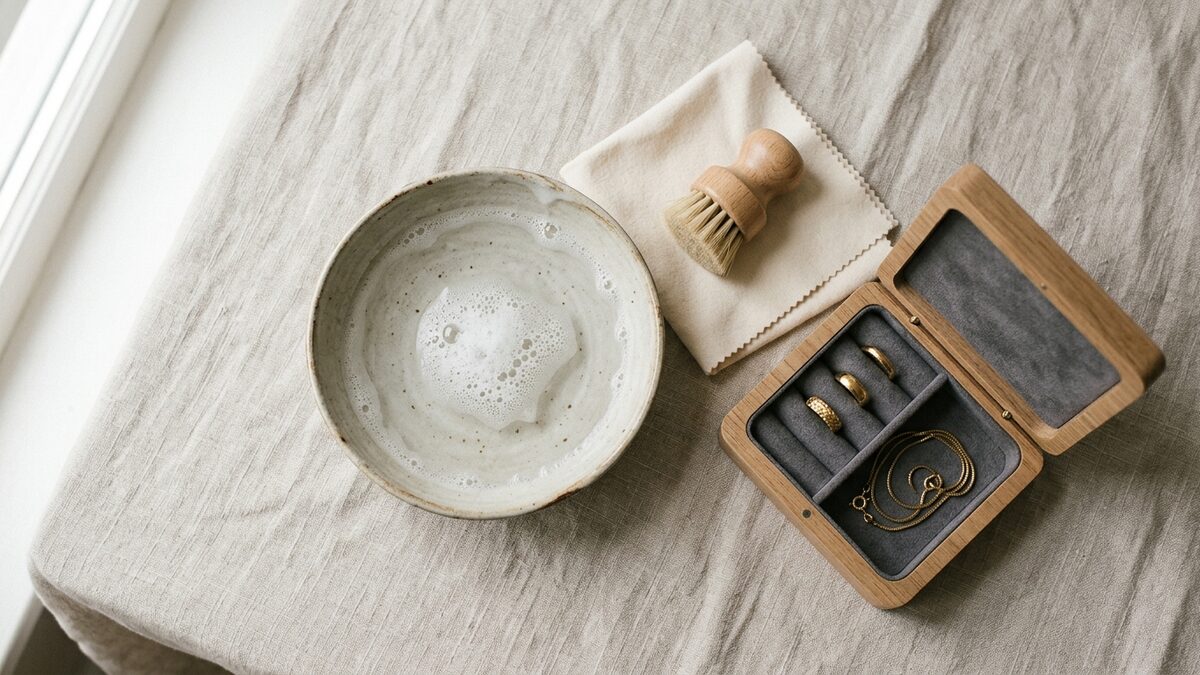
The safest all-purpose approach is a bowl of warm (not hot) water with a few drops of mild dish soap. Let the piece soak for a few minutes to loosen buildup, then work gently around settings and under the gallery with a soft toothbrush or a dedicated jewelry brush. Rinse in a separate bowl rather than under a running tap, because an open drain has claimed more earrings and loose stones than any thief. Pat dry with a lint-free cloth and let the piece air out fully before it goes back into storage.
Cleaning by metal and stone type
Gold and platinum are forgiving. The warm water and mild soap method suits them well, and a soft polishing cloth brings back shine on plain surfaces. Avoid abrasive cloths or toothpaste, which leave micro-scratches that accumulate into a permanent haze over time.
Silver has one enemy above all: tarnish, the dark film that forms as it reacts with sulfur in the air. A dedicated silver polishing cloth handles light tarnish. For heavier cases, a silver-specific cleaner works, though it should stay away from any gemstones. The better long-term answer is prevention through storage, which we come to below.
Diamonds are hard and chemically stable, so a soak and a gentle brush restore their sparkle easily; the dullness is almost always a film of oil on the underside, where you never think to clean. Softer and more porous stones need more care. Pearls, opals, turquoise, and emeralds should never soak. Wipe pearls with a damp soft cloth after wearing and let them dry flat, since the string can stretch when wet. Opals and turquoise dislike prolonged water and harsh cleaners. Emeralds are commonly treated with oils to improve clarity, and aggressive cleaning can strip that treatment, so a quick wipe is the sensible ceiling for them.
A few habits protect every category. Take rings off before applying lotion, perfume, or sunscreen. Remove pieces before swimming, since chlorine attacks alloys and can weaken solder joints. Keep jewelry away from bleach and other household chemicals entirely. And skip the ultrasonic cleaners sold for home use unless you are certain your stones can handle the vibration; they can shake loose stones in worn settings and crack the more fragile gems.
Storage habits that prevent damage
Most at-home jewelry damage is storage damage. Pieces tangle, chains knot, and harder stones scratch softer ones when everything shares a single box. The fix is separation. Give each piece its own compartment, pouch, or soft cloth. A lined box with individual slots works, and small anti-tarnish bags are inexpensive insurance for silver and gold.
Store necklaces flat or hung so they cannot knot, and fasten each clasp before putting it away, which stops chains from threading through themselves. Stud earrings do well in a small dish with dividers or pushed through a piece of felt so pairs stay together. Rings and bracelets are happiest lying flat rather than stacked, where the underside of one can abrade the surface of another.
Environment matters more than people expect. Keep the storage area cool, dry, and out of direct sunlight, because heat and humidity accelerate tarnish and can fade certain stones over months. A silica gel packet tucked into the box absorbs moisture and slows the reactions that dull silver. Resist the instinct to store everything in the bathroom, which is the most humid room in most homes.
Pearls and organic materials want a little air rather than a sealed plastic bag, so a soft pouch or a lined compartment suits them better than an airtight case. And whatever system you choose, put pieces away clean and fully dry. Trapped moisture is what turns a minor issue into a stubborn one.
A reasonable rhythm keeps everything in good shape: a gentle wipe after each wearing, a proper soak-and-brush every few weeks for the pieces you wear most, and an honest inspection every so often. When you clean, glance at the settings. If a stone rattles, a prong looks bent, or a clasp feels loose, stop wearing the piece and set it aside for a jeweler. Home care keeps fine jewelry looking its best; it does not replace the occasional professional check that catches a problem before you lose a stone.