How to Choose Earrings for Your Face Shape
The right pair of earrings does something quiet and specific: it draws the eye where you want it and lets the rest of your face settle into balance. Choosing by face shape is less about rules and more about proportion, so this guide treats shape as a starting point rather than a verdict.
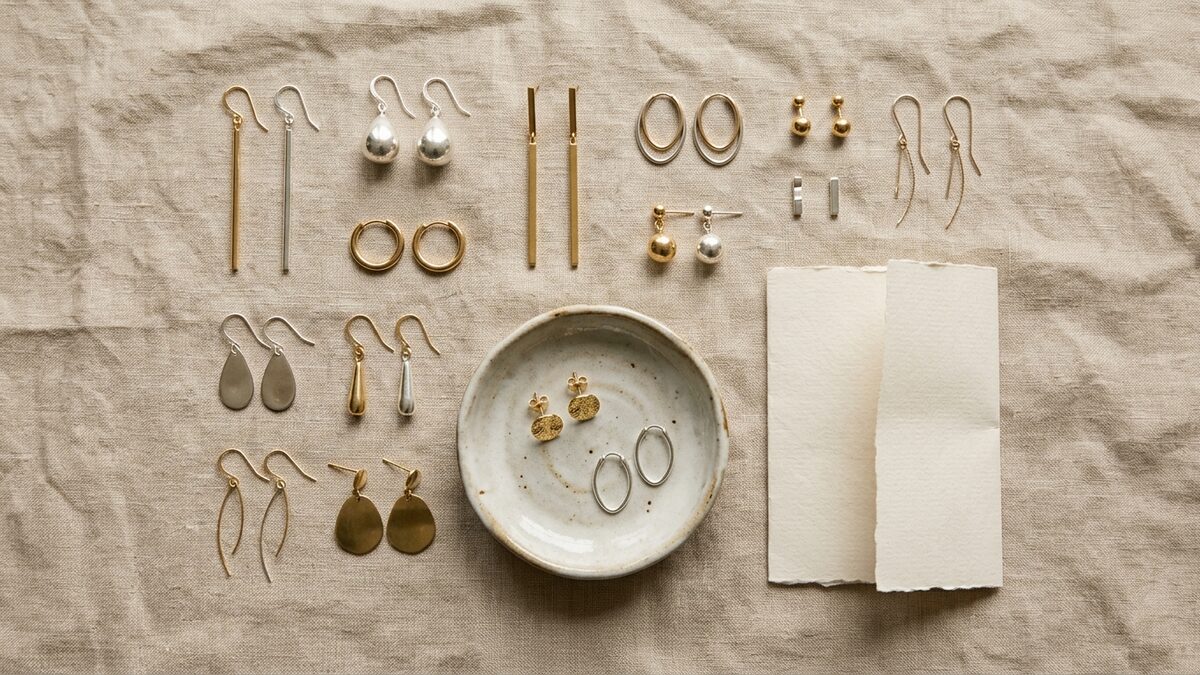
Before you think about your face shape at all, it helps to know what earrings actually do to a silhouette. A long drop lengthens. A wide hoop broadens. A compact stud stays neutral and lets your features lead. Every earring adds either vertical line, horizontal width, or a rounding curve, and matching that added line to what your face already has is the whole game. The aim is usually gentle contrast: introduce the quality your face has less of, and soften the quality it has more of.
To find your face shape, pull your hair back, look straight into a mirror, and notice three things: the width of your forehead, the width of your cheekbones and jaw, and how long your face reads from hairline to chin. You are looking for the overall impression, not exact measurements. Most people land somewhere between two shapes, and that is fine. Treat the descriptions below as leanings.
Matching earring silhouettes to each face shape
A round face reads with soft width and similar length. Earrings that add vertical line do the most here: linear drops, elongated teardrops, and slim rectangular shapes lengthen the look and trim visual roundness. Small buttons and wide hoops tend to echo the curve you already have, so keep hoops narrow and oval rather than large and circular if you want more definition.
An oval face is the flexible one. Because length and width are already balanced, most silhouettes cooperate. Studs, hoops, and drops all sit well, so you can choose by mood and outfit rather than by correction. The only thing to watch is very long, heavy drops, which can stretch an already balanced face longer than you intend.
A square face carries a strong, defined jaw and forehead of similar width. Curved shapes soften that structure beautifully: hoops, rounded drops, and teardrops introduce a gentle line that plays against the angles. Sharp geometric studs can reinforce the corners, which is a valid choice if you want to lean into that architecture rather than away from it.
A heart-shaped face is wider at the forehead and narrows toward the chin. Earrings that add a little visual weight low, such as teardrops, chandelier shapes, and pieces that widen toward the bottom, help balance the point of the chin. Very top-heavy studs can emphasize the wider forehead, so let the interest fall lower on the earring.
A long or oblong face benefits from width rather than more length. Studs, clustered shapes, and hoops that sit close to the face add horizontal presence and keep the proportions from reading even longer. Save the long linear drops for days when elongation is exactly the effect you want.
A diamond face has narrow forehead and jaw with the width at the cheekbones. Earrings that draw attention to the top and bottom, like drops with detail near the ear and a soft widening below, help fill the narrower zones and balance the cheekbone width.
Proportion, scale, and everyday wearability
Face shape gets most of the attention, but scale is what people actually notice first. An earring should feel proportional to your features, not just your face outline. Delicate features tend to be flattered by finer, smaller pieces, while stronger features can carry more size without being overwhelmed. Hold a pair up to your ear before committing and ask whether it competes with your face or complements it.
Neckline and hair length matter too. A high neckline leaves room for a longer drop, while a busy collar or a statement necklace usually asks for a quieter stud. Hair worn down softens and partly hides earrings, so larger shapes read as moderate; hair worn up gives every earring its full stage, so you can scale down and still be seen. Glasses count as part of the frame around your face as well, and a simple stud often keeps things from feeling crowded near the temple.
Comfort is the rule that quietly overrides the rest. An earring you keep touching, adjusting, or taking off by lunchtime is the wrong earring regardless of how well it suits your shape on paper. Weight, post length, and clasp security decide whether a pair becomes a daily favorite or lives in a drawer. If you wear earrings from morning to night, favor lighter metals and secure backs, and reserve the heavier statement pieces for shorter stretches.
Finally, give yourself permission to break your own guidelines. These pairings describe tendencies, not requirements, and the most memorable looks often come from someone wearing what they simply love. Use face shape as a helpful nudge toward balance, then let personal taste, occasion, and the pieces that make you feel most like yourself have the final say.