Gold Karats Explained: 10k, 14k, 18k Compared
A karat number tells you how much of a piece is gold and how much is something else. That one ratio shapes durability, price, and how a ring or chain behaves over years of wear.
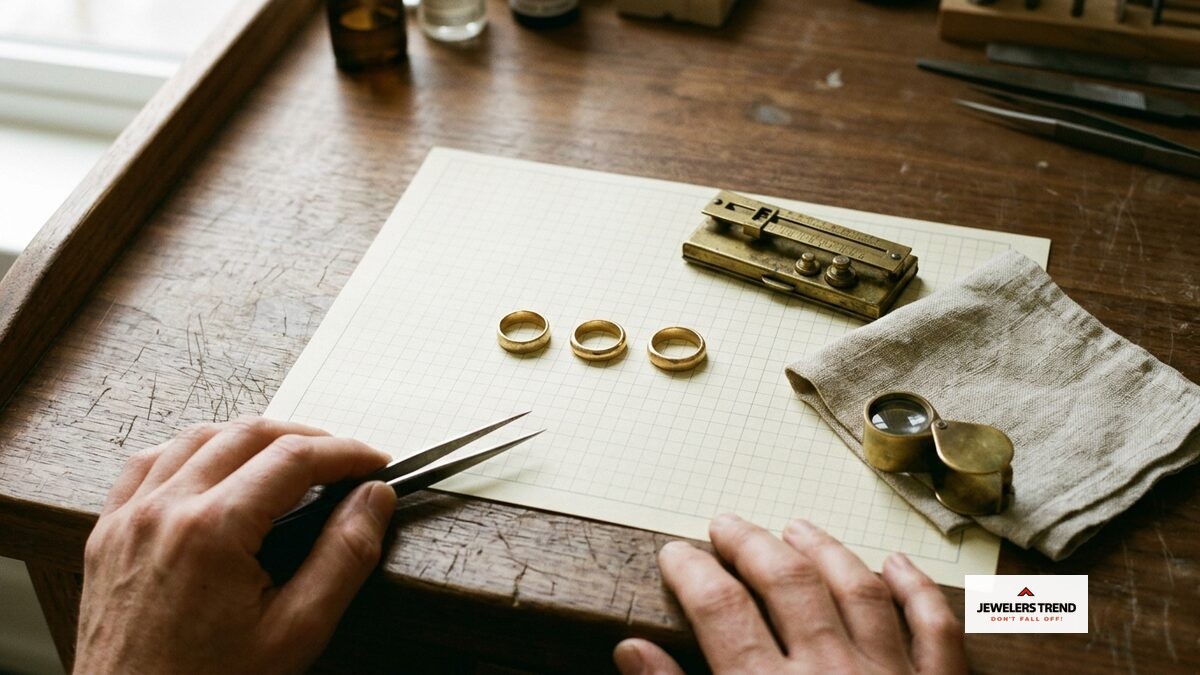
Karat is a unit of gold purity, read against a scale of 24. Pure gold is 24 karats, or 100 percent gold. Every lower number describes an alloy: some share of the metal is gold, and the rest is other metals blended in to change how the piece behaves. A karat figure says nothing about craftsmanship, stone quality, or design. It answers one question, which is how much of this object is gold.
The standard purities for the three karats in this guide are 75 percent gold for 18k, 58.5 percent for 14k, and 41.7 percent for 10k. Two others sit above them: 22k at 91.7 percent and 24k at 99.9 percent, as the JewelersTrend price index lists them.
Why not make everything 24k? Because pure gold is soft and scratches easily, which is why it is prized more for ceremonial items than for everyday wear. Adding other metals trades some gold content for strength. 22k stays very lustrous and is stronger than 24k, and it is well loved for detailed work in cultures that prize the look of gold. Below that, the three common choices for jewelry break down like this:
- 18k (75 percent gold): the balance point between purity and durability. It holds more gold than the other two, with enough added metal to stand up to regular use.
- 14k (58.5 percent gold): the practical middle. It is more resistant to wear and tear, which suits people with active lifestyles.
- 10k (41.7 percent gold): the most durable and the most cost-effective of the three, with the lowest gold content.
Durability runs opposite to purity. As gold content falls, the share of other metals rises, and the piece resists scratches and daily knocks better. That is the logic behind 10k's reputation as a workhorse and 18k's reputation as the more refined choice. The trade-off runs both ways: a lower karat gives you toughness and a lower price, while a higher karat gives you more gold in every gram.
Color is the hardest of the three to judge from a description. The sources we reviewed describe 24k as a bright yellow and note that lower karats are mixed with other metals, so what a piece looks like depends on the alloy as well as the karat number. The practical advice is plain but sound: look at real pieces side by side, in the light you will wear them in, before deciding that one karat looks richer than another.
Price follows gold content closely, and the trade publishes the numbers. In the JewelersTrend weekly index for the week ending October 9, 2026, gold closed at $4,194.35 per troy ounce. At that close, the melt value of the gold content alone was $101.14 per gram for 18k, $78.89 for 14k, and $56.23 for 10k. In other words, 18k carried about 28 percent more gold value per gram than 14k, and 14k about 40 percent more than 10k.
Two cautions apply to those figures. First, melt value counts only the gold in the piece. Per the index, retail and scrap offers sit below melt, while finished jewelry sells well above it, because design, labor, and stones are priced on top. Second, the numbers move. The same index shows gold falling 4.15 percent in the week ending October 2 and rising 1.27 percent the week after, so any per-gram comparison is a snapshot rather than a standing rule.
So how do you match karat to use? Start with how the piece will live.
- Daily wear (rings, bracelets, and chains that rarely come off): 14k is the usual answer, since it resists wear and tear. 10k makes sense where durability and budget matter most and you accept the lower gold content.
- Special-occasion pieces (earrings or a ring worn for events): 18k suits items that see lighter use, because the higher gold content matters more than extra hardness. 22k suits detailed work where the look of the gold itself is the point.
- Pieces where gold content matters to you: a higher karat carries more gold per gram, though design and the market price of gold both affect what any piece is worth later.
When you shop, ask that the karat be stated plainly on the tag or receipt, and compare pieces by weight as well as size, since the per-gram figures above scale with weight. Treat the melt numbers as a way to understand what you are paying for, not as a quote for any specific item. Karat is the first question to ask, but it is not the only one.