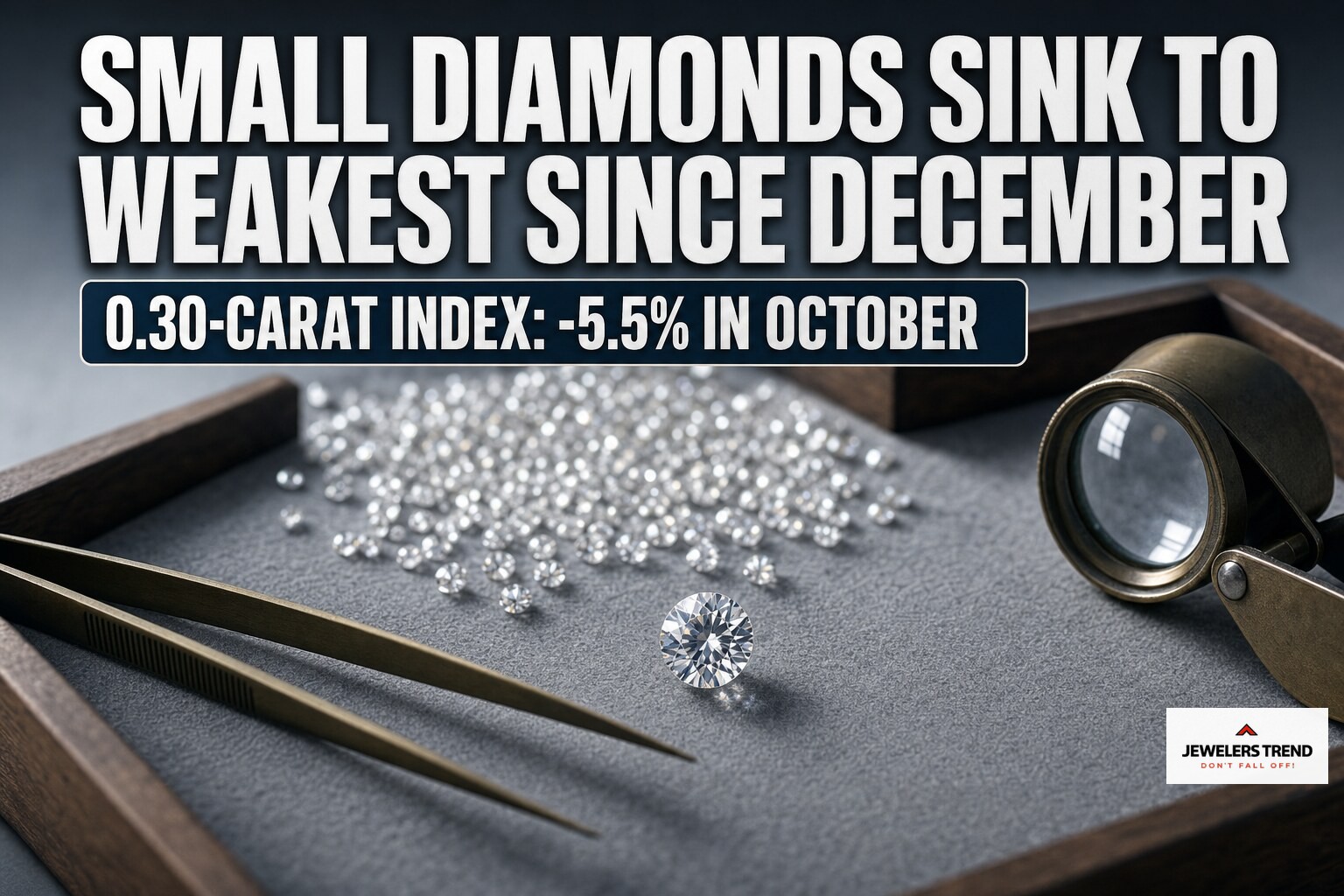
Rapaport's October price indices, published November 3, confirmed that the weakness in the natural diamond market has settled at the small end of the size range. The 0.30-carat index fell 5.5% in the month, the 0.50-carat index declined 2.3%, and the 1-carat index slipped 0.9%. The 3-carat index was the only one of the four to rise, gaining 0.9%. Rapaport noted on November 5 that the 0.30-carat index was at its weakest level since December 2025.
Supply is building where demand is softest
The more telling figure is not a price at all. The number of 0.30-carat rounds in RAPI qualities listed on Rapaport Trade grew 165% between June 1 and November 1, 2026. That is a supply indicator, and it explains a good deal of the October move. When the count of comparable goods on a trading platform more than doubles in five months, sellers compete on price, and the index follows.
The pattern is consistent with how the trade tends to behave ahead of the Indian festival season. Manufacturers clear inventory to raise liquidity, and dealers holding smaller goods, the sizes most exposed to lab-grown substitution, are the most motivated sellers. Whether the 165% figure reflects fresh production or goods released from existing stock is not something the listing count alone can answer.
The middle of the range held up better. A 2.3% decline in 0.50-carat goods and a 0.9% slip at 1 carat are modest next to the 0.30-carat move, and neither carries the same supply signal. October's damage was concentrated, not general.
De Beers holds the line, but buyers stay home
De Beers held its ninth sight of 2026 from October 26 to 30 and kept prices stable, according to Rapaport's November 2 report, following the price realignment it made in July. Sales volumes were low. Demand from sightholders was minimal ahead of India's Diwali factory shutdown, when cutting centers close and rough purchasing typically pauses.
Holding prices into a quiet sight is a defensible choice for a producer. Cutting rough prices in a week when buyers were not going to purchase in volume regardless would have given away margin without moving goods. The real read comes at Sight 10, scheduled for November 30 to December 4, after the factories reopen and manufacturers assess how much rough they need for the first quarter. The sale also takes place against the backdrop of Anglo American's unresolved disposal of its 85% stake in De Beers, which is covered in our industry report.
Natural and lab-grown pricing at 1 carat
At the 1-carat level, where the October index was nearly flat, The Diamond Price put the average for a natural round in G-H-I color and VS1-SI1 clarity at $3,490 per carat as of November 5. A lab-grown stone of the same size and grades averaged $630 per carat, about 82% below natural.
Retail pricing for lab-grown goods shows how wide the range has become within that category alone. Draco Diamond reported in October that high-grade loose lab-grown diamonds typically sell for $800 to $900 per carat at retail in 2026, while lower-grade goods typically sell for $200 to $250 per carat. That spread is a sign that grading now matters in a category often marketed on size and price alone.
What the numbers mean for retail
For jewelers, the October data cuts two ways. Weaker pricing on 0.30-carat and 0.50-carat goods lowers replacement cost on the smaller sizes used in fashion pieces, anniversary bands and entry-level solitaires. At the same time, it erodes the inventory value of stock bought earlier in the year. Retailers who bought small goods in the first half are now carrying them above current trading levels.
The firmness in 3-carat goods points to a different buyer. Larger natural stones remain the segment where lab-grown substitution has the least pull on pricing, and the 0.9% October gain in that index is consistent with that. Metal prices complicate the setting side of the equation. Spot gold was $4,049.69 an ounce on November 6, and the metal's effect on finished goods is detailed on our gold desk. JCK reported that gold jewelry consumption fell 17% year over year in the third quarter, a figure set against the rest of the week's data in the Friday trade wrap.
The Sight 10 question
The question for Sight 10 is whether manufacturers returning from Diwali will absorb the build-up of 0.30-carat goods on the trading platform, or whether a 165% rise in listings since June pushes the small-stone index lower again in November.


Comments 0
No comments yet. Be the first to share your thoughts.