October's trade show calendar ended on October 27 when JA New York Fall closed at the Jacob Javits Convention Center. The show ran October 25-27 and was the last of five trade events on the month's calendar. For retailers, the timing matters because these are among the last buying opportunities before holiday inventory has to be in the case.
The sequence ran as follows. The Select Jewelry Show held dates on October 11-12. The Jewelers International Showcase followed on October 16-19. The International Watch & Jewelry Guild's IWJG New York Show took place October 19-20 at the TWA Hotel at JFK Airport, overlapping the final day of JIS. The Select Jewelry Show returned with a second set of dates on October 25-26, and JA New York Fall ran October 25-27, putting two events on overlapping dates.
Five events between October 11 and October 27 is a dense schedule, and it falls in the window when retailers finalize holiday assortments and fill gaps in bridal and gifting inventory.
Overlapping Dates and Divided Buyers
Overlaps of this kind force choices for independent retailers with small buying teams, who cannot always cover simultaneous events. The one-day overlap between JIS and IWJG on October 19 and the two-day overlap between Select and JA New York Fall on October 25-26 put that choice to buyers twice in the same month. The formats differ. IWJG, run by the International Watch & Jewelry Guild, was held at a hotel venue, while JA New York Fall occupied the Javits Center, the city's main convention hall.
Attendance and order-writing figures for the five events were not available at the time of writing. The more useful measure of what buyers committed to on these floors will be holiday sell-through, which public retailers typically report in January.
The Luxury Backdrop
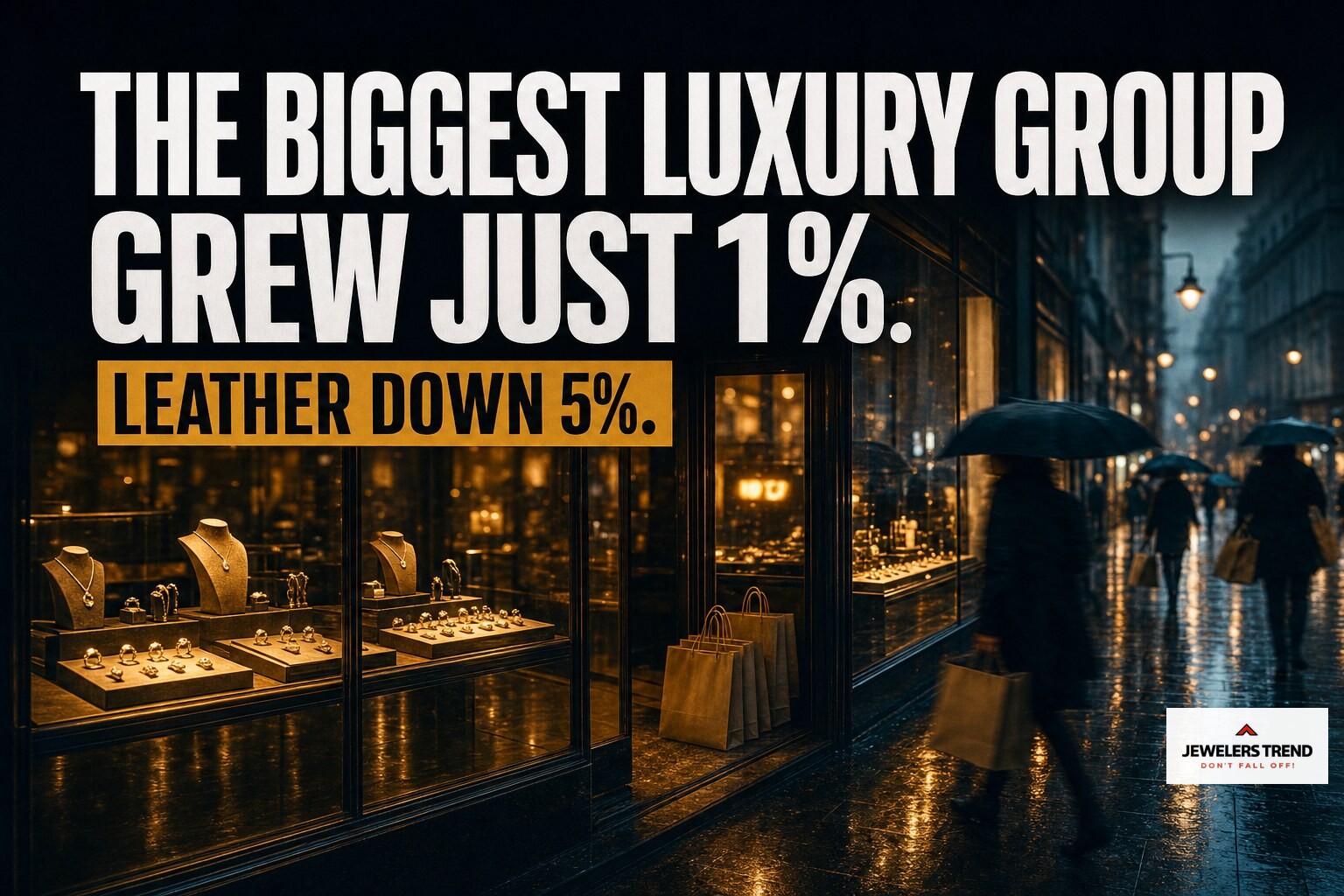
The buying took place against a soft read from the largest luxury group. LVMH reported third-quarter results on October 12, with organic sales up 1% to €18.5 billion. The Fashion & Leather division declined 5% in the quarter.
A 1% organic growth rate at group level, with the leather business shrinking, indicates that the high-end consumer remained selective through the summer quarter. For U.S. Independent jewelers, the read-through is indirect but relevant. The same high-end customer shops for fine jewelry and watches, and a group-level growth rate of 1% does not suggest a consumer adding categories. Swiss export data points the other way: the FH reported September watch exports up 11.7%, as covered in this week's watch desk report. Shipments to distributors and retail sell-through are different measures, and the October shows sit between the two.
Input Costs Moving Before Holiday
Two pricing inputs moved sharply during and after the show run. Gold spot fell 3.08% on October 30 to $3,897.48 an ounce, which lowers metal costs for goods ordered on gold-plus-labor terms. The detail is in the gold desk report. Lab-grown diamond prices fell 11% in the month to October 18 on StoneAlgo's index, and 27% over the year. Buyers who wrote lab-grown orders at JIS or Select in mid-October may already be holding goods priced above current replacement cost.
On the natural side, Rapaport's September indexes showed the 0.30-carat category up 3.2% and the 0.50-carat category up 2.5%, while the 1-carat index rose 0.3%. Retailers who bought natural small goods on the October floors did so into a rising price list, following the Rapaport Price List increase of September 11 for certain round 0.30- to 0.69-carat goods. The full diamond picture is in the jewelry desk report on lab-grown pricing.
What Comes Next
With the October calendar complete, the remaining variables for independent retailers are execution and pricing. For most stores, holiday goods will be largely committed by now. What is not yet known is whether the 1% organic growth LVMH reported for the third quarter describes the fourth-quarter consumer as well, or whether the strength in Swiss watch exports, which rose 2.7% to 19.5 billion francs in the first nine months, carries through to retail.
Retailers face a further structural question from the brands. Audemars Piguet launched its certified pre-owned program, Watch Keepers, on October 26, following Rolex, whose CPO program generated an estimated $229 million in Q3 2026 according to Morgan Stanley and WatchCharts. Brand-run pre-owned programs bring secondary sales under manufacturer control. For authorized dealers who participate, that is a new revenue line. For independent pre-owned dealers, it is new competition for supply.
The next data points arrive quickly. The FH's October export figures will show whether September's 11.7% gain was sustained into the show month. Whether jewelers who bought on the October floors priced their holiday assortments for a 1% luxury consumer or an 11.7% watch market is the question January's results will answer.


Comments 0
No comments yet. Be the first to share your thoughts.