
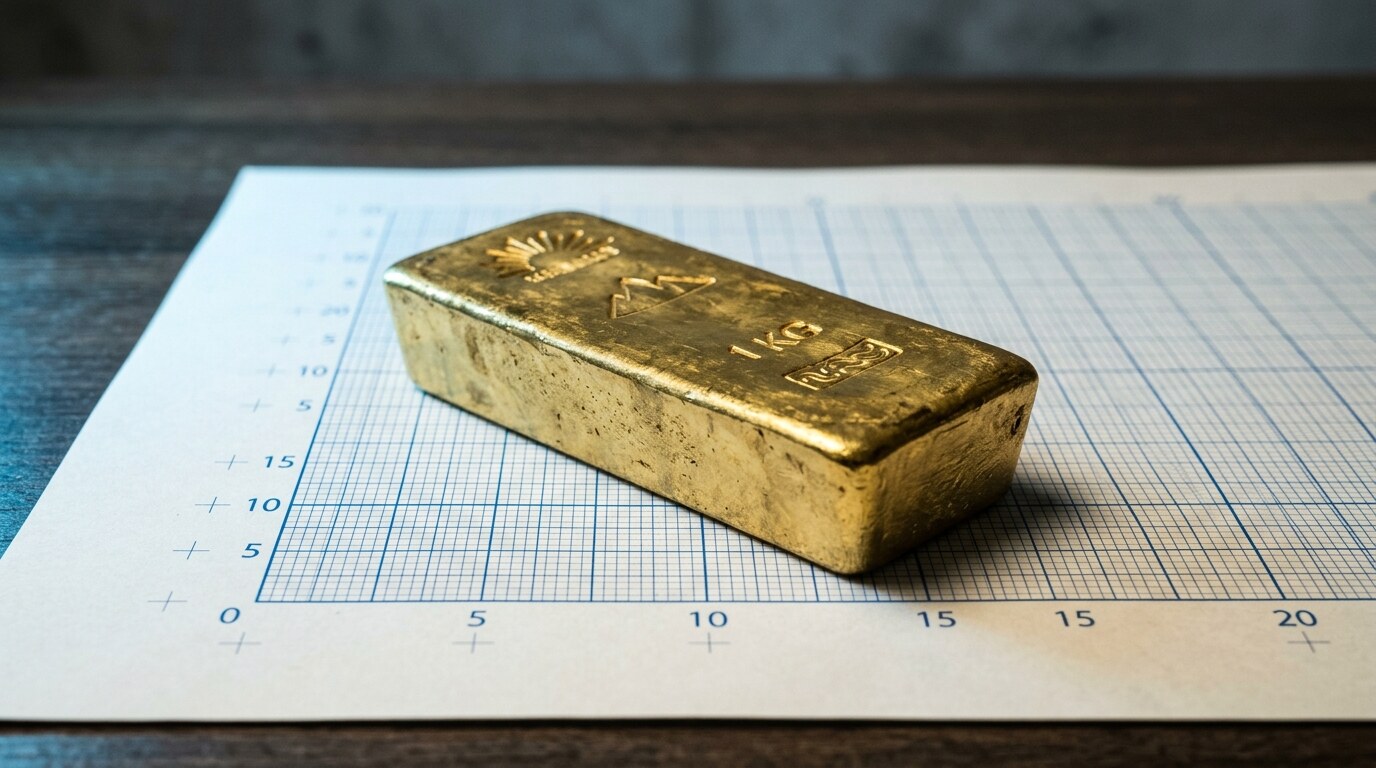
Gold rose to $4,530 an ounce on Thursday, August 21, holding near the June highs and giving the refining accounts a melt window that stayed open all week. The move follows a session on August 20 where the metal eased below $4,500 but held onto most of a 4%-plus surge from the prior day. That is the pattern I watch for: a sharp move up, a shallow give-back, and a close that keeps the gain. It tells you the bid is real and not just a squeeze. On the dealer floor, the difference between those two reads is the difference between quoting a firm melt number and hedging every ticket you write. This week I was quoting firm.
The numbers I am quoting
For the accounts that price off spot, JM Bullion had gold at $4,595.91 an ounce Thursday morning at 4:54 AM EDT. That works out to $147.76 a gram and $147,761.94 a kilogram. Those are the figures I am handing to scrap and refining desks this week, and they are the reason the melt bid held firm across the floor. When spot sits this high and this steady, the intrinsic conversation gets easy: heavy precious-metal pieces carry a floor under them that a soft retail market cannot erode. A case dealer sitting on a tray of gold-cased pieces knows the worst outcome is the refiner's number, and at $147.76 a gram the refiner's number is not a punishment anymore. It is a genuine backstop, and that changes how aggressively you can bid at the counter.
The spread between the $4,530 print I lead with and the $4,595.91 quote on the retail side is worth a word, because both are honest and they answer different questions. The lower figure is the tape everyone watches for direction. The higher figure is what an account actually gets executed against when they price a lot off spot. On a kilogram that gap is real money, and it is the first thing a refining desk asks about before it commits.
Why the floor is not fading
The support underneath the price has not shifted. Gold remained backed by steady investment demand and by continued central bank purchases, China in particular. That is the same structural bid that has driven the metal through this cycle, and it is why I am not treating $4,530 as a top to fade. Central bank buying is patient money. It does not chase and it does not panic out, which is exactly what keeps a floor firm through the dips like the one on the 20th. When your marginal buyer is a sovereign balance sheet rather than a momentum book, the give-backs stay shallow, because the patient bid steps in on weakness instead of selling into it.
Two edges for the bench
For the dealer and the bench, gold at this level is a two-edged tool. On one side, it props up the melt bid and lifts the intrinsic floor under heavy gold watches and estate pieces, which is a gift when the rest of the retail market is only steadying. That intrinsic support lines up with what the July Swiss numbers showed: the precious-metal watch category ran positive on the seven-month view at plus 3.7%, part of a headline 9.6% July jump to 2.6 billion Swiss francs, which I break down in the watch note. A firm gold price and a positive precious-metal watch line are not a coincidence. The metal is doing double duty, backing both the melt tray and the finished-goods case.
On the other side, a $4,530 spot widens the spread a retail buyer has to swallow on anything new in gold. That is the tension heading into fall show season: the melt floor helps the case dealer holding metal, but it stretches the ticket on fresh gold merchandise at a moment when the customer is willing but choosy. It is the same choosy-buyer read that ran through the watch and diamond data this week. The 1-carat diamond turnaround, which finally ended thirteen straight months of Rapaport declines, tells the same story from the stone side, and I lay that out in the diamond note. Demand is coming back, but it is coming back selective, and metal that prices at $147.76 a gram gives that selective buyer one more reason to think twice on new gold.
The level to watch
My working read is that the metal is consolidating near its highs rather than rolling over. The midweek dip below $4,500 that held most of the surge is the tell. A market that wanted lower would have given back more. With investment demand steady and central banks, led by China, still on the bid, the path of least resistance stays sideways to higher. I am not positioning the melt book for a break, and I am not hedging every finished piece as if $4,530 is a ceiling.
The open question for the floor is whether gold near $4,530 helps or hurts sell-through as the shows open. Select Jewelry Shows runs August 23 to 24 at the Ritz Carlton in Dallas, and that floor will be the first real test. It lifts the intrinsic story on heavy pieces and keeps the refining window open, but it also stretches the spread on new gold inventory. I pull the full week together in the week's wrap. The number I am watching into next week is simple: does the melt bid hold above $147 a gram once the Dallas floor closes, or does the show season give the tape its first real reason to fade?





Comments 0
No comments yet. Be the first to share your thoughts.