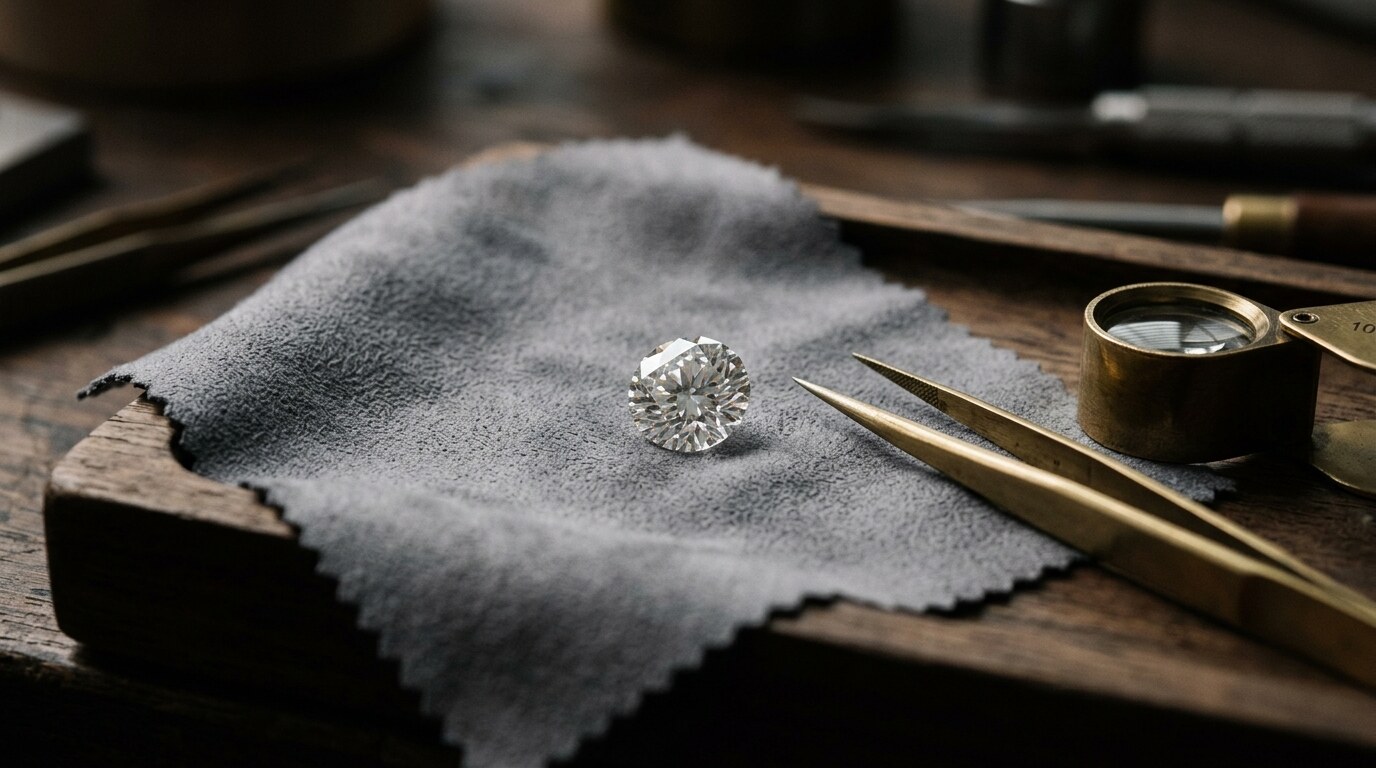
The polished diamond market printed its first constructive month in more than a year. According to Rapaport, all four major diamond categories posted flat or positive figures in July 2026, the first such month since March 2025. The RAPI for 1-carat diamonds held steady on the month, ending 13 straight months of declines. After a stretch that long, a flat month reads as a genuine inflection rather than statistical noise, and it changes the assumptions retailers carry into fourth-quarter buying.
Inside the July numbers
The composition of the turn matters as much as the headline. In 1-carat goods, D-F and G-J stones across IF-VVS and VS clarities averaged a 0.1% gain in July, reversing the 0.7% average decline recorded in June. The move is small, but the direction is the point. Thirteen consecutive months of erosion in the benchmark size had trained the trade to expect further markdowns at every sight and every memo return. A month that stops the decline changes how retailers price on the floor and how they plan the holiday assortment, because a stable base is something they can quote against without building in another leg down.
What the July data does not signal is a rebound in rough. De Beers second-quarter sight sales, reported by Anglo American, totaled $665 million, a 44% decrease from $1.2 billion in the same period last year. The per-carat average sales price fell roughly 37%, from $174 to $110. Sight volumes came in at 7.1 million carats, down from 7.6 million carats in the second quarter of 2025. So the miner moved fewer stones at sharply lower prices even as the downstream polished index found a floor. Those two facts sitting side by side define the state of the pipeline.
The rough-polished gap
That divergence is the number to watch into the fall. When polished prices steady while rough revenue drops 44%, it usually means the pipeline has finally worked through the inventory overhang that built during the long decline. Sightholders bought less because they were still clearing older goods, and lower rough prices ease the cost pressure that forced polished markdowns in the first place. If the July stability holds, the mechanism is tighter polished supply meeting demand that stopped shrinking, not a demand surge. That distinction matters, because a floor built on cleared inventory is more durable than one built on a single strong month of retail sell-through. Retailers heading into the fall show season will price against exactly that reality.
Lab-grown keeps falling on its own track
The two products continue to move independently. A 1-carat lab-grown round now carries a fair market price near $650, with most comparable stones listed between $590 and $760, down about 31% year over year. A natural 1-carat diamond still averages roughly $4,200 to $4,600 at retail, with lab-grown stones priced 70 to 90% below comparable natural goods. The 31% annual decline in lab-grown pricing is a continuation of the same trend that has run for two years, and it is decoupled from the July stabilization in natural polished. The categories no longer compete for the same transaction in any meaningful way, and pricing each against the other tells a retailer very little about where either is headed.
What the fall shows will test
The question July raises is whether a single flat month converts into written orders. The Atlanta Jewelry Show and Centurion both fall inside the next three weeks, and they will be the first venues where the price turn meets an actual order book. A steadying index that does not pull orders through is a technical event, not a recovery. For how the diamond turn fits against gold and Swiss watches this week, see the week wrap.
The figure that will settle it is not the RAPI. It is whether the polished floor formed in July, sitting on top of a 44% drop in De Beers rough revenue and a per-carat average that fell from $174 to $110, survives contact with the fall buying season, or whether one green month proves to be the pause before the next leg down.





Comments 0
No comments yet. Be the first to share your thoughts.