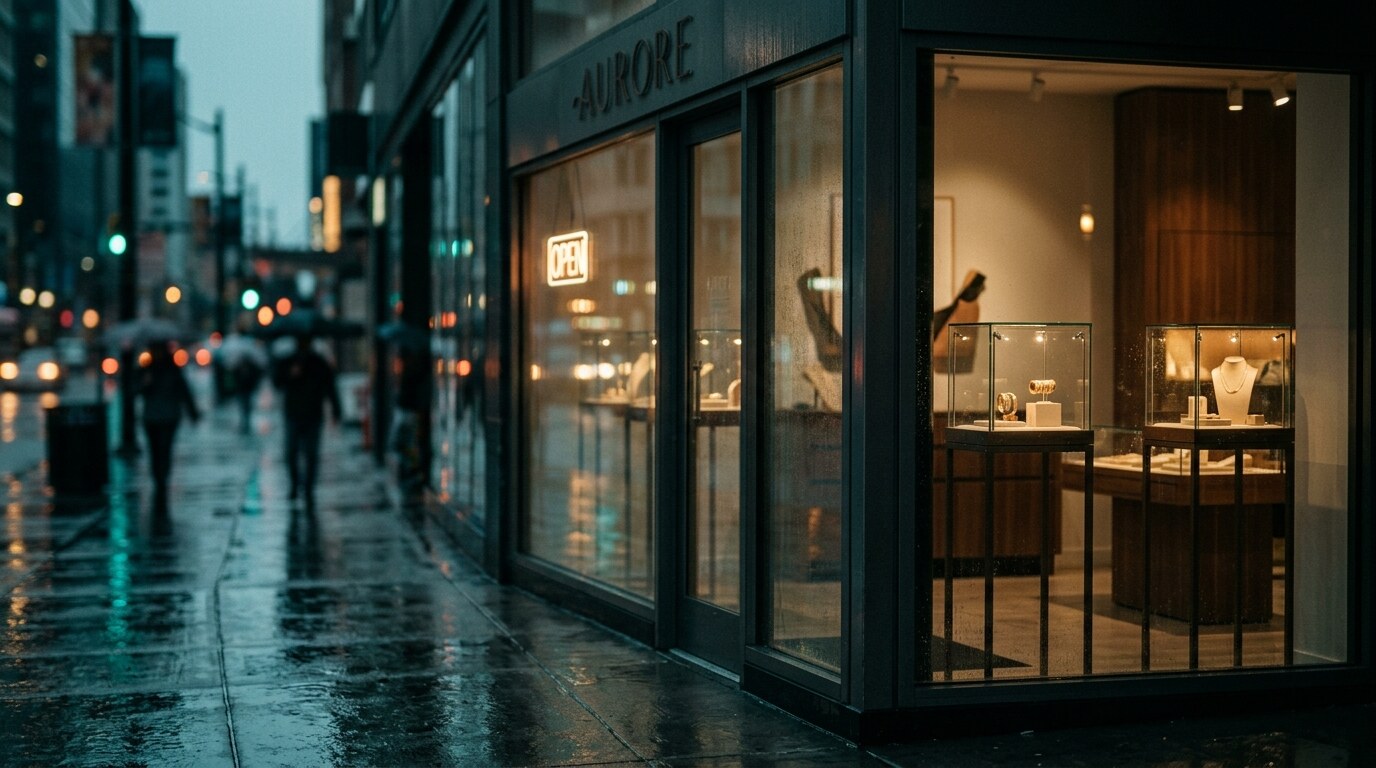
Signet Jewelers reported Q1 fiscal 2027 results on June 2 for the 13 weeks ending May 2, 2026. Total sales came in at $1.6 billion with same-store sales up 1.8% against the year-prior quarter. Earnings per share were $1.56 against the $1.37 consensus, a $0.19 beat. Revenue of $1.553 billion missed the $1.567 billion Street estimate by roughly $14 million, but the operating-line story was substantially stronger than the top-line miss suggested. Management raised the midpoint of fiscal 2027 guidance.
Adjusted gross profit was $589 million. The adjusted gross margin rate declined approximately 1 percentage point year over year. The decline broke down to a 70 basis point merchandise margin contraction driven specifically by higher gold costs, with the balance attributable to mix. Selling, general and administrative expenses fell 3% year over year, the result of restructuring and what management calls the Grow Brand Love operating model that has been in effect since the late fiscal 2026 quarter close. Adjusted operating income rose 12% year over year. Merchandise average unit retail expanded approximately 5%, which is the indicator most of the analyst commentary has flagged as the strongest forward signal in the print.
The Signet result lands in the same week as the close of JCK Las Vegas, which the show organizer RX Global reported drew 17,500 attendees across JCK and Luxury at the Venetian Expo from May 29 through June 1. The exhibitor base was approximately 1,900 with 17,000 vetted buyers from nearly 100 countries. The trade week summary is here. The watch section of JCK and Luxury expanded materially this year with Citizen, Bulova, Movado, and Frederique Constant in a new dedicated timepiece area. Lafonn reported what the company called a record-breaking JCK with more than 100 new arrivals and a refreshed presentation. Buyers came in for elongated and fancy-shape natural diamond inventory and for yellow gold.
COUTURE ran May 27 through May 31 at the Wynn with approximately 250 exhibitors. The boutique-side designer show emphasizes intimacy and craftsmanship and continues to be the entry point for many of the smaller US retailers stocking distinctive inventory. Featured designers included Bayco, Bell & Ross, Marco Bicego, Silvia Furmanovich, Jacquie Aiche, and Nikos Koulis. Buyers from Bergdorf Goodman, Marissa Collections, TWIST, Reinhold Jewelers, Borsheims, and Neiman Marcus were on the floor.
Richemont Holdings reported its full fiscal year ending March 2026 with sales up 11% on a constant currency basis, above the 9.78% average sell-side estimate. The jewelry maisons segment, which includes Cartier, Van Cleef & Arpels, and Buccellati, was up 14% at constant exchange rates, generating 4.785 billion euros in revenue. The specialized watchmaking segment, comprising Piaget, Panerai, and the smaller Richemont watch brands, reported 872 million euros on a 7% gain. The Richemont jewelry result sets the comp benchmark against which Pandora and Signet results will be read for the balance of the calendar year.
LVMH reported 3% growth on a comparable basis for the watches and jewelry division for its most recent reporting period, with jewelry led by Tiffany and Bulgari carrying most of that performance. The contrast between Richemont and LVMH on watches has narrowed since the start of the year, but Richemont continues to outperform.
Pandora released Q1 2026 results in May, reporting DKK 7.109 billion in sales and DKK 942 million in net income. EPS came in at DKK 12.6. The figures reflected a year-over-year decline from DKK 7.347 billion in Q1 2025 sales and DKK 1.101 billion in net income. Pandora lab-grown diamond revenue, which represents 1% of total sales, declined 15% year over year. The company announced in May that it will add carbon footprint information to every lab-grown stone it sells, with the rollout starting in select markets in the second half. Pandora is the first major retailer to publish per-stone emissions data on the lab-grown side. Coverage of the natural diamond floor at JCK is here and includes the Rapaport April pricing read.
On the rough side, Anglo American confirmed in Q1 results commentary that it remains committed to the divestment of De Beers and continues to progress a formal sale process. The company took a further $2.3 billion writedown on the unit ahead of the sale process. CEO Duncan Wanblad continues to signal that a consortium structure is the likely outcome, with a combination of government-backed and private investors. Botswana, the host country for De Beers flagship production sites and holder of a 15% minority interest in the company, is signaling it wants to use the process to acquire a majority position. Q1 rough sales totaled $648 million across two Sights on volume of 7.7 million carats. The consolidated average realized price was down 19% year over year to $101 per carat.
The Federal Trade Commission revised Jewelry Guides remain the governing framework on lab-grown disclosure. The FTC continues to require three approved descriptors for lab-grown product, used immediately preceding the word diamond: laboratory-grown, laboratory-created, or manufacturer-created. Use of the terms real, genuine, natural, precious, or semi-precious for lab-grown products remains disallowed. The FTC has signaled continued focus on disclosure compliance through 2026, with the industry expecting an uptick in enforcement reviews.
JBT credit indicators for the trade remain stable. Retailer credit conditions are tight but no significant uptick in collection accounts has been reported through May. The week takeaway for retailers is that the natural-diamond mid-tier is in better shape than it was at year end, lab-grown is plateauing, and gold-cost pass-through is showing up as 70 basis points of margin pressure at the Signet level. The next read on the publicly traded retail side will be Tiffany via LVMH H1 release later this summer. May FH Swiss watch numbers are due late this month.





Comments 0
No comments yet. Be the first to share your thoughts.