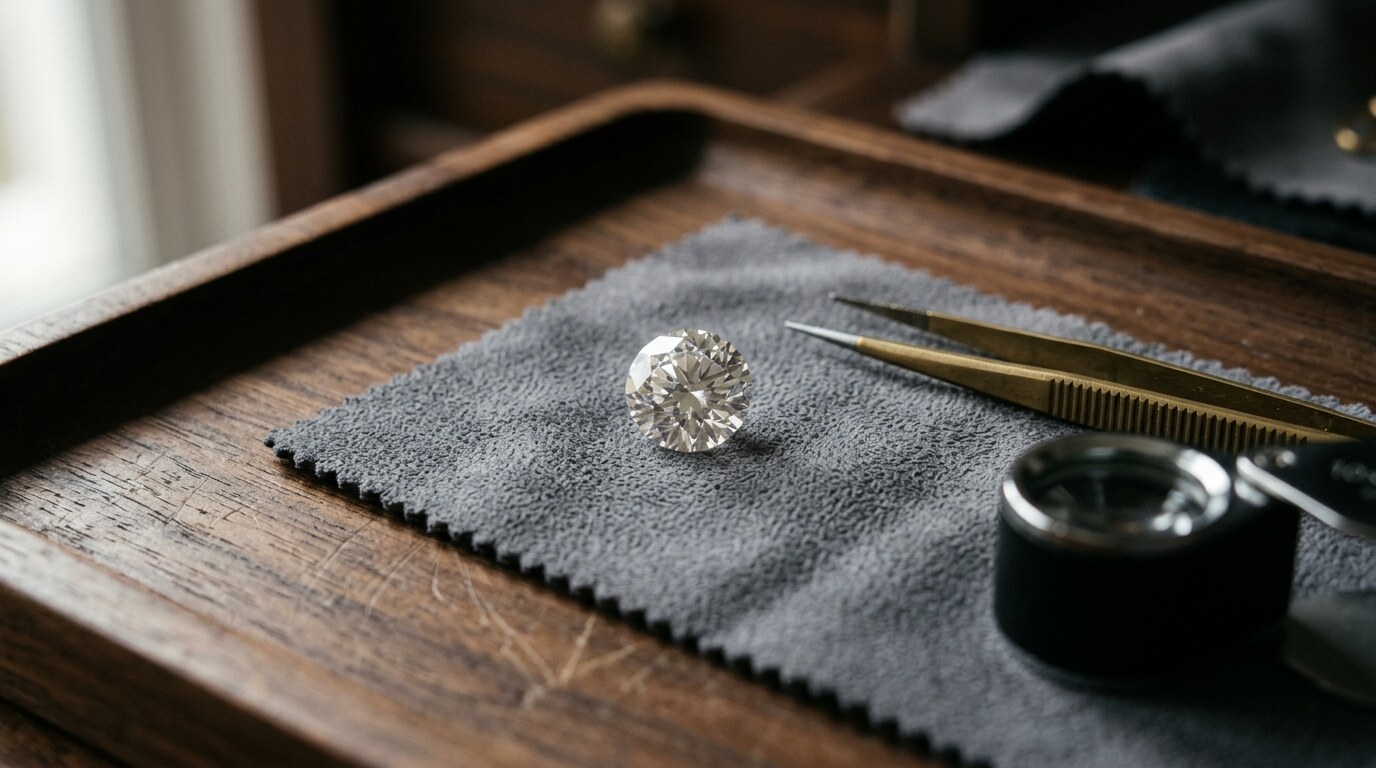
JCK Las Vegas closed on June 1 after four days at the Venetian, with show operator RX Global reporting 17,500 attendees across the JCK and Luxury portions of the event, an increase over 2025. Roughly 1,900 exhibitors and 17,000 vetted buyers from nearly 100 countries walked the floor. The headline takeaway from the floor was the rebalancing of attention back toward natural diamonds at the same moment the lab-grown category continues to soften at the higher prosumer end. Retailer feedback collected by the JCK editorial team put round brilliants at roughly 62% of the floor demand by retailer self-report, with ovals holding the second slot, followed by pears and marquise. Elongated and fancy shapes were the most-cited inventory request from buyers ordering for back-to-school and engagement windows.
The pricing context for that demand pivot came from Rapaport April release, published May 6. The RapNet Diamond Index for round, D-H, IF-VS2 1-carat goods declined 1.4% on the month, a small improvement from the 1.7% decline in March. The 0.30-carat index rose 2.6% and the 0.50-carat index rose 1.3%. The 3-carat index ticked up 0.3%. Small stones are where the inflection sits, and it is where lab-grown has competed most directly on price for the past three years. The April rebound at 0.30 and 0.50 ct suggests cutter and wholesale inventories at those sizes have finally cleared enough that price recovery is possible.
The broader natural diamond pricing context remains weak relative to the 2022 peak. From 2022 through 2025, lab-grown equivalents fell roughly 74% against a 26% decline in 1-carat natural prices. Q1 2026 direct-to-consumer lab-grown stones are approximately 85% to 90% less expensive than comparable natural diamonds at the same specifications, per Rapaport Intelligence Report data. Premium 1-carat lab-grown reached what cutters describe as a functional price floor in late 2025 and pricing has been stable in 2026, driven by certification and retail structure rather than market decline.
The Knot 2026 Real Weddings Study, referenced in the May 2026 Rapaport Intelligence Report, put lab-grown selection at 61% of US engagement rings. That figure is the one the natural side cites when arguing the lab-grown share has saturated. The JCK floor read seems to support the saturation thesis, with retailers reporting that mid-tier natural stones in the 0.50 to 1.20 ct range moved well at the show. The full trade week summary is here, and it places JCK in the context of Signet results and gold price action.
Pandora reported its Q1 2026 numbers in May. Lab-grown revenue, which represents only 1% of total Pandora sales, was down 15% year over year. Pandora has used exclusively lab-grown diamonds since 2022 and entered the US lab-grown market that year with entry-level pieces priced around $300. The company announced in May that it will publish carbon footprint information on every lab-grown stone it sells. The labeling will disclose the emissions generated during lab-diamond production, with the rollout starting in select markets in the second half. Pandora is the first major branded jewelry retailer to publish per-stone emissions data on the lab-grown side, which the trade press has framed as a defensive move against lower-priced lab-grown competitors using grid electricity in production.
On the rough side, De Beers reported Q1 sales of $648 million across two Sights on a volume of 7.7 million carats. The consolidated average realized price declined 19% to $101 per carat, driven by a 17% drop in the average rough price index and a sales mix shifted toward lower-value goods. Production rose 17% to 7.1 million carats, primarily on planned ore release at Gahcho Kué in Canada and higher volumes from Venetia underground. Trading conditions at the Sight level remain pressured.
Anglo American confirmed its commitment to the De Beers divestiture process in the Q1 results commentary and took an additional $2.3 billion writedown on the unit ahead of the sale. The CEO continues to indicate that a consortium structure is the likely outcome rather than a sale to a single corporate buyer. Botswana, which holds a 15% minority and hosts the company flagship production sites, is signaling that it wants to use the divestment process to acquire a majority position. No completion date has been publicly committed. The path forward most cited inside the trade involves a mixed government and private investor group.
For US retail jewelers buying at JCK and Couture, the operational message coming out of the week was three-fold. Signet Q1 fiscal 2027 results, released June 2, validated that average unit retail can expand even as units soften, with merchandise AUR up roughly 5% year over year. The mid-tier natural stone segment is recovering on the supply side. Lab-grown growth at the lower end is plateauing, with even the largest brand-led entrant in Pandora reporting a 15% decline. The Couture show at the Wynn, which ran May 27 through May 31 with around 250 designer exhibitors, reported strong buyer traffic. Bergdorf Goodman, Marissa Collections, TWIST, Reinhold Jewelers, Borsheims, and Neiman Marcus were among the top-tier retailers in attendance.
Looking ahead, the diamond trade will be watching the next De Beers Sight cycle for pricing signals and the May Rapaport release in early June. The May lab-grown versus natural pricing comparison will indicate whether the 0.30 and 0.50 ct natural rebound continued or was a one-month bounce. JBT reported retailer credit conditions remain tight but stable, with no significant uptick in collection accounts versus April. The natural-diamond side of the trade left Las Vegas in better shape than it arrived.





Comments 0
No comments yet. Be the first to share your thoughts.