
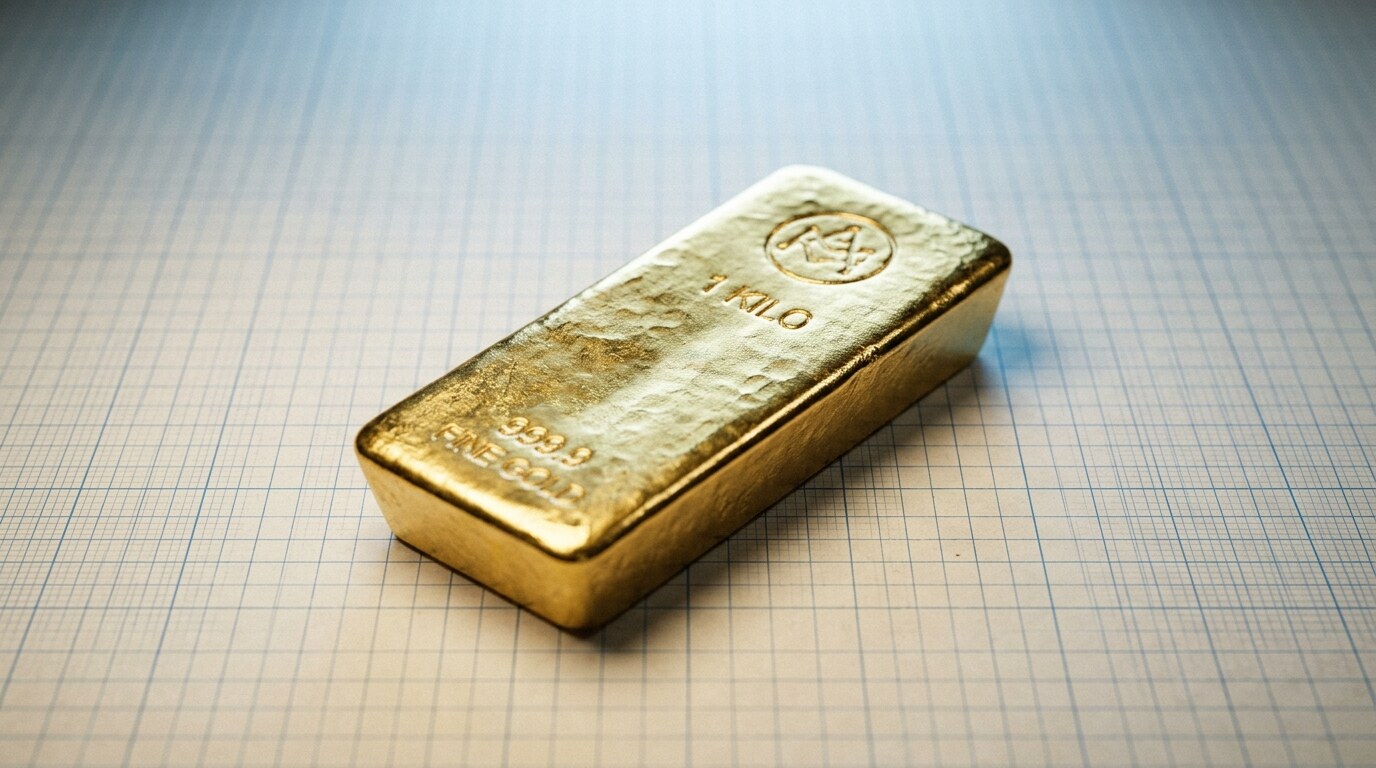
Gold spent the week testing a round number and finding a floor rather than a ceiling. The metal traded at $4,010 per ounce as of 8:55 a.m. ET on July 20, a $38 gain from July 17, and it closed the week at $4,044.06 on July 24, down 0.14 percent on the day. The chop around $4,000 has unsettled some inventory holders, but the year-over-year math tells the calmer story: gold on July 20 stood $657 above where it traded a year earlier. That is the number to keep in front of you when the daily tape gets noisy.
The floor held
The break below $4,000 during the week ending July 17 looked worse in the moment than it reads now. That was the metal's weakest five-session run in six weeks, and it prompted the usual questions about whether the multi-year bid was finally tiring. The recovery to $4,010 by July 20 and the settle in the low $4,040s by Friday answered those questions for now. The round number is behaving as support, and each push below it this month has been bought back within days.
For the bench and the case-metal desk, a gold price that defends $4,000 is workable. It is high, but it is stable enough to quote against, and stability matters more than level when you are pricing a custom order three weeks out. A $44 close above the line is not a breakout, but it is a market that keeps refusing to break down, and that is the posture you want if you are carrying gold-case pieces into the fall. The way the bullion move fed into the broader tape is covered in this week's trade week wrap.
The PBOC is still the bid underneath
Whatever the daily fix does, the structural buyer has not left the table. China's central bank bought more gold in June, lifting bullion held by the People's Bank of China by 480,000 troy ounces to 75.44 million ounces. That was the biggest single-month purchase since October 2023, and it extended the PBOC buying streak to 20 straight months.
A twenty-month streak is not a trade, it is a policy. When the largest official buyer keeps adding at these levels, the metal has a durable floor under it that does not depend on Western investor sentiment or the next US data print. That is the single most important fact for anyone carrying gold-case inventory: the dips are being bought by an entity that is not price-sensitive in the way a fund is. A 480,000-ounce month, the biggest since late 2023, tells you the pace is accelerating rather than fading, and that is what has kept every break below $4,000 short-lived.
It is worth putting the June buy in context. At 480,000 troy ounces, the single month added meaningfully to reserves that now stand at 75.44 million ounces, and being the largest purchase since October 2023 means the pace is picking up rather than plateauing after twenty months. Central banks that buy for reasons other than price do not chase rallies or panic on dips, which is precisely why their presence steadies the tape. For the trade, that translates into a simpler planning assumption: the cost floor on gold-case work is set less by the futures market than by an official buyer with a two-year habit.
What it means for the trade
Put the price action and the official buying together and the picture is a market that wants to correct but keeps getting caught. Every push below $4,000 this month has been met, and June's 480,000-ounce PBOC purchase is the clearest reason why. For dealers, the practical takeaway is that gold-case pieces are not going to get materially cheaper to make while the central-bank bid runs, and quoting on the assumption of a coming break lower is a bet against a buyer with a two-year record of showing up.
The strength in Swiss exports, including gold-case demand, is detailed in this week's watch column, and steel is what carried that print because steel does not need a cheap fix to move. The open question is duration: the PBOC has bought for twenty consecutive months, and the moment that streak breaks is the moment the $4,000 floor gets its first real test without official support underneath it. Until then, the burden of proof sits with the bears.




Comments 0
No comments yet. Be the first to share your thoughts.