

The working assumption in much of the trade has been that lab-grown prices move one way. StoneAlgo's November data does not support that assumption this month. On November 20, a 2-carat lab-grown stone averaged $1,050 against $17,509 for a natural stone of the same weight. Over one month, the lab-grown figure rose 3.04% and the natural figure rose 0.68%.
Neither move is large in isolation. The direction is the point. Lab-grown outpacing natural over a 30-day window runs against the pattern that has dominated the category's pricing conversation, and it arrives in the weeks when retailers set holiday price tags.
The one-carat comparison
StoneAlgo's 1-carat figures, dated November 23, show the gap at the more common engagement weight. A 1-carat lab-grown stone averaged $528, against $3,812 for natural. On those numbers a natural 1-carat stone costs about 7.2 times its lab-grown equivalent. At 2 carats the multiple is about 16.7 times.
The widening multiple as stones get larger is consistent with how the two categories are produced. Natural supply thins sharply by weight. Lab-grown supply does not, and its price scales far more gently. For a retailer building a holiday case, that difference governs where each category can earn margin dollars.
A 3.04% monthly rise on a $1,050 stone is a small move in dollar terms. Its significance is that a price many buyers assumed would keep falling did not fall over this window.
There are limits to what an average can say. An average price for a weight category can blend different cuts, colors and clarities, so a 3.04% rise could reflect a shift in which goods were listed as much as a change in the price of any single stone. The same caveat applies to the 0.68% natural figure.
What Rapaport shows on the natural side
The natural market has been soft at the smaller sizes. Rapaport's latest index, published November 3, showed the 1-carat RAPI down 0.9% in October and the 0.30-carat index down 5.5%. A 5.5% monthly decline in the 0.30-carat category is a substantial move for a segment that relies on volume.
The StoneAlgo natural figures and the RAPI are not measuring the same thing. StoneAlgo reports average prices at specific weights. The RAPI is Rapaport's index of asking prices. Read together, they suggest a natural market that is steady at 2 carats and under pressure at the small end.
De Beers holds rough, Angola puts a price on a stake
At the rough level, Rapaport reported on November 2 that De Beers kept rough prices stable at its October sight, with low sales volumes. Holding price while volume stays thin is a decision to protect the reference rather than clear goods. It tells sightholders the miner would rather sell less than sell cheaper.
Stable rough pricing alongside a 5.5% October decline in the 0.30-carat RAPI puts manufacturers of small goods in a familiar squeeze: rough cost held flat while the polished price index for those sizes fell.
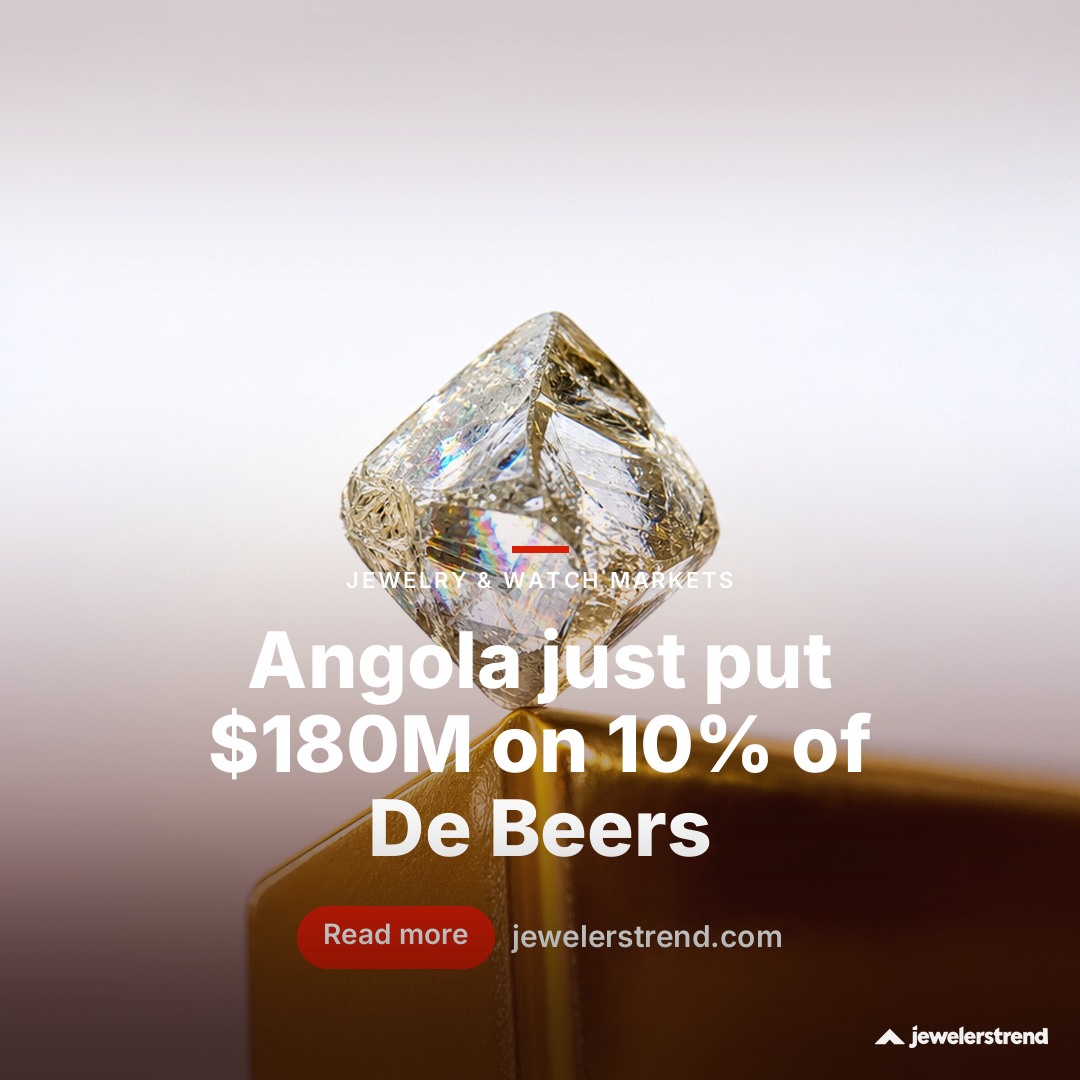
The ownership question moved as well. Reuters, via Ad Hoc News, reported on November 20 that Angola's state diamond company Endiama plans to pay $180 million for a 10% stake in De Beers. Ownership changes at De Beers matter to retailers because they shape how rough is allocated and priced over the medium term, even if nothing changes at the next sight. The deal implications are covered in this week's industry report.
What this means at the counter
For independent jewelers, the practical reading is narrower than the headlines. Natural 1-carat pricing slipped 0.9% on the RAPI in October, and lab-grown 1-carat stones averaged $528 on November 23. A store quoting a natural 1-carat engagement ring against a lab-grown alternative is quoting two products roughly seven times apart in stone cost.
At 2 carats, the arithmetic is different. A 3.04% monthly rise in lab-grown against 0.68% in natural does not change a multiple of about 16.7 times in any practical sense. What it changes is the assumption that a retailer holding lab-grown inventory will see that stock reprice lower every month. If that assumption weakens, so does the argument for taking lab-grown only on memo.
Sales staff should be ready for that conversation. A customer who has read that lab-grown prices fall every month will not expect a quote that rose over the past 30 days, and a store that marked lab-grown down earlier in the autumn may find replacement cost moved the other way at 2 carats.
The case is also feeling the metal. Gold's fall to its lowest level since September 2025 on November 20 changes the cost of the mounting as well as the stone. The bullion desk tracks that in this week's gold report.
The open question
One month of data is not a trend. StoneAlgo's 30-day window shows lab-grown rising faster than natural at 2 carats, and Rapaport's November 3 index shows the small natural sizes still weak. The question for December is whether the next RAPI release shows the 0.30-carat decline extending beyond October's 5.5%, or whether De Beers' stable-price, low-volume approach starts to show up in polished.


Comments 0
Sign in or create a free account to join the conversation.
No comments yet. Be the first to share your thoughts.