
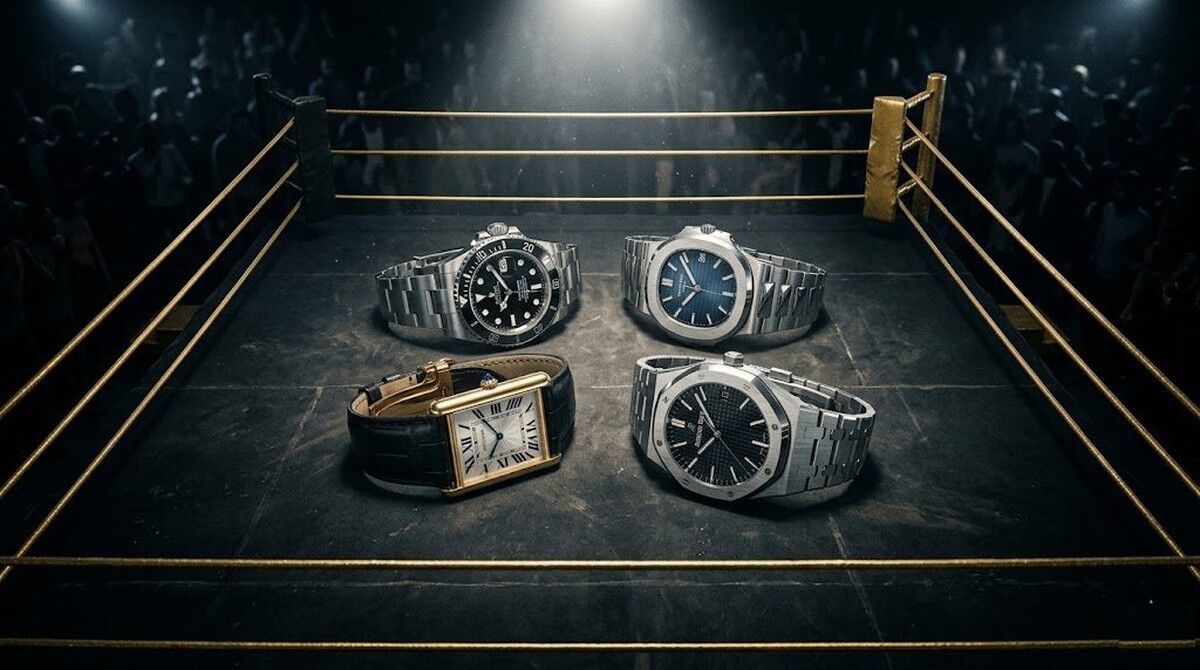
Every April, Geneva becomes the center of gravity for the watch business. The 2026 edition looks even bigger: 65 exhibiting brands, the largest Watches and Wonders yet, arriving just as Swiss export data shows renewed momentum. February exports hit CHF 2.2 billion, up 9.2%. US demand was up 26.8% year over year — the strongest regional growth by a wide margin. For dealers and buyers in the secondary market, what happens in those halls next week will ripple through grey market pricing for months.
That combination matters because the primary market and secondary market never stay separate for long. A strong launch can pull attention back to a model family. A weak launch can make older references feel safer. A discontinuation rumor moves faster than a confirmed sell-through report. Dealers who understand this already know the play: watch what gets released, but pay closer attention to what clients start asking for 24 to 72 hours later. Geneva sets the story. The market sets the price.
The Product Pipeline Is Shaped by 2023
Brands developing 2026 novelties were working in early 2023, when the pandemic-era glow had worn off and the luxury slowdown was just beginning to bite. That context matters — expect measured designs that emphasize heritage and wearability over hype. The frenzy-era launches designed to generate waitlists and Instagram buzz are giving way to something more grounded. Case sizes are trending back toward 36 to 40mm across most major brands, and complications are being framed around value and craftsmanship rather than shock factor.
Gen Z is driving part of the mid-size shift, but so is a broader correction away from oversized sport watches on integrated bracelets. Chrono24 and Fratello's H1 2025 report flagged dress watches as the breakout category among younger buyers — slender, elegant pieces on leather straps that say something different than the steel bracelet watches that dominated the boom years. Cartier's share of Gen Z purchases grew from 1.7% to 6.8% over seven years, a growth rate far outpacing Cartier's overall market share increase from 2.9% to 4.8%. The brand's varied archive of shaped cases — Tank, Santos, Crash — gives vintage hunters individuality, Instagram appeal, and a story that reads as taste rather than hype.
Within the Rolex ecosystem, the hierarchy has shifted too. The Daytona overtook the Submariner as the brand's No. 2 collection in pre-owned, trailing only the Datejust — which has held the top spot for years and is itself a dress-adjacent piece. Even within a brand known for tool watches, the dressier references are leading. Rolex still accounts for roughly one in three watches sold globally, with 33.7% pre-owned market share, but the composition of what moves within that dominance is changing. Dealers watching Geneva should pay attention to whether new releases lean into this dress watch momentum or push back with another sport watch play.
Flagships Are Telling You Where Demand Goes Next
The real story in watch retail this month is not what is on the wrist. It is what is on the lease. Vacheron Constantin just reopened its Miami Design District boutique as the brand's largest Americas flagship — 5,000 square feet, a two-story glass facade topped with the Maltese Cross emblem, palm trees and a living plant wall inside, and a spiral staircase leading to private consultation suites on the second floor. This is not a store. It is a destination.
AP House in Miami Beach runs more like a members lounge than a retail location, with plush seating and an outdoor gathering space. Bucherer in New York City has turned its space into a gallery-retail hybrid, collaborating with artists on installations. A. Lange and Sohne continues investing in dedicated showroom environments. The pattern is clear: major brands are moving retail into large, light-filled spaces designed to educate, not just sell.
As one retail design consultant described the trend, if you are putting a big price tag on a product, the environment has to match. European brands are building spaces that explain why their watches are worth the investment — showcasing in-house movements, heritage storytelling, and bespoke service in environments that feel more like private galleries than traditional retail. For multi-brand retailers and grey market dealers, this is an important signal about the direction of authorized distribution. The brands investing heaviest in their own direct retail are the same ones that have been thinning out their multi-brand retail partnerships. That trend will accelerate after Geneva.
Tariffs Still Distort the US Pipeline
The 39% tariff on Swiss watches introduced in April 2025 was reduced to 15% in December, but the damage to US import flows was significant. Swiss exports to the US collapsed in September 2025, and even with the February data showing a strong 26.8% year-over-year recovery, the absolute volume of new Swiss watches entering the US market has not returned to pre-tariff levels. Rolex has raised prices three times since January 2025, with the most recent hike in early 2026, absorbing tariff and material cost pressures across the lineup.
Pre-owned is filling the gap. Chrono24's ChronoPulse index shows a 5.2% sales rise over six months, with the platform noting signs of broad buyer demand returning. Bloomberg's Subdial Watch Index, which tracks the 50 most-traded timepieces by transaction value, gained 8% in 2025, with prices climbing to the highest since October 2023 on holiday-season purchases in December.
For grey market dealers, this creates a specific dynamic worth thinking through. Fewer new pieces entering the US pipeline now means tighter secondary supply within 12 to 18 months, even if current inventory levels feel adequate. The dealers who sourced well during the tariff panic — buying from European and Asian sellers at favorable exchange rates while US retail was frozen — are positioned with inventory that is becoming scarcer domestically. Watch what comes out of Geneva next week, and pay attention to which models brands allocate to US retailers versus funneling to Asia and the Middle East. The allocation split tells you more about future secondary pricing than any launch announcement.
The Collector Market Is Shifting Generationally
The Bloomberg Subdial data and the Chrono24 Fratello report both point to a longer-term shift in who is buying and what they want. The pandemic-era buyer who chased steel sport watches for quick appreciation is largely gone. The buyer who replaced them is more patient, more informed, and more interested in personal expression than resale value. They research extensively before purchasing. They move between online and in-store. They trust transaction data and collector communities more than brand marketing.
This matters for dealers because the inventory mix that worked in 2021 and 2022 is increasingly mismatched with 2026 demand. Dress watches, vintage pieces with character, and brands with strong design identity are gaining ground relative to mid-tier sport watches from brands outside the top handful of names. If you are sitting on well-preserved vintage dress pieces, the buyer pool is growing — and growing among a demographic that has decades of purchasing power ahead of them. As we covered in our Watches and Wonders 2026 preparation guide, the dealers who read the room correctly next week will set their inventory strategy for the rest of the year. The direction is clear.





Comments 0
No comments yet. Be the first to share your thoughts.