
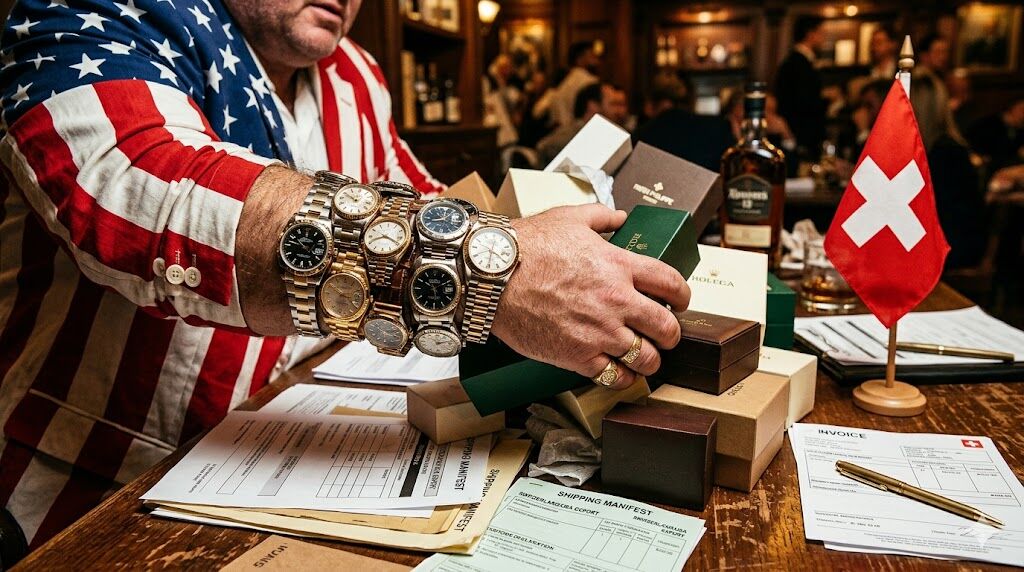
After a weak January, Swiss watch exports returned to growth in February 2026, rising 9.2% to CHF 2.2 billion. The U.S. jumped 26.8%. The U.S. remains the most important market, especially while China's recovery stays uneven — down more than a third over two years.
Swiss Watch Tariff at 15%: Baked In but Not Yet Binding
The framework agreement brought tariffs from 39% to 15%, retroactive to November 14, 2025. But it must be finalized into a binding treaty by March 31, 2026.
Rolex implemented a 7% average increase for 2026, gold up ~9%, steel ~5%. Both Rolex and AP absorbed costs during the 39% window rather than raising prices — a short-term hit that positions them cleanly now.
Rolex Certified Pre-Owned and the Secondary Market Tailwind
WatchCharts Overall Market Index up 8.2% YoY. 21/27 brands above $3,000 avg in positive territory. Rolex RCPO controls ~10% of global secondhand. The 1916 Company — three Rolex ADs merged with WatchBox — shows the direction. Cartier, AP developing CPO. Patek expected to move next.
What Watch Dealers Should Watch in Q2 2026
Primary market getting more expensive. Secondary market getting more organized. Buyer getting more informed. The dealers who thrive will source well, price accurately, and offer trust and service. American buying trends remain the signal worth watching. February says the signal is green.
Why U.S. Demand Is Leading the Recovery
The 26.8% surge in U.S. demand for Swiss watches is not happening in a vacuum. It reflects several converging factors: a strong dollar making Swiss imports relatively affordable, pent-up demand from collectors who paused buying during the 2024 correction, and the Rolex CPO program driving awareness of the secondary market into mainstream consumer consciousness. When Rolex validates pre-owned watches with an official certification program, it lifts the entire category.
The broader Swiss export picture — 9.2% growth to CHF 2.2 billion in February — shows that the recovery is global but U.S.-led. China, which had been the growth engine for Swiss watches for the past decade, remains soft due to economic headwinds and shifting consumer preferences toward domestic luxury brands. The rebalancing of Swiss watch exports toward the United States is a structural shift that dealers should plan around.
What This Means for Inventory Decisions
For U.S.-based watch dealers, the February data validates aggressive inventory positioning in the current market. The combination of strong primary demand (new watches from authorized dealers), rising secondary values (WatchCharts index up 8.2%), and robust auction results (Phillips Geneva Sessions at CHF 4.5 million) creates a favorable environment for both buying and selling. The risk is not that demand will disappear — it is that supply constraints will tighten further as brands prioritize their own retail channels.
Dealers who are sourcing should take positions before the Watches and Wonders announcements, not after. The attention spike around Geneva creates a short-term demand surge that rewards those who have inventory on hand when buyers are most engaged.





Comments 0
No comments yet. Be the first to share your thoughts.