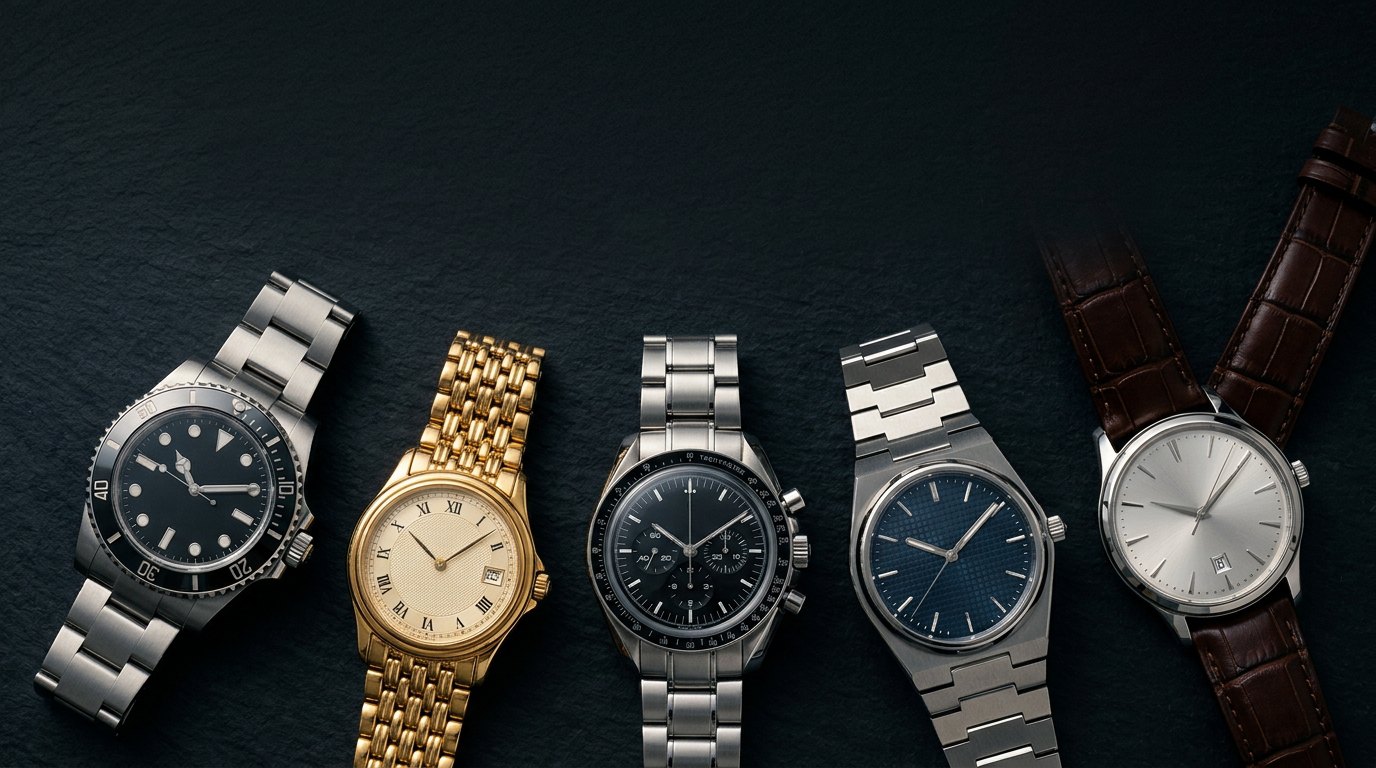
Three structural forces are reshaping the jewelry and watch trade right now, and none of them are going away by next quarter. Tariffs are working as a hidden margin multiplier. Skilled labor is becoming the industry's scarcest resource. And Gen Z is buying differently than every generation before them. Each one of these stories deserves attention on its own. Together, they explain why 2026 feels so different from the hype years of 2020 to 2022 — and why the operators who understand all three are the ones pulling ahead.
Tariffs: The Quiet Margin Killer
Tariffs are no longer background noise for jewelers and watch dealers. After the Supreme Court struck down the earlier IEEPA tariff structure, the administration imposed a 10% global tariff using another law, and Treasury signaled that rate could rise to 15%. Jewelers of America has cautioned that broad tariffs could compress margins further across the trade. The instability itself is the damage — importers are forced to price around rules that can change faster than inventory turns, and the planning horizon for seasonal purchase cycles (Valentine's Day, Mother's Day, holiday) gets shorter with every policy shift.
For jewelers, tariffs land on top of $4,750 gold, cautious consumers, and already compressed replacement cycles. The customer walks in thinking the ring or bracelet just costs more. But the real cost structure is more specific: metal costs are higher, landed costs are higher because of tariffs, and retailers are absorbing as much of the increase as they can before the sticker finally moves. When a jeweler eats 5 to 8% of a cost increase to keep a price point attractive, that margin erosion compounds across every category in the case.
The Swiss watch tariff tells the same story in sharper relief. The 39% rate introduced in April 2025 was reduced to 15% in December, but Swiss exports to the US collapsed in September 2025 and have not fully recovered even as February data showed a 26.8% year-over-year rebound. The damage was not just in the price increase — it was in the behavioral change. Buyers who delayed purchases during tariff uncertainty did not all come back when the rate dropped. Some shifted to pre-owned. Some waited longer. Some bought in Europe instead. Trade flow disruption from tariff volatility leaves scars that take longer to heal than the tariff itself.
The operators winning right now are managing sourcing, timing, and margin defense with a level of precision that was not necessary two years ago. Tighter purchase orders, faster repricing when costs shift, selective inventory reduction in categories where margins are worst, and in some cases renegotiating vendor terms to share the tariff burden. This is not glamorous work. But in 2026, execution is becoming a larger competitive moat than assortment alone.
Skilled Labor: The Industry's Most Underpriced Asset
The jewelry business keeps talking about technology — AI pricing tools, virtual try-on, blockchain provenance tracking. But the deeper shortage is human. AWCI (American Watchmakers-Clockmakers Institute) reports that for every 10 watchmakers who retire, only 1 new watchmaker enters the workforce. That ratio has been cited across industry coverage for years, and it is getting worse. The average age of a certified watchmaker in the US continues to climb, and the training pipeline has not scaled to meet replacement demand, let alone growth.
In jewelry, the same pressure shows up everywhere. Jewelers Mutual committed $10 million over 10 years to SCAD's bench jeweler pipeline — one of the largest private commitments to jewelry workforce development in recent memory. The Community for Ethical Jewelry hosted a webinar focused specifically on the shortage. DCA launched its Second Spark initiative targeting veterans and returning parents — people with manual dexterity, discipline, and the need for flexible skilled career paths.
The shortage has real business consequences beyond the abstract we need more young people framing. A jewelry store that cannot repair a watch in-house sends customers to a competitor. A retailer without a competent bench jeweler cannot do custom work, cannot handle sizing efficiently, and cannot offer the kind of service that justifies premium pricing. A watch dealer who cannot assess movement condition accurately is buying blind. In an industry where margins are compressing from every direction, the ability to add value through skilled labor is one of the few remaining sources of differentiation.
AI may improve marketing, pricing, and customer service workflows. It does not size a ring, finish a repair, set a stone, or restore a vintage movement. The future belongs to watchmakers, setters, casters, polishers, melters, assayers, and bench technicians who can actually do the work. The trade needs the industry to treat those roles like premium careers — with apprenticeship pathways, competitive compensation, and professional recognition — instead of back-room support positions that get less attention than the sales floor. In 2026, craftsmanship is not old-fashioned. It is underpriced infrastructure, and the businesses that invest in it will have a structural advantage that software cannot replicate.
Gen Z: Buying Cartier, Not the Hype
For years, the secondary watch market ran on a simple formula: steel sport watches on integrated bracelets. Daytona, Nautilus, Royal Oak — these were the names that moved inventory and drove dealer margins during the pandemic boom. Then Gen Z showed up and started buying Cartier.
According to Chrono24 and Fratello's H1 2025 report, Cartier's share of Gen Z watch purchases grew from 1.7% to 6.8% over seven years. That growth rate far outpaces Cartier's overall market share increase from 2.9% to 4.8%. The brand's archive of shaped cases — Tank, Santos, Crash, Ballon Bleu — gives vintage hunters what this generation is looking for: individuality, visual distinctiveness on social media, and a story that reads as taste rather than trend-following. For a demographic that views consumption and content as inseparable, a Cartier Tank on Instagram Stories communicates something very different than another Submariner.
Dress watches as a category are outperforming sport watches among younger buyers for the first time in over a decade. These are slender, elegant pieces on leather straps — the opposite of the chunky steel bracelet watches that dominated the pandemic era. The shift is not limited to Cartier. Gen Z is gravitating toward Nomos, JLC (especially the Reverso), vintage Omega dress references like the Constellation and De Ville, and niche independents that offer design-forward aesthetics at accessible price points. They want individuality, not hype. A vintage JLC Reverso says something different than a ceramic Submariner, and that difference is showing up in transaction data across every platform.
Rolex still dominates. Roughly one in three watches sold globally carries the crown. On the pre-owned market, Rolex holds a 33.7% share. But the internal hierarchy has shifted: the Daytona overtook the Submariner as No. 2, trailing only the Datejust — essentially a dress-adjacent daily piece. Even within a brand built on tool watches, the dressier references are winning. Bloomberg's Subdial Watch Index gained 8% in 2025, with dress watches and celebrity-driven demand — the report specifically cited Taylor Swift's influence on dress watch preferences — driving a meaningful share of that appreciation.
What Dealers Should Do With This Information
If your dealer inventory is still 80% sport watches on bracelets, you are merchandising for 2022. The transaction data from Chrono24, Bloomberg, and every major auction house over the past 12 months says the same thing: diversify into dress watches, especially vintage pieces from Cartier, JLC, Vacheron Constantin, and Omega's classic dress lines. These pieces often carry lower acquisition costs and are turning faster with younger buyers who have different priorities than the collector who spent 2021 chasing a Tiffany-dial Nautilus at 3x retail.
The secondary market is rewarding dealers who read the generational shift early. If you are sitting on well-preserved vintage dress pieces, the buyer pool is growing — and growing among a demographic with decades of purchasing power ahead of them. As we covered in our Watches and Wonders 2026 dealer preparation guide, the inventory mix that worked during the boom is increasingly mismatched with 2026 demand. Expect longer hold times and thinner margins on mid-tier sport watches as buyer attention migrates toward pieces that photograph well, tell a story, and express individual style rather than category membership.
These three forces — tariffs, labor, and generational taste shifts — are not separate problems. They are interconnected. Tariffs compress margins, which makes skilled labor (the ability to add value through repair, customization, and expertise) more important as a profit center. The Gen Z shift toward dress watches and personal expression creates demand for the kind of knowledgeable, story-driven selling that only experienced salespeople and watchmakers can deliver. The trade is getting harder in ways that reward depth, expertise, and operational precision over raw inventory and hype-driven speculation. The operators who get that are the ones building businesses that will still be here in 2030.





Comments 0
No comments yet. Be the first to share your thoughts.