
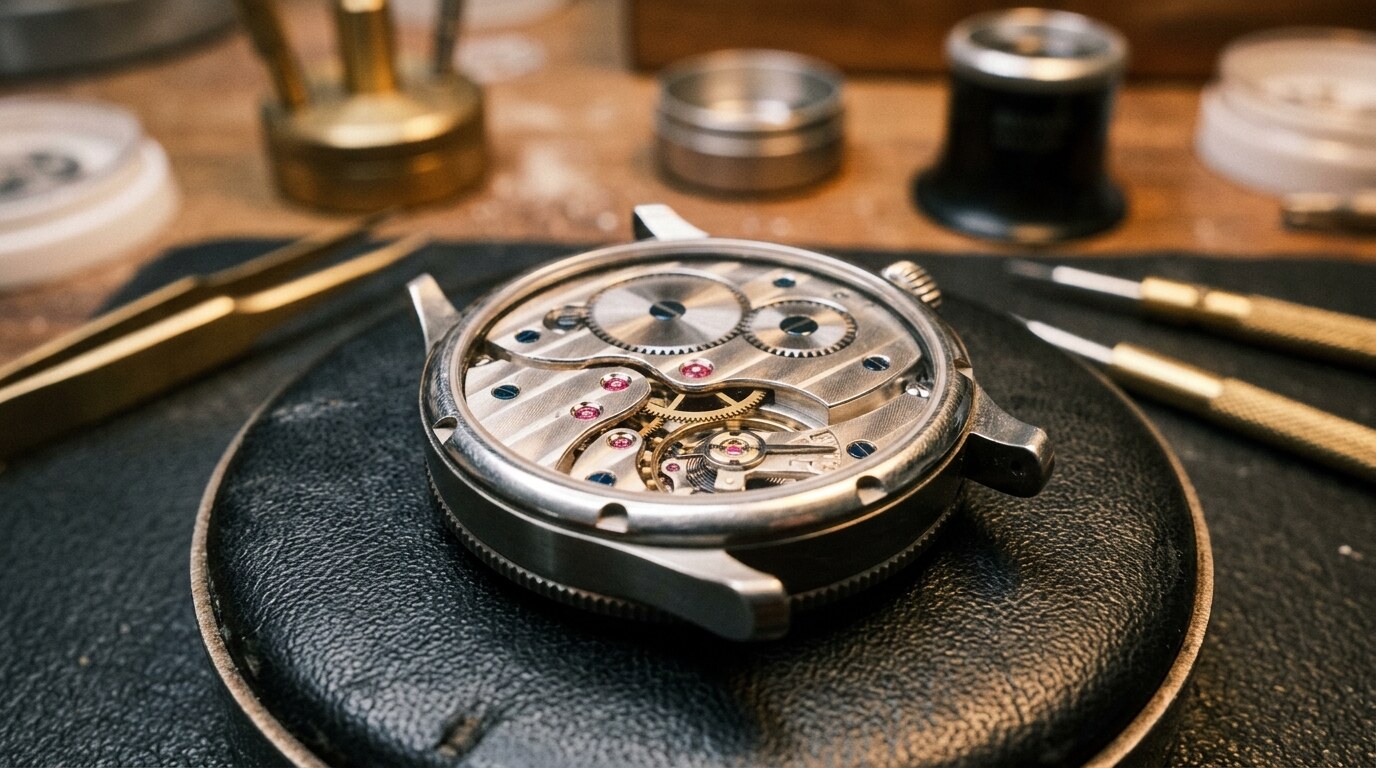
Phillips XIV: F.P. Journe writes the rules now
The New York Watch Auction XIV closed Saturday night at $75.8 million, more than double the sale's high estimate and a fresh record for any watch auction held on US soil. The previous US record (Phillips XIII, six months ago, $43.5 million) fell on a single lot. An F.P. Journe Chronometre a Resonance Souscription No. 007 in pink gold and platinum hammered for $13.9 million after almost nine minutes of bidding. That number is the new auction record for any independent watchmaker and, by my read of the data, the highest price a 21st-century watch has ever achieved at a commercial sale.
Seventeen F.P. Journe lots crossed the block for $29.2 million in aggregate. The Souscription series traded at numbers that would have looked like typos two years ago. If you collect Journe, you already knew. If you do not, the takeaway is that the independent segment has decoupled from the trends governing the rest of the trade, and the secondary market is treating Journe like a third currency. The man only makes 800 to 900 watches a year. The supply side cannot loosen.
Audemars Piguet was the other story, and it was not pretty
Multiple Royal Oak references sold below low estimate. A Royal Oak Offshore I expected to land mid-pack hammered at the floor. Walking the preview on Wednesday, the AP table was the quietest of the three majors, and the consignor whispers I caught were not optimistic. The data tells the same story: on May 16, the day Audemars Piguet launched the Swatch x Royal Pop collaboration, the WatchCharts average dealer price for any AP Royal Oak was $67,100. One week later it was $65,100, a 3% reset attributed almost entirely to brand-dilution concerns.
That print has not recovered. Pre-owned market makers I talk to are still pricing AP with a discount built in. A Royal Oak 15500ST that was a $40,000 phone call last winter is closer to $34,000 today, and the spread between asks and trades is wider than at any point since the 2022 correction. The Phillips result confirms it: the room will not pay catalog premiums on a brand it thinks is structurally weakening.
Patek did fine, Rolex held, and the Daytona signal
A Patek 1518 in pink gold sold within estimate. The Clapton-provenance Rolex Daytona reference 5004 cleared comfortably. Steel sports Rolex in general printed in line with the Q1 Morgan Stanley read on the secondary, which had Rolex up 1.7% and Patek up 3.0% quarter on quarter. None of this is news to anyone who has been watching the WatchCharts moving averages. The signal is gentle recovery, no froth, broad-line strength on the established blue-chip references.
Rolex took its expected June 1 retail action: plus 5% on gold references, plus 2.5% on two-tone, no change on steel, platinum, titanium, or white Rolesor. That is the second hike of 2026 after the 4 to 9% January 1 move, and it is now textbook for Geneva. Tie the increase to the gold print, leave steel alone to manage allocation. The grey market is still 30% below primary on a lot of the gold pieces, which is why the gold hike does not move secondary prints much. It just keeps the official MSRP defensible.
What is broken and what is not
The trade is more bifurcated than it has ever been. Independents (F.P. Journe, Philippe Dufour, Roger Smith, the upper-tier Akrivias) clear at numbers that read like contemporary art. Top-tier blue chips with restrained supply (Patek complications, certain Rolex references) hold their pricing through cycles. Almost everything else is being repriced down. Royal Oaks are the highest-profile victim. Vacheron sport models are also softer than last year. The Lange Datograph trades in a narrower band than 2023.
The summer auction schedule is light from here. Christie's Geneva is the next major test in November. In the interim, the trade is reading the room for direction, and the direction this week is unambiguous, pay through the nose for independents that move the needle, get selective on everything else, and do not be the buyer who steps in front of a brand that just diluted its core proposition.
Looking ahead to fall
The bigger watch conversation for Q3 will be the Geneva Watch Days circuit in late August and what Vacheron, Lange, and Richard Mille bring to the secondary-market analysts. Federation Horlogere May export data lands later this month and the Q1 read was a 1.7% year-over-year contraction. The mid-tier Swiss brands (Longines, Tudor, Tag Heuer) are the bellwether to watch. If those numbers stabilize, the broader market has its floor. If they slip again, the structural reset gets a second leg, and the bifurcation visible at Phillips XIV widens further. I am betting on stabilization, but the AP print is a reminder that no brand is too big to give back premium when collectors lose conviction.
For broader market context this week, including gold's second weekly decline, the India export print, and the De Beers timeline, see our Friday wrap-up and the gold note. The Geneva pricing committee is reading the same prints we are.





Comments 0
No comments yet. Be the first to share your thoughts.