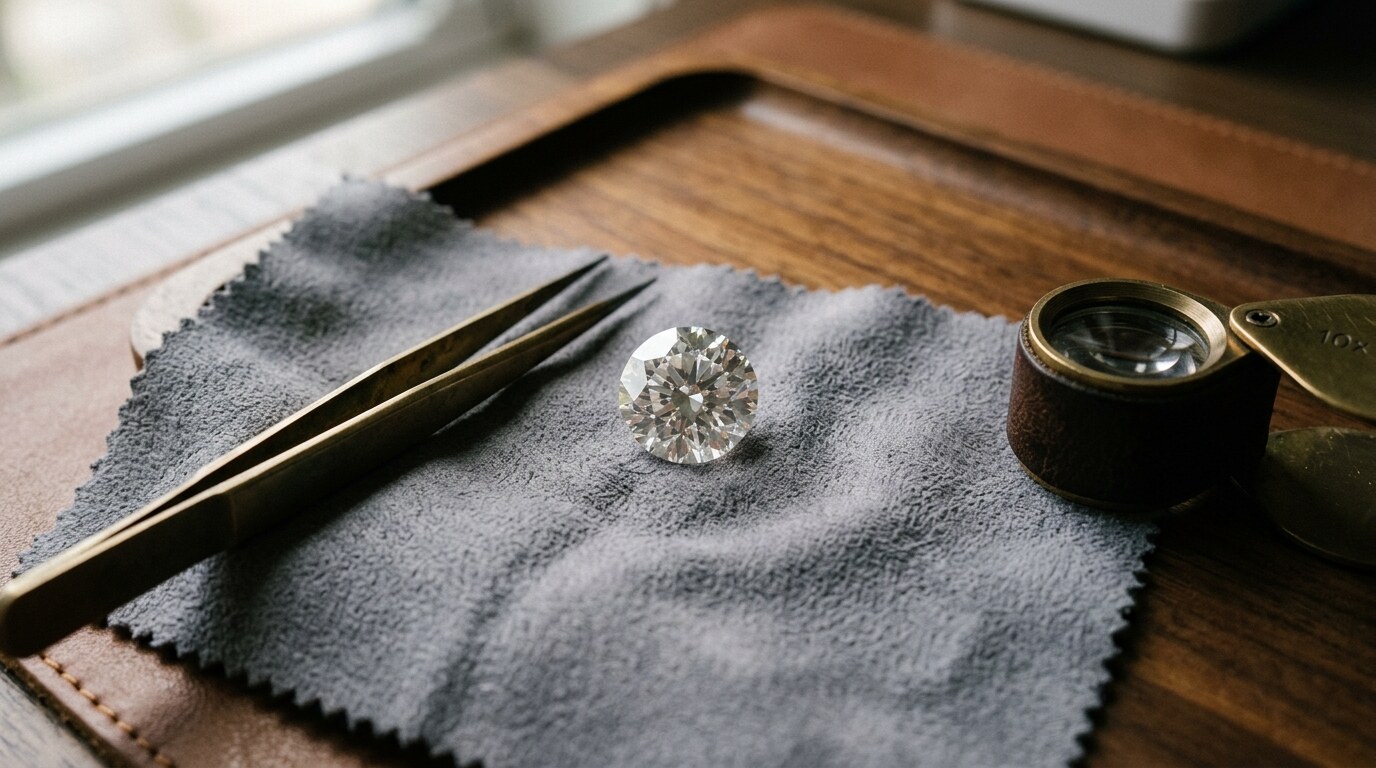
The wholesale diamond market is re-pricing in real time, and the reset arrives just as US retailers begin committing to fall and holiday inventory. Two forces are converging: De Beers has dragged its official rough list back toward secondary-market reality, and the Rapaport index for smaller natural goods has turned higher after a four-year slide.
The De Beers list meets the market
At its July sales cycle, De Beers implemented the deepest official price cuts in its history. According to Bloomberg reporting, the company's book had been running between 5% and 50% above secondary-market levels depending on the category. After the July adjustment, official prices sit close to where stones actually trade. The cut coincided with a restructured sightholder roster, trimmed from roughly 70 buyers to between 45 and 50 under new supply agreements.
For retailers, the significance is not the headline cut but the re-anchoring. A list price that tracks the secondary market removes a long-standing distortion in which sightholders bought rough above the price at which polished would clear. That distortion pushed losses down the pipeline to manufacturers and, eventually, into the memo goods sitting in retail cases. A market-aligned list should, in theory, make restocking math more honest heading into the fourth quarter.
Small naturals lead the recovery
The Rapaport data supports a cautious read. The RapNet Diamond Index for 0.30-carat rounds rose 4.2% in June, up from a 2.1% gain in May. The 0.50-carat index added 1.3%, the 3-carat index rose 0.4%, and only the 1-carat category slipped, off 0.7%. Rapaport attributed the small-stone strength to sustained inventory reductions rather than a demand surge, which is the more durable kind of recovery. Notably, RAP List prices for smaller natural diamonds have increased for the first time in more than four years, reversing a decline that began after Russia's 2022 invasion of Ukraine accelerated lab-grown substitution.
Lab-grown finds its floor
On the lab-grown side, prices have stabilized after a punishing 2025. A well-cut one-carat round lab-grown stone now carries a fair retail price around $725, with most comparable goods listed between $660 and $810. A one-carat lab-grown in the popular G-to-H color, VS-clarity range runs roughly $700 to $1,500 at retail, and two-carat rounds sit near $1,700. That follows wholesale declines of about 26% in some segments during 2025. Analysts expect lab-grown to hold steady or soften selectively as production efficiencies advance, which means the natural-to-lab spread is widening again from the natural side rather than narrowing.
What it means for the case
For an independent jeweler building a fall assortment, the practical takeaways are concrete. Natural small-stone melee and commercial goods are firming, so the deflation trade that defined the past three years is over for those categories. Lab-grown has settled into a stable, low-margin commodity role, useful for fashion and volume price points but no longer a moving target. And De Beers' repricing means the rough feeding the natural pipeline is finally aligned with polished demand, which reduces the risk of buying inventory that is underwater on arrival.
The demand signal underneath all of this is not weak. Richemont's jewelry maisons posted a 21% sales jump to EUR 4.73 billion in the June quarter, with US sales up 25%, and De Beers' own consumer data earlier this year showed US natural-diamond spending rising. The branded and design-led end of the market is pulling; the reset is happening in the undifferentiated middle. I connected the diamond, gold, and watch threads in the trade week wrap.
The overhang
The variable no retailer can price yet is ownership. Anglo American has named a preferred bidder for its 85% stake in De Beers, and a change in control could reset supply discipline all over again. The full deal picture is in the industry report. For now, the numbers point one direction: natural prices at the small end are rising, the De Beers list is honest again, and lab-grown has stopped falling. Whether that holds through the holiday season depends on how much rough the new owner decides to push into a market that has only just found its footing.





Comments 0
No comments yet. Be the first to share your thoughts.