
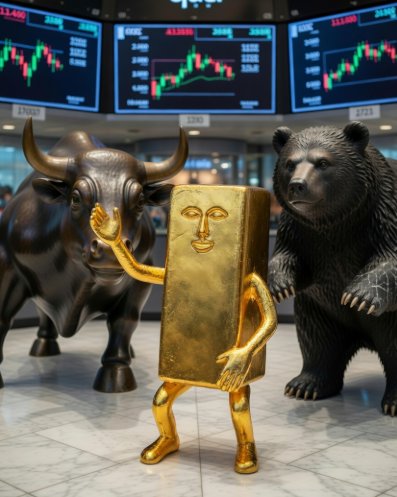
Gold closed Friday at approximately $4,675 per ounce, down from $4,784 the day before — a $108 drop in a single session. On Tuesday, gold had traded at $4,749, up $231 from the prior close. For dealers who price in gold, these are not abstract numbers. This is the math on every piece changing overnight.
What Happened This Week
President Trump delivered a televised address on Wednesday evening in which he vowed to "hit them extremely hard over the next two to three weeks" while simultaneously predicting the Strait of Hormuz would reopen naturally once fighting stopped. The contradiction rattled gold traders. Safe-haven demand had been building as the Hormuz closure — which began on March 4 when Iranian forces declared the strait closed — entered its fifth week.
Gold futures opened Thursday at $4,783, then fell below $4,650 in early trading before partially recovering. The concern: Trump's suggestion that the war is nearly over reduced the geopolitical risk premium, while his escalatory language reintroduced it.
March Was the Worst Month Since 2008
Context matters. Gold fell 11.8% in March — its worst monthly decline since the 2008 financial crisis. War-driven energy inflation and higher rate expectations initially hurt bullion, before a weaker dollar and renewed rate-cut hopes helped it rebound sharply into April.
For the gold trade, this kind of two-way volatility is the new normal as long as the Hormuz situation remains unresolved. The Strait's closure has been described as the largest disruption to global energy supply since the 1970s oil crisis. Oil briefly topped $126 per barrel at its peak and Brent crude remains around $100-105.
The Broader Gold Picture
Gold has gained more than $1,500 per ounce over the past year. JPMorgan and Goldman Sachs project gold will trade within a $4,000 to $6,300 range through 2026. Central bank purchases remain a structural tailwind. Global central bank buying slowed to just 5 tonnes in January 2026 versus a monthly average of 27 tonnes in 2025, but the buying base is broadening — Malaysia and South Korea resumed purchases, and China continues adding to its reserves.
Iran has selectively reopened the Strait to ships from China, Russia, India, the Philippines, and several other nations, while also floating the idea of formal transit tolls. If implemented, that would fundamentally reshape global energy logistics and keep geopolitical risk premium elevated in gold.
What This Means for the Gold Trade
For gold jewelry dealers, the volatility is a pricing headache. A $100 intraday swing on a 14K piece worth $2,000 at fabrication changes margin by meaningful percentages. High gold prices lift replacement costs, pressure memo, complicate custom work, and change consumer behavior all at once.
For gold buyers and scrap dealers, the environment is favorable. Higher spot prices mean higher walk-in traffic from consumers liquidating old jewelry. But the volatility cuts both ways: if you buy at $4,750 and spot drops $100 overnight before you can move the metal, your margin evaporates.
Gold is still the trade's ultimate hedge. But in 2026, it is also a daily reminder that risk management matters just as much as market opinion. Lock in prices faster, keep exposure windows short, and watch the evening news.





Comments 0
No comments yet. Be the first to share your thoughts.