
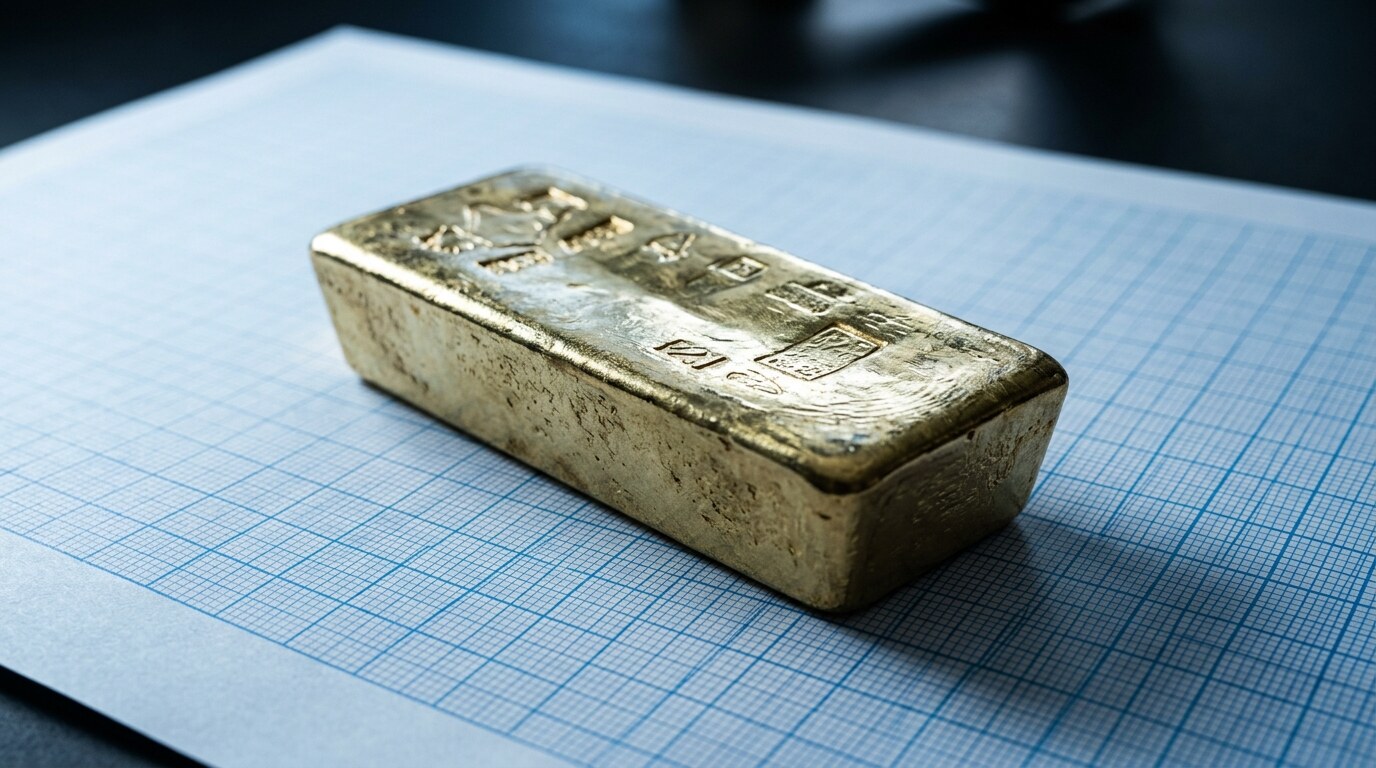
Gold reclaimed the $4,000 handle this week, but the way it got there matters more than the level. Spot settled Friday, July 17, near $3,985 an ounce, capping a week off roughly 3%, its worst stretch since June. It then ground back to about $4,019 on Monday and $4,022 by Tuesday morning. This is a market coiling, not recovering, and it is coiling for one reason: the Federal Reserve decides rates next Wednesday.
An inflation trade, not a haven trade
The usual logic says a shooting war between the United States and Iran should send gold vertical. It has not, because the market is reading the conflict as an inflation event. Higher oil pushes headline inflation up, and this Fed has been clear it will meet hotter prices with higher rates rather than cuts. That turns gold's rate math against it even as the geopolitical risk premium builds. The tension between those two forces is exactly why the metal is stuck in a band instead of breaking either way.
The rate odds captured the whiplash. CME FedWatch had the probability of a July 29 hike spiking toward the low 70s percent at the height of the oil scare, then cooling back under 20% by Tuesday as crude steadied. Most of the desk now expects no change next week, but nobody is betting the ranch on it, and that uncertainty is the lid on price. Gold is still up around 17% from a year ago, so this is a pause inside a longer climb, not a top.
Silver and platinum sag
The rest of the complex was heavier. Silver settled around $55.20 on Friday, and scrap slipped $0.65 on the week to $43.66 an ounce. Platinum dropped 1.1% to roughly $1,599. When silver and platinum lag gold like this, it usually signals the move is being driven by macro and central-bank flows rather than broad industrial or retail buying, and that is exactly what the rest of the data shows. For the bench, the practical effect is a wider gap between what gold and the white metals will fetch on a scrap ticket, so weigh and price them separately rather than leaning on a blended rate.
The official bid is the floor
Central banks kept accumulating straight through the dip. The People's Bank of China added 14.93 tonnes, or about 480,000 ounces, in June, its biggest single-month buy since 2023 and its 20th consecutive month of purchases. That lifted Chinese reserves to 2,346 tonnes, up more than 40 tonnes this year, though gold still sits below 10% of the country's total reserves, which leaves plenty of room to keep going. Uzbekistan added 9 tonnes in June and Poland has added 64 tonnes through May.
This is the number I watch more closely than the daily print. When official buyers keep taking metal on a 3% down week, near nine-month lows, they are setting a floor that speculative selling has to fight through. That is why every dip toward $4,000 this year has been bought. The refiners and kilo-bar desks I talk to describe steady physical offtake, not the panic you would expect from the screen, and premiums on kilo bars have held firm even as the paper price wobbled. It is worth remembering that China's gold still sits below 10% of its reserves, so the single most important buyer in this market has years of runway left, whatever the Fed does next week.
What next week decides
The setup is clean. A hold plus patient language, and gold has a path back toward $4,100 and beyond, with the watch and jewelry trades inheriting a softer-dollar tailwind. A hike, or even hawkish language pointing at one, and the metal likely tests and breaks $3,985 with $3,900 the next real shelf. For context on how the metals backdrop is shaping luxury retail pricing, see this week's watch report and the trade week wrap.
For the retail bench, the practical read is to hold scrap pricing tight and avoid loading inventory before Wednesday's 2 p.m. Eastern decision. The market has told you where it wants to trade: right at $4,000, waiting. The only open question is which way the Fed pushes it from there, and how hard the official bid pushes back.





Comments 0
No comments yet. Be the first to share your thoughts.