
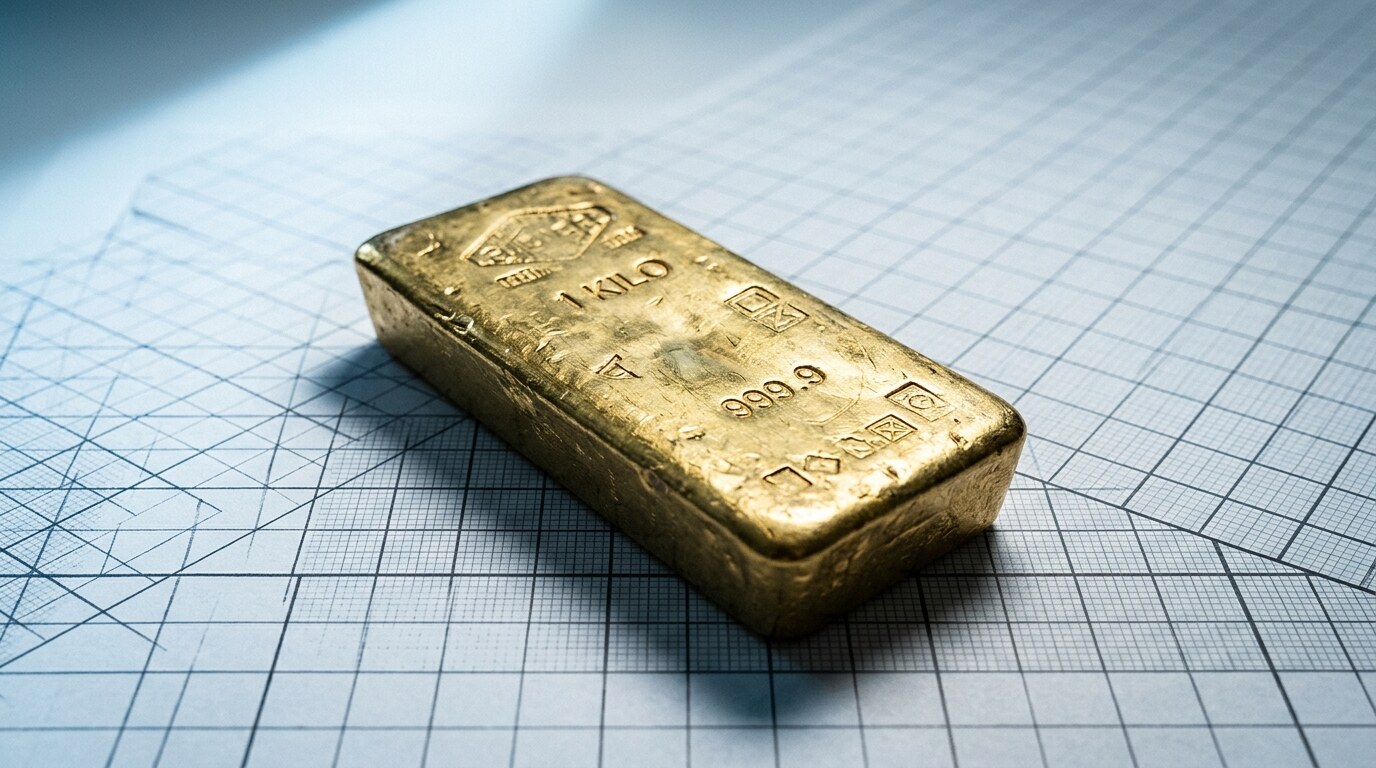
Spot gold closed Friday near $4,466 per ounce, off about 0.2% on the day and roughly $119 below where it sat when JCK Las Vegas opened on Thursday at $4,585. The Friday print is consistent with a pattern most of us watch every June and July. Asian jewelry fabricators do not normally restock heavily until autumn for the October through March wedding cycle, so jewelry-side bullion demand drifts down through the early summer. The cooling is happening on top of the broader pullback from the January 2026 high above $5,414.
The Middle East tape has been the main driver of intraday moves this week. Wednesday saw the strongest single-session advance in weeks for both gold and silver after the US House passed a resolution limiting presidential war powers on Iran, plus confirmed progress on an Israel-Lebanon ceasefire framework. The gold-silver ratio compressed to 60.0 on Wednesday, the tightest reading in several weeks, with silver industrial demand footprint amplifying the risk-on signal. Silver closed Friday near $73 per ounce. By Thursday, dollar weakness on the peace headlines and softer oil pulled gold above $4,500 before the May payroll print on Friday turned that move around.
The Federal Reserve picture has shifted hard in the last six weeks. The three cuts in late 2025 took the federal funds rate to 3.75%. Goldman Sachs had earlier penciled in two more cuts in 2026, targeting a 3.0 to 3.25% range by late year. Those cuts have not materialized, and Iran-driven inflation expectations have repriced the curve. Markets are now assigning roughly even odds to a rate hike by year end. The June cut that had been the consensus a quarter ago is no longer in the conversation. Goldman has quantified the relationship as roughly $120 per ounce of gold price support per 50 basis points of Fed easing, so two cuts on the other side of this would translate to roughly $240 of pressure either way on the second-half tape.
On the jewelry side, the World Gold Council put Q1 2026 jewelry demand at 335 tonnes, down 24% quarter over quarter and 23% year over year. China was down 32%. India was down 18% and the Middle East down 23%. Metals Focus has called for full-year 2026 jewelry demand to fall 2%. That number captures the price elasticity that has been the operational story for everyone working a US retail counter. The full week wrap-up is here, including the read on how the JCK floor handled it. Signet specifically called out 70 basis points of merchandise margin compression from higher gold costs in its Q1 fiscal 2027 release on June 2.
Central banks continue to buy, which is the structural offset to the jewelry softness. Q1 2026 net purchases came in at 244 tonnes, with the Polish National Bank again the largest single buyer at 31 tonnes added on the quarter, lifting reserves to 582 tonnes. The People Bank of China added 7 tonnes, more than double the previous quarter, taking total PBoC reserves to 2,313 tonnes. April reporting showed central banks resumed net buying at 19 tonnes after a brief pause. State Street and the World Gold Council are projecting the 2026 full-year net central bank purchase number to land in a 750 to 850 tonne range, which is consistent with the strong start.
For boutique dealers running scrap and refining flows, the operational read is that scrap inflow has come in over the past three weeks. Swiss precious-metal exports were down sharply in April in part because precious-case watches were not moving at retail above $4,500 spot. Refining premiums on kilo bars have held but premiums on smaller bars have softened in the IWJG channel. Coin dealers in the major US shows in May reported steady but unspectacular flows. The Bay Area dealer shows I track all reported buy-side interest in tenths and quarter-ounce gold coins but slow movement at the kilo end.
What I am watching: the May FH Swiss watch numbers expected late in the month for precious-case directional read, the next BLS print on US payrolls and CPI for confirmation of the Fed repricing, and the Phillips New York Watch Auction XIV results on June 13 and 14 for any spillover signal on precious-metal retention at the auction-side wholesale level. Phillips brought 156 lots with a $17.5 to $35 million range, including the pink-gold Patek 1518 and 17 F.P. Journe lots. If those lots clear in the middle of estimate, precious case demand is fine. If they come in soft, the late-spring softness on the metal side is broader than just refining flows.
The seasonal pattern argues for gold to drift through June and July, with the structural central bank bid setting a floor in the high $4,300s on the current tape. The Fed repricing is the wildcard. A confirmed rate-hike scenario in Q4 cuts perhaps $240 off the second-half average price. A return to two cuts adds that back. The $4,500 level has been the technical fulcrum since March. For retail jewelers, the operational message coming out of JCK was to plan inventory for a $4,400 to $4,700 working range through Q3 and not bet either way past that.





Comments 0
No comments yet. Be the first to share your thoughts.