
The jewelry and watch trade is moving through a strange mix of stronger top-line dollars and softer real demand. March CPI came in hot, global supply-chain pressure rose to its highest level since early 2023, and gold rebounded to roughly $4,740 after dipping below $4,700 earlier in the week. In other words, prices are elevated, logistics are uneasy, and the market is rewarding discipline more than optimism.
Do not confuse higher ticket values with a healthier market. Edge Retail Academy data from 2025 tells the real story: gross sales rose 4.7%, but units sold dropped 5.6%. The average retail sale jumped 10.9%. That is price-driven growth, not demand-driven growth. The firms winning this cycle are pricing fast, buying selectively, and staying liquid enough to react instead of defend. Jewelers sitting on stale inventory hoping for a recovery rally are the ones feeling the squeeze hardest.
This week packed a lot into five trading days. A ceasefire announcement that moved gold over $100 in a single session. The biggest restructuring in Signet's history. Fresh Swiss export data that confirms the US is driving watch demand globally. And the entire trade calendar pointing toward Geneva starting Monday. Here is how it all breaks down.
Gold: Ceasefire Swings, Structural Bid Intact
Gold traded near $4,750 on Friday, on track for a third straight weekly gain. The US-Iran ceasefire announced midweek sent prices up 3.3% intraday on Wednesday before profit-taking wiped out nearly all the gains by close. Thursday saw a spike to $4,802 on ceasefire skepticism — Iranian media reported oil tanker transit through the Strait of Hormuz had been halted after Israeli strikes on Lebanon, while a senior Iranian official said three provisions of the ceasefire had already been breached. By Friday, traders were watching VP Vance head to Islamabad for direct talks with Iran while gold consolidated.
The bigger picture matters more than any single session. The dollar index slipped below 100 on the DXY for the first time in months, making gold cheaper in every non-dollar currency. China extended its gold-buying streak to 17 straight months. The World Gold Council's 2025 survey found that 95% of central banks expect global gold reserves to increase over the next year. Central bank buying in January slowed to 5 tonnes — compared to a monthly average of 27 tonnes in 2025 — but the buying is now spreading to countries like Malaysia, South Korea, and Uzbekistan that had been dormant for years.
What does this mean for the trade? Short-term gold trades like a headline-sensitive macro asset. Long-term, it is being treated like strategic reserve collateral by sovereign buyers who do not care about the spot price. For bullion traders, respect the swings but do not forget the structural bid. As we covered in our March gold correction analysis, the $4,500 to $4,800 band has become the new normal trading range. ERA data showed the average retail sale jumped 10.9% in 2025 while units dropped 5.6% — that is the price-up, units-down dynamic playing out in real time. If you have not adjusted your pricing cadence to match the volatility, you are already behind.
Diamonds: Supply Is Tightening Faster Than Demand Is Healing
Natural diamond prices fell 11.5% year over year, according to AIDI data published this week. De Beers cut 2026 production guidance to 21 to 26 million carats — close to multi-decade lows. Global production dropped to around 100 million carats in 2025. RapNet reported March disruption shut down trading in Dubai and Israel and pushed rough tenders toward Antwerp, with buyers purchasing strictly for immediate needs rather than building inventory positions.
The larger stones are holding up better. Trading in diamonds of 3 carats and above has shown relative strength, suggesting sustained demand from high-net-worth buyers and collectors. But 1-carat categories continue to face price pressure from both sides — natural prices softening while lab-grown alternatives get cheaper. De Beers continues reducing its sightholder base, and the signaling power that used to come from De Beers pricing decisions is being diluted as Botswana's Okavango Diamond Company, Angola, and Alrosa all expand their channels.
Meanwhile, Signet dropped its restructuring plan: 100 store closures, JamesAllen.com sunsetting in Q2 and folding into Blue Nile, Rocksbox becoming a collection within Kay. The company is betting everything on three banners. E-commerce declined 2.4% in fiscal 2026, with James Allen dragging that number. Lab-grown captured 52% of center stones sold in 2024, up from 12% in 2019, and lab-grown engagement ring sales grew 31% in units last year. As we broke down in our natural versus lab-grown analysis, the mid-market mall diamond is losing relevance from both directions.
Watches: US Demand Is Carrying the Conversation into Geneva
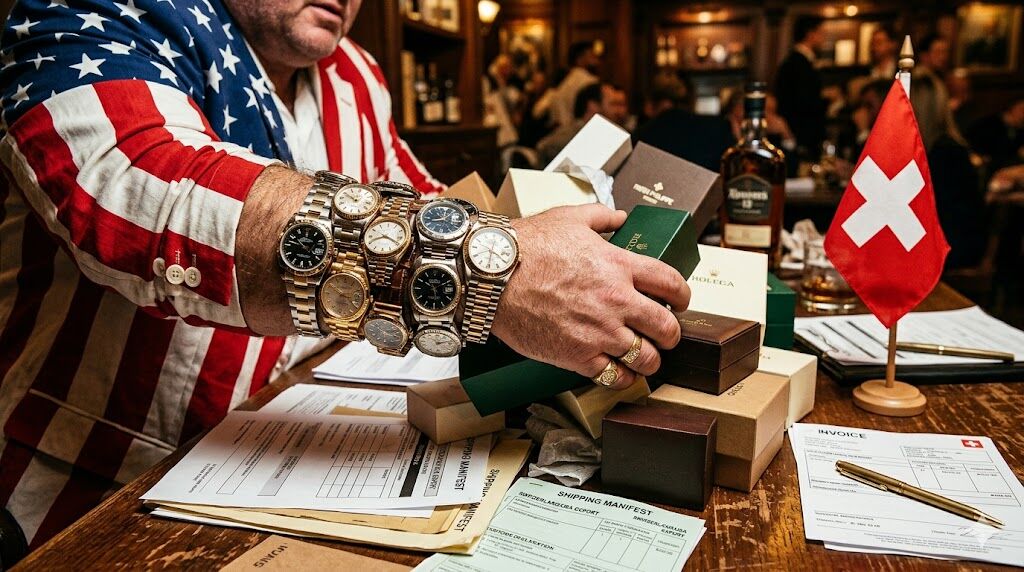
Swiss watch exports rose 9.2% in February to CHF 2.2 billion, with US exports up a striking 26.8% year over year — by far the strongest regional growth. That is a significant data point after the tariff shock of 2025, when Swiss exports to the US collapsed in September following the 39% tariff. The tariff was reduced to 15% in December, and it appears US demand is recovering faster than most analysts expected.
Watches and Wonders Geneva 2026 opens Monday with 65 exhibiting brands — the largest edition yet. Concurrently, Jewellery Geneva runs at the Hotel President Wilson with over 35 high-jewellery houses and buyers from 30 countries. Chrono24's ChronoPulse index shows a 5.2% sales increase over the past six months on the secondary market, with increases of 2.9% over three months and 1.2% over the past month pointing to what the platform called a return of broad buyer demand.
The brand boutique arms race is accelerating alongside the trade fair. Vacheron Constantin reopened its largest Americas flagship in Miami's Design District — 5,000 square feet, two-story glass facade, living plant wall, spiral staircase to private consultation rooms. AP House in Miami Beach is pushing the home away from home concept. Bucherer in NYC is collaborating with artists on gallery-style installations. The brands pouring money into physical spaces right now are telling you something about where they think demand is heading — and it is not toward a glass case in a multi-brand mall store.
Industry: Tariffs and Labor Are the Quiet Margin Killers
After the Supreme Court struck down the earlier IEEPA tariff structure, the administration imposed a 10% global tariff using another law, with Treasury signaling the rate could rise to 15%. The instability itself is damaging — importers are forced to price around rules that can change faster than inventory turns. Broader retail coverage has hammered the same point: when your cost basis can shift overnight on a policy announcement, the traditional jewelry buying cycle breaks down.
For jewelers, tariffs work like a hidden multiplier — landing on top of $4,750 gold, cautious consumers, and already compressed replacement cycles. The customer walks in thinking the ring or bracelet just costs more now. The truth is more specific: metal costs are higher, landed costs are higher, and retailers are absorbing as much as they can before the sticker finally moves. This is why the best operators in 2026 are not just selling product — they are managing sourcing, timing, and margin defense with a level of precision that was not necessary two years ago.
The labor story is just as urgent. AWCI reports that for every 10 watchmakers who retire, only 1 enters the workforce. Jewelers Mutual committed $10 million over 10 years to SCAD's bench jeweler pipeline. DCA launched its Second Spark initiative to bring veterans and returning parents into jewelry retail. The Community for Ethical Jewelry hosted a webinar focused specifically on the bench jeweler shortage. AI may improve marketing and pricing, but it does not size a ring, set a stone, or restore a movement. A jeweler with better-trained staff and stronger bench talent is no longer just better run — that jeweler has a structural advantage. Craftsmanship in 2026 is underpriced infrastructure.
The Week Ahead
All eyes on Geneva. Watches and Wonders runs April 14 through 20 and could reset reference attention across the secondary market overnight. New releases, discontinued lines, and brand messaging out of Geneva can all move grey market pricing without changing total supply. For dealers, this is the kind of week where being early matters more than being right later — watch what gets released, but pay closer attention to what clients start asking for 24 to 72 hours after the announcements.
On the macro side, US PPI data drops Monday, the Fed's Beige Book comes Tuesday, and VP Vance heads to Islamabad for continued US-Iran talks over the weekend. Gold traders will watch the Strait of Hormuz situation closely — any disruption to oil flows puts immediate upward pressure on bullion and reignites the inflation narrative. A strong US bid plus a major trade fair means reference attention can shift quickly across both the watch and jewelry markets. Stay liquid. Stay attentive.





Comments 0
No comments yet. Be the first to share your thoughts.