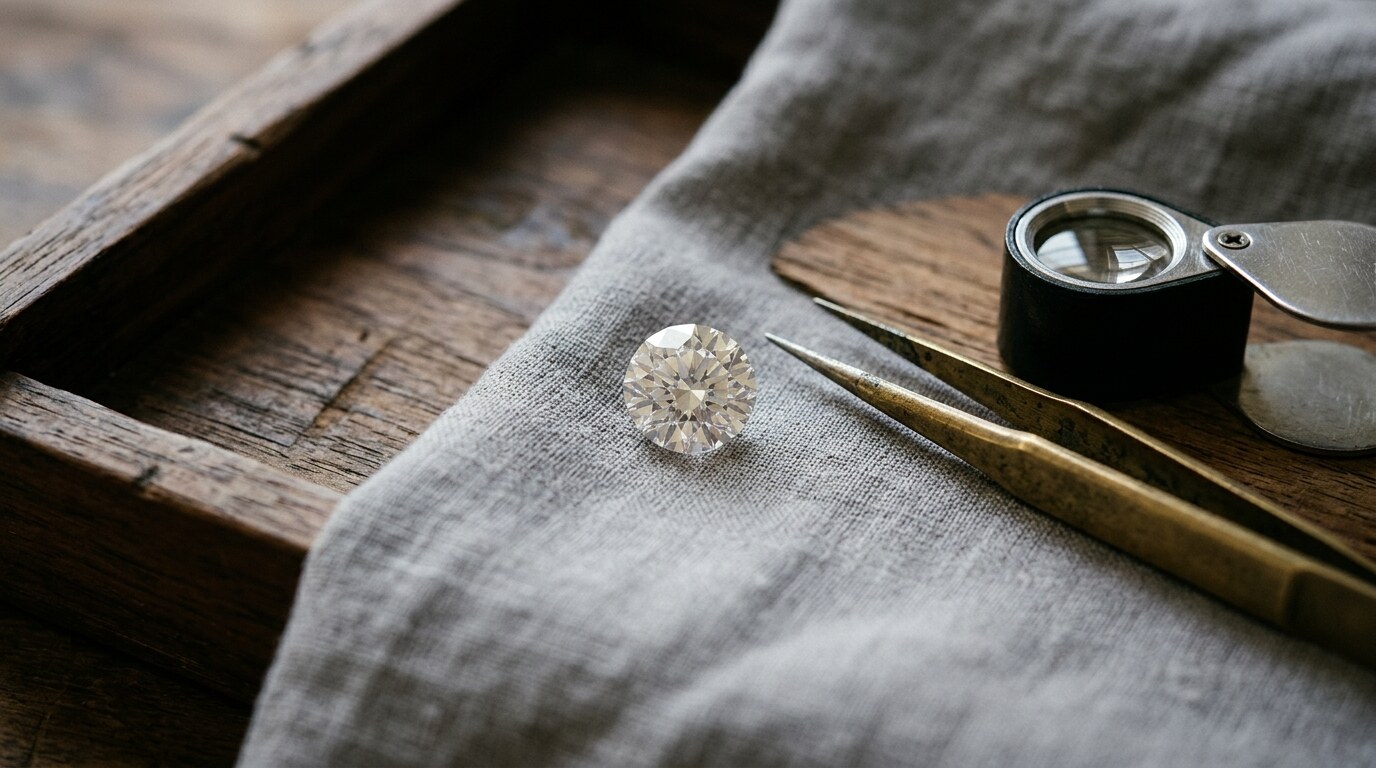
For the first time in more than four years, the widely watched Rapaport price list moved higher in the sizes that carry the bread-and-butter engagement trade. The July edition showed pointer goods, the round diamonds from 0.30 to under 1.00 carat, rising across the tracked ranges. It is a small number. It is also the first constructive move the natural diamond market has posted in years, and in a business that has spent 2026 reporting one decline after another, direction matters more than magnitude.
The retail benchmark helps frame it. A natural 1-carat D/VVS2 round now runs near $4,600 at US retail, with Asian retail closer to $5,300. Those are recovering numbers, not boom numbers, but the pointer sizes had been the softest part of the natural book for the better part of half a decade as lab-grown stones ate into the fashion and smaller-center categories. A positive print in exactly that range is the first evidence that the natural floor may have found support where the pressure was heaviest.
The bifurcation holds
None of this closes the gap with lab-grown, and it was never going to. Lab-grown diamonds remain roughly 78% cheaper than their natural equivalents, with 1-carat grown stones selling for a few hundred dollars direct from brand sites while the natural equivalent holds near $4,600. The lab-grown price has effectively hit its production floor, which is the quiet reason the natural pointer sizes can finally lift: once the synthetic price stops falling, the two products stop competing on price alone and start competing on what they are. The natural trade has spent two years learning to sell that distinction rather than fight it, and the July list is the first pricing evidence that the message is landing.
The producer data underneath remains heavy. De Beers reported a first-quarter consolidated realized price of $101 a carat, down 19% year over year, and its sales have fallen from nearly $6.6 billion in 2022 to about $3.5 billion last year. Anglo American said in mid-June that its long-running effort to sell the unit had reached its most advanced stage in two years. A consortium led by former De Beers chief executive Gareth Penny, backed by Qatari funds, is competing against the governments of Botswana, Angola and Namibia for control. Whoever wins inherits a business whose rough price is still searching for a bottom even as the polished pointer market ticks up. That divergence, between a firming polished list and a still-soft rough realization, is the tension the next buyer will have to manage.
What the retail counter shows
The pricing turn lands in a retail environment defined by a price-up, units-down pattern. US independent jewelers grew revenue 4.7% in 2025 while selling 5.6% fewer units, according to industry survey data, and the global jewelry market reached roughly $348 billion for the year. Shoppers are buying fewer pieces at higher tickets, which favors the natural stone at the center of a considered purchase and squeezes the impulse categories where lab-grown has taken hold. Our industry desk covers that retail structure in detail.
The metals backdrop is not neutral here either. Gold rose about 1.4% Friday to roughly $4,180 an ounce, its first weekly gain in five weeks, which keeps the mounting and the finished-goods cost elevated even as diamond content firms. For the fine-jewelry retailer, a stone that holds its value and a mount that keeps getting more expensive both push the average ticket in the same direction. Our week wrap sets the diamond move against gold and the Swiss watch data.
The question the July list raises is whether one positive print becomes a trend. The Rapaport pointer sizes have not risen in more than four years, so a single month does not make a recovery. But the mechanism is finally in place: lab-grown at its floor, De Beers holding supply discipline into a sale, and a retail consumer trading up in quality. If the August list confirms the pointer move, the natural diamond trade will have its first back-to-back gain since before the lab-grown flood, and that is a data point worth more than any marketing campaign the industry has run in two years.





Comments 0
No comments yet. Be the first to share your thoughts.