
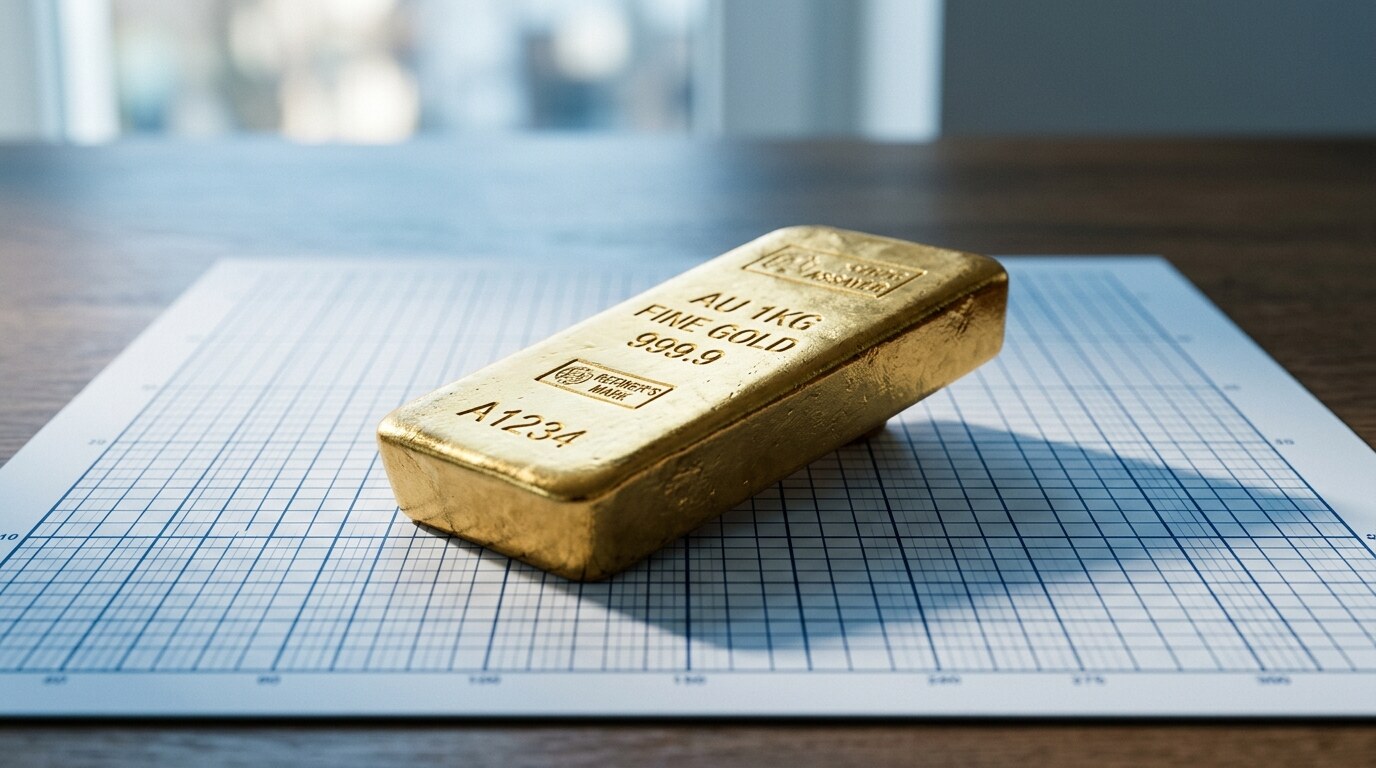
Gold finally caught a bid. Spot rose about 1.4% on Friday to roughly $4,180 an ounce, its highest level since June 23 and its first weekly gain since the week of May 25. The move ran about 2.3% on the week and unwound part of the slide that had dragged bullion toward $4,000 and handed it the worst quarter since 2013. The driver was not geopolitics. It was a labor-market number soft enough to change the Fed math.
The June employment report showed nonfarm payrolls up just 57,000, against a consensus near 113,000 and down from a downwardly revised 129,000 in May. It was the weakest month in four. The unemployment rate ticked down to 4.2%, but the decline came from a falling labor-force participation rate, which dropped three tenths to 61.5%, its lowest since March 2021. A jobless rate that falls because people quit looking is not the strong report the headline suggests, and the gold market read it correctly.
The Fed math shifts
The rates response was immediate. Fed funds futures cut the probability of a September quarter-point hike to about 53.5% from roughly 65% before the print. The two-year Treasury yield, the maturity most sensitive to policy expectations, fell 3.5 basis points to 4.13%. For a metal that pays no yield, the two things that matter are real rates and the dollar, and both moved in gold's favor as traders pulled forward the idea that the Fed is closer to done than the hawks had argued.
Silver ran harder than gold, as it usually does when the macro news turns. The gray metal jumped 2.69% Friday to $62.57 an ounce, a second straight gain and a record on the session. The caveat is that silver is still down roughly 20% for the year even after the recovery, having given back much of a rally that ran more than 150% over the prior twelve months. Silver's industrial demand gives it more torque than gold on a soft-landing read, and this week it used every bit of it. For the dealer who buys scrap and sells bullion coin, that volatility is the spread.
Official buyers never left
The bid that has underpinned this market all year is central banks, and the spring data shows they did not flinch when the price fell. The National Bank of Poland added 18 tonnes in May, its fourth consecutive month of double-digit accumulation and 64 tonnes year to date. The Monetary Authority of Singapore bought 4 tonnes, its first net purchase since September 2025, lifting its holdings to 197 tonnes. The Czech National Bank added 2 tonnes and Jordan added 1. The People's Bank of China, which added 8 tonnes in April, now holds about 2,322 tonnes, roughly 9% of its reserves, after 18 straight months of buying.
The forward signal is just as firm. In the World Gold Council's latest survey, a record 45% of central bankers said they expect their own institution to increase gold reserves over the next year, and 89% expect global official reserves to rise. That is the structural floor under bullion. It does not trade on a jobs report, and it did not sell the second-quarter dip. For the cross-asset picture, our week wrap ties the metals move to watches and diamonds.
The pass-through to the trade is direct. Rolex raised gold and two-tone references on June 1 as bullion sat near record levels, and gold-steel watches led the May Swiss export book with 34% value growth. Our watch desk covers what the metal move does to case pricing, while the industry desk looks at how record mounting costs land at the retail counter.
The question for July is whether Friday's miss was noise or signal. One soft payrolls print does not end a hiking cycle, and the September odds are still a coin flip near 53.5%. But if participation keeps sliding and the next jobs report confirms the trend, the metals bid that returned this week has room to run, and the $4,000 handle that looked like a ceiling last month starts to look like a floor.





Comments 0
No comments yet. Be the first to share your thoughts.