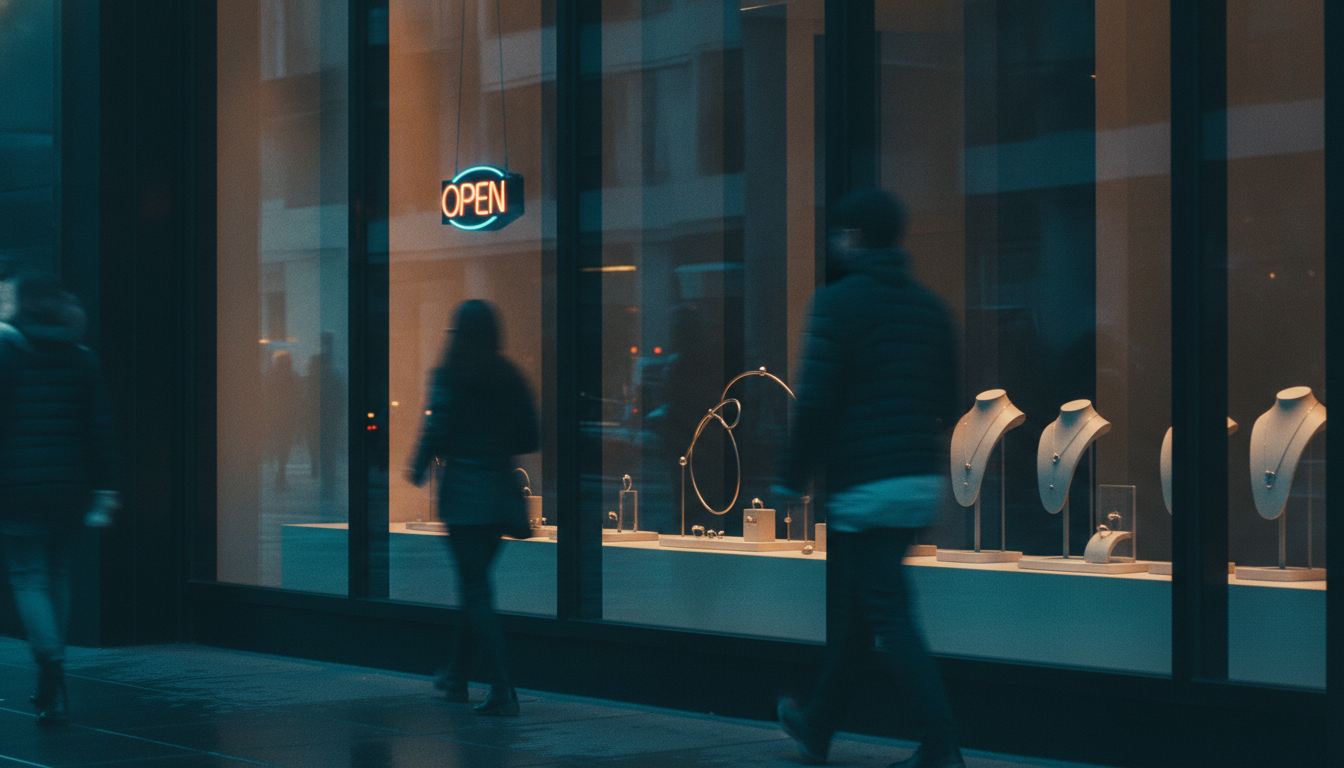
The industry read this week runs in three parts: a luxury group posting divergent divisional numbers, a fresh tariff schedule reshaping import costs, and a domestic show calendar that opens the fall selling season. Each carries a distinct signal for retailers heading into the second half.
LVMH: jewelry carries the group
LVMH reported first-half organic revenue growth of 2 percent, accelerating to 3 percent in the second quarter, with net income flat at 5.7 billion euros and an operating margin of 22.5 percent. Inside that muted top line, the jewelry division led all segments at 9 percent organic growth, driven by Tiffany and Bvlgari. The company cited Tiffany's HardWear line and Bvlgari's Serpenti and Tubogas families as bright spots in the watches and jewelry division. Sephora grew 5 percent.
The takeaway for the trade is that branded hard jewelry is outperforming the broader luxury basket. That tracks with Richemont's 20 percent fiscal first-quarter jump, detailed in this week's market wrap: the maisons that own their jewelry categories are pulling ahead while the wider luxury market runs flat. Pandora, by contrast, guided to full-year organic growth of minus 1 to plus 2 percent with an EBIT margin of 21 to 22 percent, and reported roughly flat like-for-like trading in the second quarter as of its May update.
New tariffs reshape import math
The more immediate operational story is trade policy. Per the Rapaport August newsletter, new US tariffs of 10 to 12.5 percent took effect on gemstone and jewelry imports from India, Hong Kong, China, Australia, Colombia and Thailand. Loose stones from the EU, Cambodia, Indonesia and Taiwan were exempted. For US retailers and manufacturers, that split changes sourcing math overnight: finished goods and stones from the tariffed origins carry a double-digit cost increase, while the exempted loose-stone lanes become relatively more attractive.
The exemption structure matters as much as the rate. A dealer importing loose goods from the EU or Taiwan is unaffected, while one bringing finished jewelry from Thailand or India now prices in a surcharge. Expect sourcing to shift toward the exempted lanes and toward domestic setting of imported loose stones where the math favors it. The cost pressure lands at the same time Signet is closing roughly 100 stores and winding down its James Allen banner, a retail reset covered alongside the polished-price stabilization in the diamond report.
The show calendar opens
The fall selling season starts now. The Seoul International Jewelry and Accessories Show runs August 14 to 16 at COEX. The Select Jewelry Show at Mohegan Sun follows August 16 to 17 in Uncasville. Centurion is scheduled for August 30 to September 1 at The Breakers in Palm Beach. Three shows across three weeks give retailers their first read on how the tariff changes and the softer luxury backdrop translate into actual order books.
On the corporate side, consolidation continues in growth markets. Senco Gold agreed on January 21 to acquire 68 percent of August Jewellery Private Limited's equity for INR 680 million, with completion expected April 30, an example of the scale-building underway in the Indian retail market even as US import costs rise.
What to watch
The second half hinges on whether branded jewelry strength broadens beyond the top maisons and whether the tariff surcharge gets passed to consumers or absorbed by margin. LVMH's 9 percent jewelry growth against 2 percent group growth is a narrow base of outperformance. If the August shows return soft order books under the new tariff schedule, the question becomes whether the branded strength is a category tailwind or simply the biggest names taking share in a flat market.





Comments 0
No comments yet. Be the first to share your thoughts.