
The record that defined the season
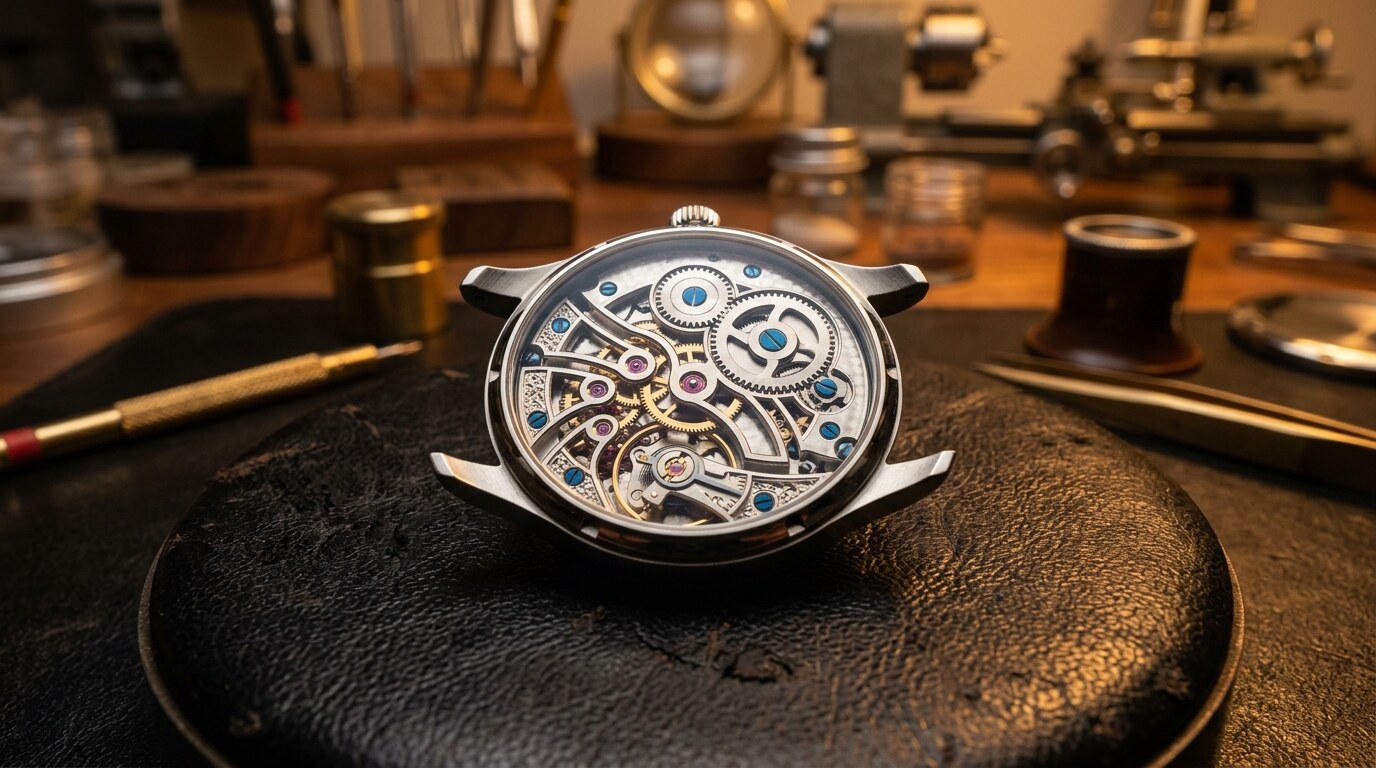
An F.P.Journe Souscription Resonance No. 007 sold in New York for $13.9 million. That is a world record for any watch by an independent maker, the highest result for any 21st-century watch in a commercial sale, and the top hammer for a watch anywhere in the Americas. I have watched Journe values climb from collector-circle money to institutional money over the last decade, but a Resonance clearing eight figures is a different order of thing. It confirms what the better dealer floors already priced in: the independents are no longer the alternative to the Geneva names, they are the blue chips.
Phillips closes a record book
The Journe was the exclamation point on a season that broke every prior total. Phillips took a combined total exceeding $235 million across its Geneva, Hong Kong and New York watch sales in the first half, the strongest season in the history of watch auctions. The Geneva Watch Auction XXIII carried its share of the load, with a Patek Philippe Ref. 2523 Polychrome Two-crown World-time selling for CHF 7,961,000 and a Ref. 6002G-010 Sky Moon Tourbillon at CHF 3,242,000. Those are not speculative flips. They are the kind of references that anchor a room and set the comps every dealer quotes for a year afterward. The full week-in-review context sits in our trade week wrap.
The independents deserve a longer look, because the Journe result is not an outlier so much as a marker of where collector money has moved. For years the auction narrative was Patek and Rolex with everything else in the discount bin. That is over. A Souscription Resonance at $13.9 million now sits in the same conversation as the eight-figure Patek complications, and the dealers who stocked independents early are the ones holding appreciating inventory. The Ref. 2523 World-time at CHF 7,961,000 and the Sky Moon Tourbillon at CHF 3,242,000 show the Geneva names still command the very top, but the ceiling above the independents has lifted right along with them.
Swiss exports back the auction strength
The primary side is running with the secondary. The Federation of the Swiss Watch Industry reported June exports up almost 11.2 percent, to nearly 2.4 billion francs, and the two-year comparison holds at plus 2.6 percent against 2024. That is a factory shipping into real demand, not stuffing a channel. The one line every U.S. Buyer feels: exports to the United States fell 14.8 percent across the first six months. So the strength is coming from elsewhere while the domestic order book stays disciplined. When the aggregate is up double digits and your home market is down fifteen, you watch which references the brands are actually allocating.
The 14.8 percent drop in Swiss exports to the United States over six months is the counterweight to all this strength, and it reads plainly. The American buyer did not stop wanting watches. The domestic channel loaded up in the strong years and is clearing that inventory before it writes fresh orders. On the dealer floors that shows up as steady sell-through on pieces already in the case and thin new allocation from the brands. The retail price hikes at the start of the year, with average Rolex prices up 7 percent in the U.S. And 5.2 percent in the U.K., hold the resale floor up while that overhang works off.
The secondary market turned
Under the auction headlines, the resale market quietly stopped bleeding. Morgan Stanley and WatchCharts had quarter-on-quarter secondary prices up across the board in the first quarter: Rolex plus 1.7 percent, Patek Philippe plus 3.0 percent, Cartier plus 1.9 percent, Omega plus 1.9 percent and Audemars Piguet plus 2.0 percent. Modest, but green after a long stretch of red. On the retail side, average Rolex prices jumped 7 percent in the U.S. And 5.2 percent in the U.K. At the start of the year, which pulls the resale floor up behind it. When list goes up, the pre-owned pieces that trade near list follow, and that is exactly the pattern the WatchCharts print showed.
None of this happens in isolation. The same steadiness in the salerooms is showing up in the metal and the stones, which is why the whole trade feels firmer than it did in the spring. Gold holding above four thousand, which we cover in our bullion note, keeps the hard-asset buyer confident that the floor is not rolling over, and that confidence carries straight into the steel-sport end of the watch market where the pre-owned bid lives.
What it means on the floor
Put the signals together and the strong end of the watch trade is the healthiest it has been in over a year. Records at the top, primary exports running double digits, and a secondary market that has flipped positive on every major brand, with Rolex up 1.7 percent, Patek up 3.0 percent, Cartier up 1.9 percent, Omega up 1.9 percent and Audemars Piguet up 2.0 percent quarter on quarter. The same steadying is showing on the stone side, which we cover in the diamond market breakdown. The open question for the fall: does the U.S. Export line recover as the tariff picture clears, or do the strong Swiss numbers keep leaning on Asia and the Middle East to carry the total?





Comments 0
No comments yet. Be the first to share your thoughts.