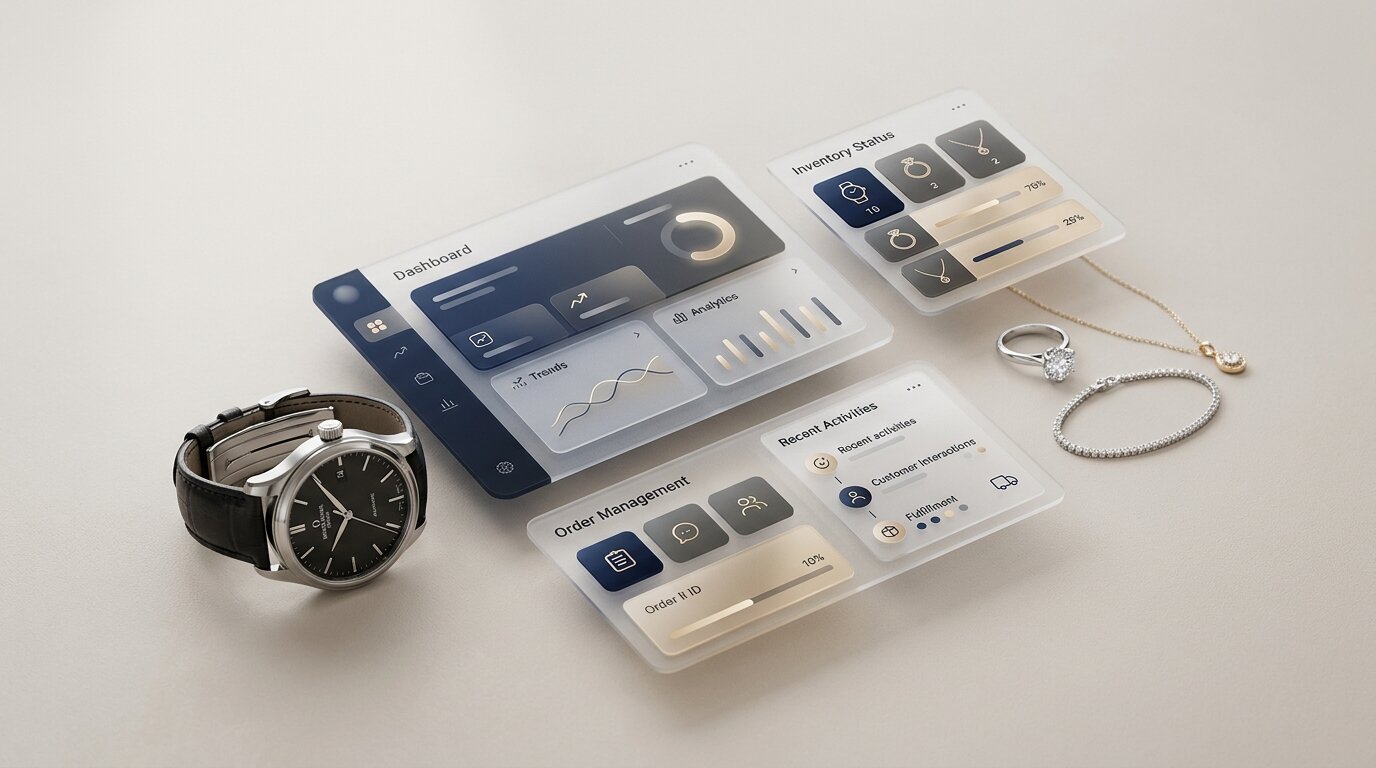
Most dealers I know are running their business across four or five tools that were never meant to talk to each other. Inventory lives in a spreadsheet. The website is a separate build nobody wants to touch. Invoices come out of accounting software that knows nothing about the actual pieces. Repairs get tracked on a legal pad. LuxSys.io is a bet that all of that belongs in one place, and that a dealer should be able to put their own name on it.
The pitch is white-label from the ground up. You get inventory, a buyer-facing storefront, catalog, invoicing, estimates and repair tracking, all served on your own domain under your own branding. LuxSys runs the infrastructure and stays invisible. Your customers see your shop, not a vendor's logo in the corner.
What it actually does
At the center is inventory built for how the trade really works. Every piece carries its reference, specs, metal, condition and pricing, and that single record feeds everything downstream. Add a watch once and it shows up in your catalog, on your storefront and in an invoice without being re-keyed three times. For anyone who has watched a stone get described four different ways across four systems, that alone is worth a look.
The storefront is the part that will get the most attention, because it is the part buyers see. It runs on the dealer's domain and pulls straight from live inventory, so what sells comes down and what lands goes up without a separate publishing step. The catalog styling is meant to read like the dealer's own house rather than a generic template, which matters more in this business than it does in most.
Then there is the back office. Invoices and estimates come out branded, with the dealer's terms already baked in. Repairs, service jobs and special orders get tracked from intake to done, which is exactly the kind of unglamorous workflow that usually falls through the cracks and costs a shop a customer. None of this is flashy. It is the plumbing, and the plumbing is where most dealer operations quietly break.
The model
LuxSys sells access, not a build. Pricing is published on the site at a flat monthly rate with a short trial, and there is no sales call required to see the number. That is a deliberate contrast to the enterprise inventory systems the larger houses use, where you cannot get a price without a demo and a quote. For a mid-size dealer who wants to look bigger than they are without hiring a developer, the math is easy to run.
The obvious question is what happens as a shop grows into it. A platform that hosts your storefront, your inventory and your customer-facing brand is a platform you become dependent on, and dealers should go in clear-eyed about that. The upside is that the same dependence buys you out of maintaining any of it yourself.
Worth watching
LuxSys is early, and a white-label platform lives or dies on how well it disappears behind the dealer's brand and how reliably the boring parts run. But the core idea is sound and overdue. The trade has spent years stitching together tools that were built for other industries. A system designed from the start for how watch, jewelry and gold dealers actually operate, priced so a normal shop can afford it, is the kind of thing worth keeping an eye on. You can see it at luxsys.io.





Comments 0
No comments yet. Be the first to share your thoughts.