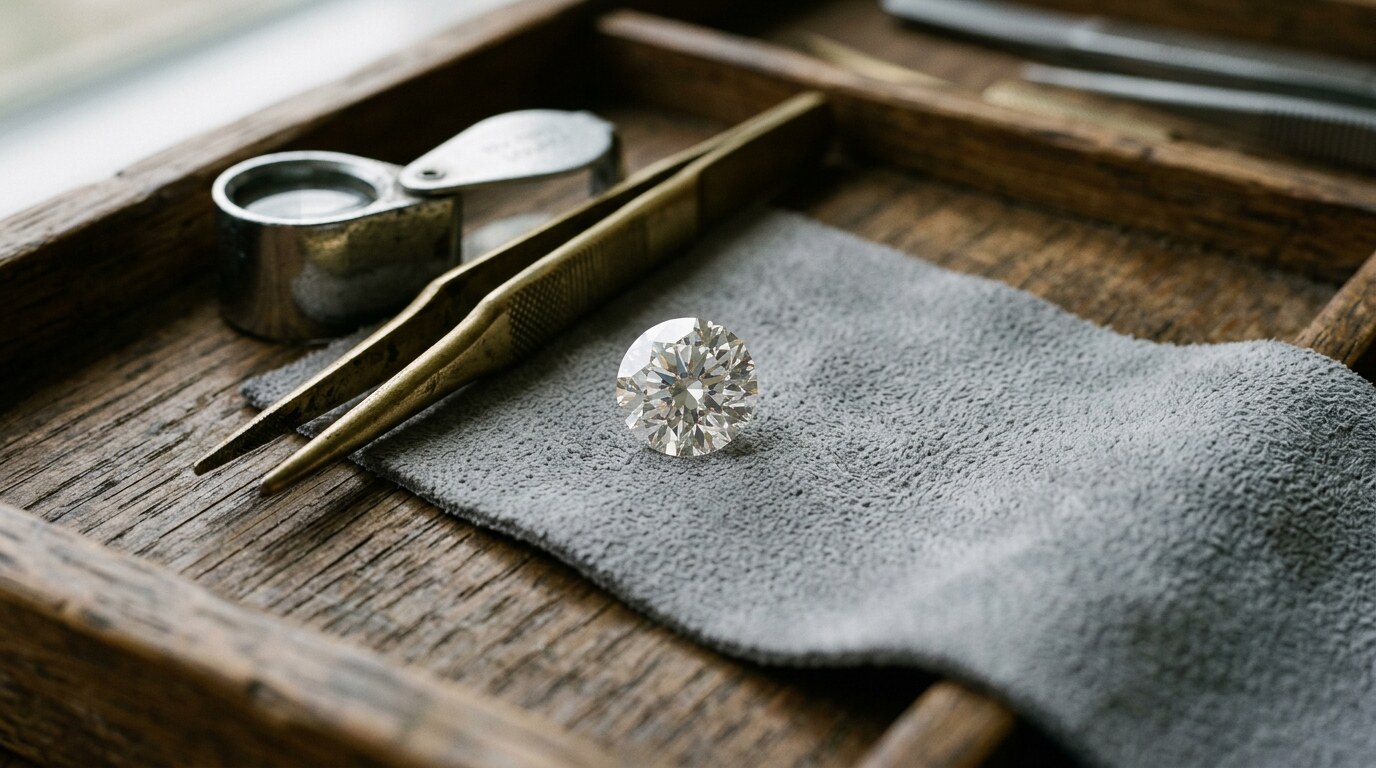
De Beers published fresh US consumer research on June 29, and the numbers cut against the narrative that has dominated the diamond trade for two years. Average consumer spending on natural-diamond jewelry in the United States rose 25% to $4,063, up from $3,242 in 2023. The average natural stone purchased grew to 1.86 carats, from 1.65 carats two years earlier.
The spend figure and the size figure point the same direction. Buyers are not just returning to natural stones, they are trading up within them. That is the opposite of the trade-down behavior the lab-grown surge was supposed to lock in.
The retail data backs the survey
The consumer survey is paired with point-of-sale data from 950 independent US jewelers, which is the number that should hold a retailer's attention. Natural-diamond sales across that panel rose 4% year-on-year in the fourth quarter of 2025 and 9% in the first quarter of 2026. Two consecutive quarters of growth at the independent level is a firmer signal than any single survey, because it reflects transactions rather than stated intent.
The generational breakdown is where the report earns its keep. Millennials accounted for 32% of natural-diamond buyers but 55% of demand value, confirming them as the category's spending core. Gen Z is the more surprising line. That cohort spent an average of $4,080 per piece, nearly double the $2,250 Baby Boomers spent, and contributed 23% of natural-diamond demand value while making up 18% of the population. The youngest buyers are over-indexing on natural stones by value, not abandoning them.
Occasions have shifted off the bridal track
The structural change underneath the spending growth is occasion. Non-bridal purchases now account for roughly 75% of US natural-diamond acquisitions, with birthdays, career milestones and self-purchase driving the volume. For a category that built its 20th-century business on engagement, a 75% non-bridal mix is a different demand model, and one less exposed to marriage rates and household formation. It also explains the larger average stone: self-purchase and milestone buying tend to skip the budget anchoring that comes with a couple shopping a ring together.
This is the backdrop to the price split I have covered through the spring. Lab-grown stones continue to slide toward $750 to $1,000 a carat at retail, now 73% to 83% cheaper than their natural equivalents by some measures. De Beers shuttered its own Lightbox lab-grown brand and took $6.8 billion in writedowns across three years, and its effective rough index fell 25% year-on-year once discounted stock deals are counted. The contrast with the consumer data is the entire story: natural and lab-grown are decoupling into separate products at separate price points, rather than one cannibalizing the other.
What it means for the independent counter
For independents, the De Beers panel offers a planning case that has been scarce lately. Natural-diamond demand value is concentrated in millennials and skewing toward larger stones and non-bridal occasions. The merchandising implication is a deeper bench of half-carat to two-carat natural goods aimed at self-purchase and milestone gifting, not only bridal solitaires. The lab-grown line, meanwhile, behaves like fashion inventory: high velocity, thin and falling margin, useful for traffic but not for value.
That split also reframes the lab-grown question. The synthetic line is no longer a threat to the natural business so much as a different department with different economics. Treating it as fashion inventory, priced for velocity and stocked for traffic, lets a retailer carry both without letting one cannibalize the other.
The same upgrade signal appears at the luxury end of the broader trade, where Watches of Switzerland reported high-end jewelry up 18% on the year in our industry breakdown. The weaker gold price this quarter, detailed in our gold desk note, also relieves some of the metal-cost pressure that squeezed finished-jewelry margins through the spring. The full week's cross-currents sit in the trade week wrap.
The open question is durability. Two quarters of growth on a 950-store panel is encouraging, but the prior two years trained the trade to distrust a single good print. If the independent panel holds its 9% first-quarter pace into the second half, the natural-diamond recovery stops being a survey talking point and becomes a stocking decision.





Comments 0
No comments yet. Be the first to share your thoughts.