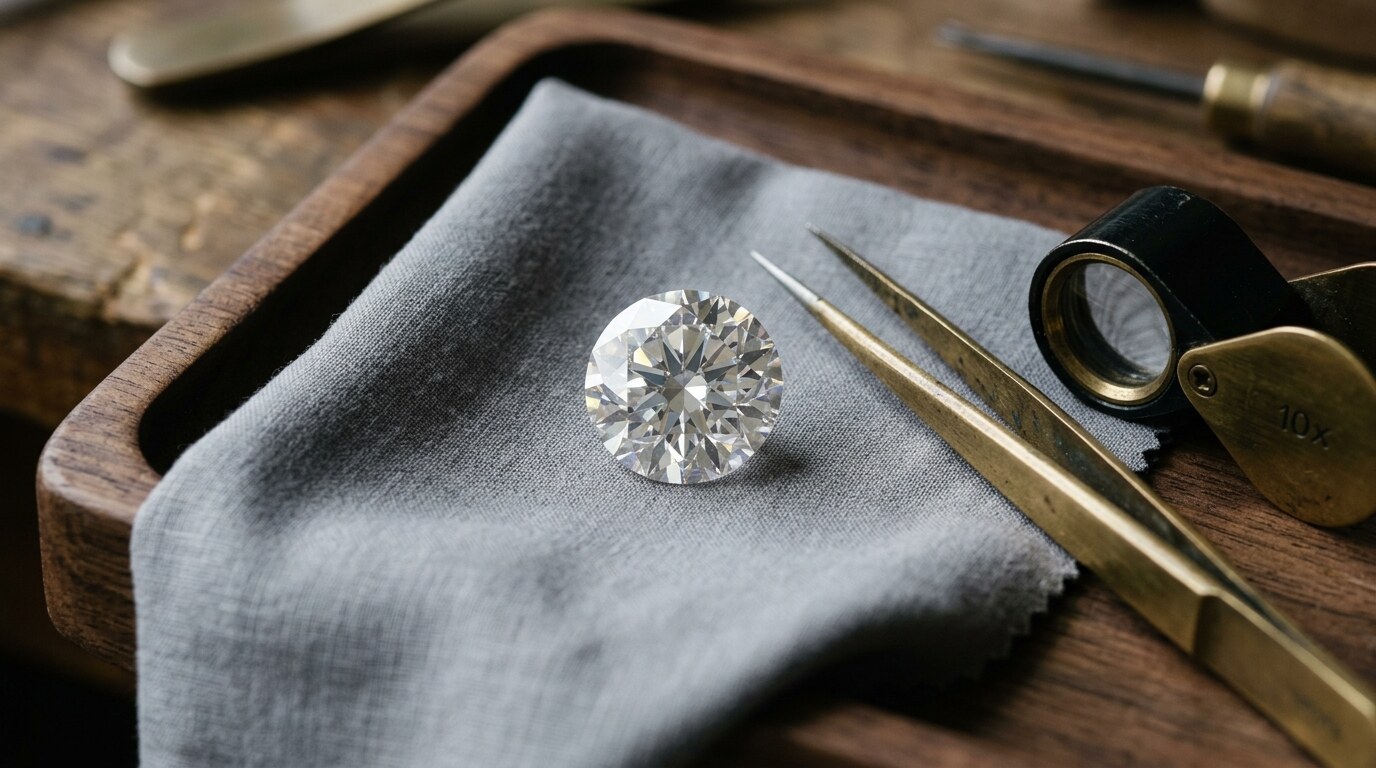
Rapaport reported this week that July marked the diamond market's first positive month since March 2025, with all four major size categories reading flat or higher. The result ends a downturn that had run without a break for more than a year and gives the trade its first evidence that polished prices have found a floor.
The size-by-size read
The detail matters more than the headline. The 1-carat RAPI held stable in July, ending 13 consecutive months of declines. Below that size the index moved higher: the 0.30-carat RAPI rose 1.6%, the 0.50-carat rose 1.8% for its best month since March 2025, and the 3-carat added 0.2%. The pattern of pointer sizes leading is the one analysts look for, because sub-1-carat goods are where retail restocking registers first and fastest.
Read against the floor traffic, that ordering is not incidental. Pointer goods clear at bridal price points, they turn quickly, and a jeweler refilling a depleted case reaches for 0.30s and 0.50s before committing capital to a 1-carat center stone. When those two categories post the strongest readings in the batch, it signals that buyers are moving on the sizes that carry the least inventory risk. The 3-carat gain of 0.2% is thinner and belongs to a different buyer, but it points the same direction: no size category worked against the seller in July, which had not been true in any month since the spring of last year.
A single month does not establish a trend, and Rapaport's own framing was measured. The 1-carat pointer holding steady is a stabilization rather than a rally. But after 13 months in which every category ground lower, a flat-to-positive reading changes the tone of the market from defensive to selective. Dealers who had marked inventory down repeatedly now have a reference point that is not moving against them. The broader market context is covered in this week's trade wrap.
The year-to-date scar
The turn does not erase the damage. Natural 1-carat G-H, VS1-VS2 goods are down 14.1% year to date, sliding from $4,715 on January 1 to $4,049 as of August 5. That is the depth of the hole the market is climbing out of, and it frames why a single flat month for the 1-carat index reads as meaningful rather than trivial. When a benchmark size has given up more than 14% in seven months, the value of it simply not falling again is real.
For retailers the year-to-date figure is the number that governs margin. Goods bought at the start of the year are worth materially less today, and any restocking now happens against a reset cost basis. A stone carried on the books at the January reference of $4,715 sits roughly $666 above where the same goods trade in early August, and that gap is a live problem for any dealer who financed inventory into the decline. The July stabilization is what allows restocking to proceed without the buyer assuming another leg down before the goods reach the case. It also gives appraisers and lenders a mark they can defend, which matters when memo lines and consignment terms are being renegotiated against a moving benchmark.
De Beers quantifies the reset
The producer side of the ledger showed how far prices fell to get here. Anglo American reported that De Beers sold 7.1 million carats across three sights in the second quarter, down from 7.6 million carats in Q2 2025. Revenue fell 44% to $665 million from $1.2 billion, and the average sales price dropped roughly 37%, from $174 a carat to $110. The producer moved nearly as much volume while realizing a sharply lower price, which is the clearest measure of how aggressively rough repriced to clear.
Hold the two figures side by side. Carat volume slipped about 7% year over year, yet revenue fell 44%. Almost the entire revenue miss is price, not demand for stones, and a sightholder reading those numbers sees a producer choosing to move goods at $110 rather than hold them off the market at $174. That decision at the source is what let polished stop falling downstream. Manufacturers who bought rough into that reset now hold a cost basis low enough to make current polished bids workable, which is the mechanism behind the July floor rather than a coincidence alongside it.
The contrast between the two datasets is the story. Polished has stabilized at the wholesale level while rough completed a severe reset at the source. That spread is where the trade's margin sits this quarter, and it is why the Rapaport turn carries more forward-looking weight than the De Beers revenue miss. One number describes the quarter that just closed. The other describes the market that opens next.
What to watch
The test is August. If the 1-carat RAPI holds a second consecutive month, the July turn was a genuine floor and the restocking cycle it enables will shape fourth-quarter demand. If it resumes falling, July was a pause rather than a bottom. The number that ended a 13-month decline is the same number that will confirm or reverse it, and the sub-1-carat categories are covered further in the industry roundup alongside the branded-jewelry demand data. The question the trade takes into the fall is a single figure: does the 1-carat index hold above the August 5 mark of $4,049, or does the floor give way a second time?





Comments 0
No comments yet. Be the first to share your thoughts.