
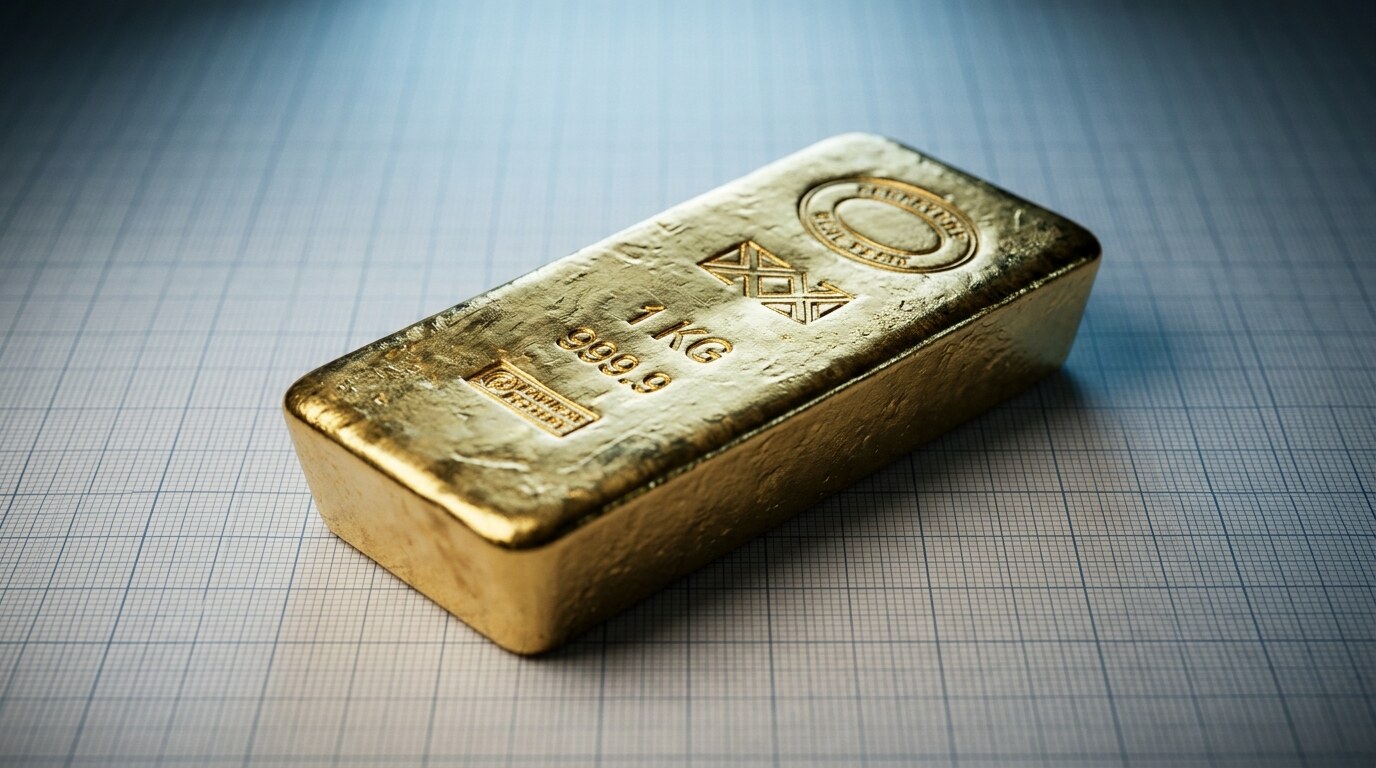
Gold spent the first full week of July doing the one thing that unsettles a trading desk more than a selloff: nothing much. Spot traded around $4,143 an ounce midday on July 6, up roughly $20 from its $4,123 close on July 2, then eased back toward $4,140 on July 7 as a firmer dollar capped the move. After the prior week's rebound, the metal is consolidating rather than trending, and the trade is waiting on a single event to break the tie.
The setup into the minutes
That event is the June FOMC minutes, due July 8. The context is a labor market that just came in soft: June nonfarm payrolls added only 57,000 jobs against expectations near 110,000, the weakest print in four months. The reaction was immediate. CME's FedWatch showed the implied probability of a September rate hike sliding to about 50 percent, down from the 66 to 67 percent priced in before the report. Silver outran gold on the news, jumping 3.7 percent in a single session on July 2 as the rate-cut-versus-hike debate tilted.
The minutes matter because they will show how seriously the committee weighed the case for another hike before the jobs data landed. A hawkish read that pushes September odds back above 60 percent would reinforce the World Gold Council's $4,100 base case and likely test the metal's floor. A dovish tone that keeps odds below 50 percent supports the upside scenario and lends weight to forecasts like J.P. Morgan's $4,300 third-quarter target. For now the tape is coiled between those two outcomes, which is why volume has been thin and the range narrow.
Central banks are still the floor
Whatever the minutes say about rates, the structural bid under gold has not wavered. Central banks kept buying through the spring. The National Bank of Poland added 18 tonnes in May, its fourth straight month of double-digit accumulation and 64 tonnes year to date. Singapore returned to the market with 4 tonnes, its first net purchase since September 2025. China extended its own streak past 18 consecutive months, with reserves now around 2,322 tonnes, roughly 9 percent of its total.
The survey data backs up the flow data. The World Gold Council's latest central bank poll found 89 percent of respondents expect global official reserves to rise over the next twelve months, and a record 45 percent expect their own institution to add. That is not a cohort that sells into a dip. It is a persistent, price-insensitive buyer that puts a rising floor under the metal regardless of what the September dot plot ends up saying.
What it means on the counter
For the trade the practical effect of a $4,140 spot is unchanged from the past several weeks. Scrap keeps flowing in as consumers monetize old gold at levels that still look historically rich, up better than 25 percent year over year even after the metal slipped about 6 percent from its early-June high near $4,408. Casting-grain and findings costs stay elevated, which squeezes margins on new manufacturing, and retail buyers continue to negotiate hard around a spot number most of them assumed would be lower by mid-year. The bullion desk covering diamond and watch inventory has to price all of that into every deal.
The read across the wider trade is that gold's stability is doing more work than its direction. A metal that holds a range lets dealers plan; a metal that gaps does not. That steadiness is also the backdrop for the week's diamond news, where De Beers reset its rough book against a firm bullion tape, covered in our diamond desk note. The full cross-asset picture, from watches to rough, is in this week's trade wrap.
The number that resolves it prints July 8. Above 60 percent September odds, gold tests its floor and the scrap math shifts. Below 50 percent, the path opens back toward $4,200. The trade will not have to wait long to find out which way the coil unwinds.





Comments 0
No comments yet. Be the first to share your thoughts.